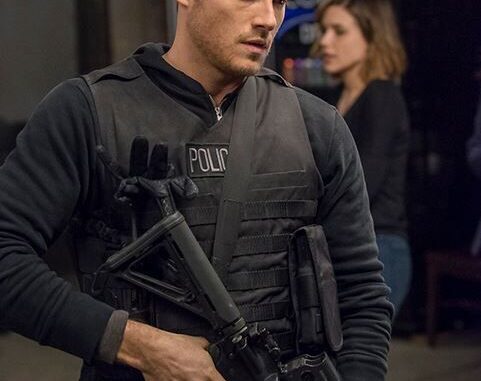
For years, Jesse Lee Soffer was one of the most familiar faces on Chicago P.D., bringing Jay Halstead to life with a mix of intensity, loyalty, and emotional depth that helped define the series. As a core member of the Intelligence Unit from the very beginning, Halstead wasn’t just another detective — he was the moral center for many of the show’s most complicated storylines, often standing at the intersection between doing what’s right and doing what’s necessary.
So when his exit finally came, it didn’t just surprise fans.
It surprised him too.
Soffer has openly admitted that the way his journey on Chicago P.D. came to an end wasn’t something he fully expected. After spending nearly a decade inside that world, building relationships with both the cast and the audience, the idea of stepping away felt less like a planned conclusion and more like a sudden shift.
“I didn’t expect it to end like that” is the kind of reflection that carries weight, especially coming from an actor so deeply connected to his character.
Halstead’s departure was written as a personal decision within the story. After a series of intense and morally challenging cases, the character chose to leave Chicago and join a military program, searching for a different kind of purpose. On paper, it made sense. Halstead had always struggled with the emotional cost of the job, often questioning the lines that the Intelligence Unit crossed under the leadership of Hank Voight.
But for fans who had followed his journey from the beginning, the exit felt abrupt.
There was no long goodbye stretched across multiple episodes, no extended resolution to every relationship, no slow build toward a final moment. Instead, it happened quickly, almost quietly, leaving viewers with the feeling that there was more story left to tell.
That’s part of what Soffer’s reflection speaks to.

When an actor spends that many years in a role, there’s an unspoken expectation that the ending will feel as significant as the journey itself. Halstead had been through too much — from undercover operations to personal loss to his evolving relationship with his partner and later wife, Hailey Upton. Their story, often referred to by fans as one of the emotional backbones of the show, didn’t get the kind of extended closure many viewers had hoped for.
And that absence was felt.
For Soffer, the experience of leaving wasn’t just about stepping away from a character. It meant saying goodbye to a routine, a cast, and a creative environment that had been part of his life for years. Long-running shows create a unique kind of stability for actors, where the line between professional and personal life often becomes intertwined. Walking away from that isn’t a simple decision, even when it’s the right time.
At the same time, his departure opened the door to something new.
Since leaving Chicago P.D. as a full-time cast member, Soffer has remained connected to the franchise in a different way, even stepping behind the camera to direct episodes. That transition suggests that while his time as Halstead may have ended on screen, his relationship with the One Chicago universe hasn’t completely closed.
And for fans, that matters.
Because in a show like this, characters rarely feel truly gone.
Halstead’s absence has continued to shape the story in subtle ways. His departure affected not just Upton, but the entire dynamic of the Intelligence Unit. The balance he once brought — often challenging Voight’s more aggressive instincts — is something the team still feels without him. In many ways, his presence lingers in the decisions the characters make, even after he’s no longer there.
That kind of impact doesn’t disappear overnight.
It becomes part of the show’s identity.
Soffer’s reflection also highlights something larger about long-running television. Not every exit gets a perfectly planned ending. Sometimes, the conclusion comes sooner or differently than expected. What matters is the legacy left behind, and in Halstead’s case, that legacy is significant.
He was the character who questioned, who pushed back, who tried to hold onto a version of justice that didn’t always align with the world around him. That internal conflict gave Chicago P.D. some of its most compelling moments, and it’s part of what made his departure so impactful.
Looking back, the fact that Soffer didn’t expect it to end that way might be exactly why the moment resonates so strongly.
Because it feels real.
Life doesn’t always wrap up neatly, and neither do the stories we connect to the most. Halstead’s exit may not have been the ending fans imagined, but it was one that left a lasting impression — on the show, on the characters, and on the actor who brought him to life.
And sometimes, those are the endings people remember the longest.