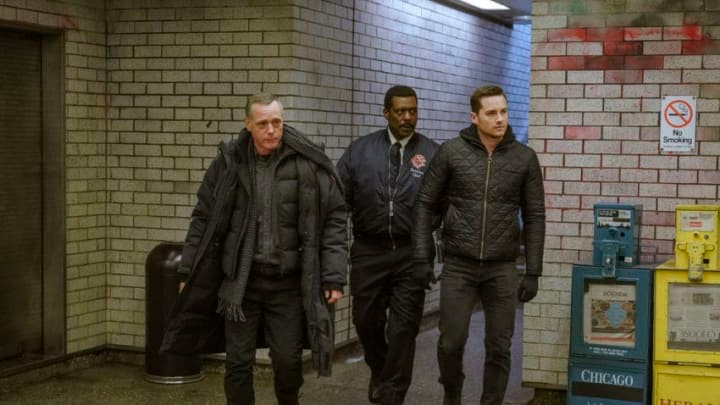
The legacy of Firehouse 51 is built on more than just physical bravery and quick reflexes; it is anchored by a unique brand of leadership that has evolved over thirteen seasons. From the stoic command of Wallace Boden to the rising influence of Stella Kidd, the true power behind these leaders lies in their ability to balance the rigid hierarchy of the Chicago Fire Department with the deep, messy bonds of a “found family.“
To understand the hidden strength of 51, one must look past the badges and examine the specific archetypes of leadership that have kept the house standing through countless tragedies.
The Moral Compass: Wallace Boden
For over a decade, Chief Wallace Boden was the bedrock of the station. His power didn’t come from shouting orders, but from his gravitas. Boden’s hidden strength was his role as a protector—not just of the city, but of his people. He often put his own career on the line to shield his firefighters from the “brass” at headquarters. By serving as a buffer against political bureaucracy, he allowed his crew to focus entirely on their mission, creating an environment of psychological safety that is rare in high-stress professions.
The Tactical Mentor: Kelly Severide
Kelly Severide represents a different kind of power: technical mastery paired with emotional restraint. As the leader of Squad 3, his strength is his intuition. Severide doesn’t lead through speeches; he leads by example in the most high-stakes environments. His hidden power is his ability to spot potential in others—taking “lost” souls like Jimmy Borrelli or even Stella Kidd and molding them into elite first responders. He is the quiet engine that drives the house’s operational excellence.
The Heart of the House: Christopher Herrmann
Leadership isn’t always about rank. Christopher Herrmann, long before he became an officer, was the “engine room” of 51’s morale. His strength lies in institutional memory and empathy. Herrmann reminds the younger generation of the traditions of the CFD while providing the emotional support needed after a traumatic call. Whether it’s behind the bar at Molly’s or on the back of the engine, his power is his ability to keep the “family” together when the job threatens to tear them apart.
The Rising Sun: Stella Kidd
Perhaps the most modern evolution of leadership at 51 is Stella Kidd. Her strength is resilience. Having overcome a difficult past, she leads Truck 81 with a focus on mentorship and inclusivity, exemplified by her “Girls on Fire” program. Kidd represents a shift toward more communicative, emotionally intelligent leadership. She isn’t afraid to show vulnerability, which in turn inspires a deeper level of loyalty from her crew.
The New Frontier: Dom Pascal
The arrival of Chief Dom Pascal in Season 13 has introduced a “colder” style of leadership that challenges the established status quo. His power is objectivity. By stripping away some of the sentimentality that Boden encouraged, Pascal is forcing Firehouse 51 to sharpen its professional edges. While it has caused friction, his hidden strength might be exactly what the house needs to survive the increasingly complex political landscape of the modern CFD.
Conclusion: A Symphony of Command
The true power of Firehouse 51 isn’t held by any one individual. It is found in the interlocking strengths of these various leaders. When Boden’s protection, Severide’s skill, Herrmann’s heart, and Kidd’s resilience work in harmony, 51 becomes more than a firehouse—it becomes an impenetrable fortress.
As the series moves forward, these leadership styles continue to clash and combine, proving that the greatest strength of a leader isn’t their ability to stand alone, but their ability to empower the people standing next to them in the smoke.