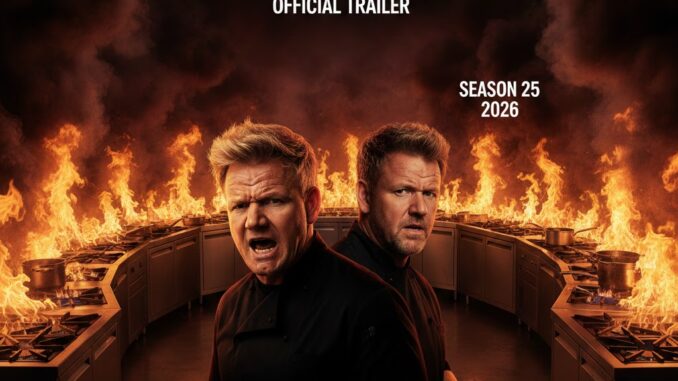
For over a decade, Hell’s Kitchen has thrived on intensity, ego clashes, and Gordon Ramsay’s volcanic standards. But just when fans thought the format had been pushed to its limit, 2026 arrives with a seismic reinvention: “Battle of the States.” And this time, it’s not just chefs competing for glory — it’s entire states going to war in Ramsay’s kitchen.
At the center of the firestorm, of course, stands Gordon Ramsay, sharper than ever and fully aware that this twist could either reignite the franchise’s dominance or blow it apart.
Because this isn’t a minor format tweak.
It’s a mega cast. A cultural showdown. A high-pressure experiment in regional pride.
And it may be the boldest gamble the show has ever taken.
A Kitchen Divided by State Lines
Instead of the traditional red versus blue team dynamic, “Battle of the States” introduces contestants representing their home states — Texas, New York, California, Illinois, Florida, and beyond. Each chef isn’t just fighting for a black jacket. They’re fighting for hometown pride, culinary identity, and bragging rights that extend far beyond the dining room.
Suddenly, the pressure multiplies.
It’s no longer personal ambition alone driving these chefs. It’s reputation. Social media back home. Local headlines. Culinary communities watching every service meltdown in real time.
And Ramsay knows exactly how to weaponize that pressure.
“You’re not embarrassing yourself,” he reportedly tells one trembling contestant in the premiere. “You’re embarrassing your entire state.”
The psychological shift is immediate — and explosive.
The Mega Cast Chaos
This season’s expanded roster is another shockwave. More chefs. More personalities. More combustible egos packed into a tighter competitive structure. Early reports suggest larger opening teams before dramatic mid-season cuts slash the numbers in brutal fashion.
With more contestants comes more volatility.
Regional stereotypes spark instant friction. A Southern pitmaster clashes with a fast-talking New York fine-dining prodigy. A California plant-forward chef challenges a Midwest steakhouse traditionalist. Culinary philosophy becomes identity politics — without ever crossing into actual politics — and the kitchen transforms into a battleground of styles.
Viewers aren’t just picking favorite chefs.
They’re picking sides on the map.
Ramsay’s Strategic Evolution
For Ramsay, this twist demands a new level of orchestration. He’s no longer just evaluating technique and leadership. He’s managing alliances rooted in geography. Teammates share cultural bonds before they ever share a station.
That unity can be powerful.
It can also be dangerous.
Because when state loyalty overrides kitchen hierarchy, discipline fractures. Ramsay thrives in chaos — but controlled chaos. Too much emotional allegiance, and the brigade collapses.
Sources close to production hint at a mid-season bombshell that reshuffles state lines entirely, forcing chefs to abandon their geographic alliances and cook alongside former rivals. If true, it could be the most ruthless twist in the show’s history — stripping contestants of their identity anchor just when they need it most.
Pride Before the Fall?
“Battle of the States” taps into something primal: pride. Pride in origin. Pride in flavor. Pride in doing it “our way.”
But pride can blind.
A chef unwilling to adapt beyond their regional comfort zone won’t survive Ramsay’s evolving standards. This isn’t a tourism campaign for local cuisine. It’s still Hell’s Kitchen — where perfection is demanded regardless of accent or upbringing.
And that tension is where the drama ignites.
When a Texas competitor refuses to tone down spice levels for a fine-dining tasting menu, is it authenticity — or arrogance? When a New England seafood specialist dismisses Southern techniques, is it expertise — or elitism?
The line blurs fast.
Bigger Stakes, Bigger Spectacle
The prize reportedly matches the ambition: a head chef position tied to a major Ramsay restaurant venture in a flagship U.S. location. Winning doesn’t just elevate an individual — it elevates a state’s culinary bragging rights.
Expect hometown watch parties. State officials tweeting support. Local news stations turning contestants into minor celebrities overnight.
The show becomes more than entertainment.
It becomes a map-wide rivalry.
Can the Format Survive Its Own Ambition?
Reinventing a long-running franchise is always risky. Fans love familiarity. But stagnation kills relevance. By injecting state identity into the competition, producers are betting that regional pride will supercharge emotional investment.
The danger? Overcrowding the narrative.
With a mega cast and layered alliances, storytelling becomes more complex. Viewers need clear arcs, not chaos for chaos’ sake. If the balance tips too far into spectacle, the heart of the competition — culinary excellence — risks getting overshadowed.
But if executed correctly?
It could be the franchise’s most addictive season yet.
A New Era for Hell’s Kitchen
For Gordon Ramsay, “Battle of the States” feels like both evolution and escalation. After years of refining the format, he’s lighting a new fuse — one that stretches from coast to coast.
The question isn’t whether chefs will clash.
They will.
The question is whether state pride will forge stronger leaders — or create the most dramatic implosions the series has ever seen.
Either way, one thing is certain:
When Hell’s Kitchen turns the entire country into competitors, the fire doesn’t just burn hotter.
It spreads.