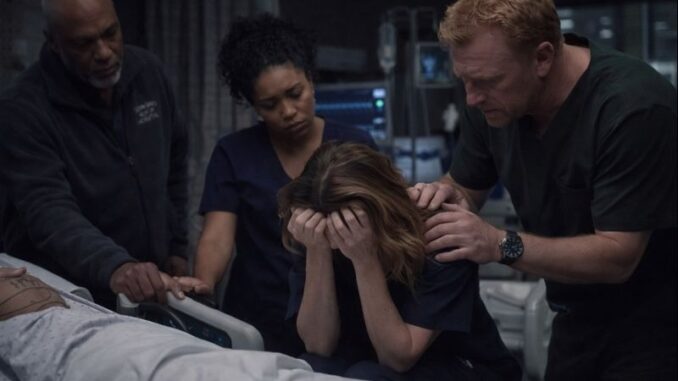
When a show survives more than two decades on television, outrage isn’t new — but Season 22 of Grey’s Anatomy has sparked a particularly intense wave of backlash. The question dominating fan forums and social media right now: Is Grey Sloan Memorial finally falling apart?
For years, chaos has been part of the show’s DNA. Bomb threats. Plane crashes. Hospital shootings. Catastrophic storms. Yet those disasters often strengthened the emotional core of the series. The doctors leaned on each other. Trauma forged deeper bonds. The hospital survived.
Season 22 feels different.
A Hospital Without Its Center
One of the biggest sources of outrage is the reduced presence of Meredith Grey, played by Ellen Pompeo. While Meredith has transitioned into a recurring role in recent seasons, many fans still see her as the emotional anchor of the show. Her absence — or limited screen time — has left some viewers feeling unmoored.
Grey Sloan without Meredith doesn’t feel impossible. But it does feel unfamiliar. For a series built around her voiceovers, her trauma, and her growth, shifting the center of gravity has been jarring.
Some fans argue that the show hasn’t fully replaced that narrative spine. Instead, Season 22 often feels like multiple competing storylines without a clear emotional through-line.
Leadership Under Fire
Another major flashpoint? The ongoing scrutiny of Miranda Bailey, portrayed by Chandra Wilson.
Bailey has always been strong-willed, but this season places her leadership style under a harsher spotlight. Internal tensions, administrative decisions, and clashes with colleagues have fueled debates online. Is she protecting the hospital — or pushing people away?
Some viewers feel the writing has hardened her character, stripping away the warmth that once defined her mentorship. Others argue she’s simply evolving in a system that demands impossible choices. After all, running Grey Sloan has never been easy.
Still, the friction has added to the perception that the hospital is less united than ever.
The Intern Problem
Season 22 continues to invest heavily in the new generation of interns. While fresh faces are essential for longevity, not all fans are convinced. Comparisons to the original MAGIC class are inevitable — and often unforgiving.
Early Grey’s Anatomy thrived on intimate friendships and layered rivalries. The new dynamics, some argue, feel rushed or underdeveloped. Without the deep emotional groundwork that defined earlier seasons, dramatic conflicts can seem manufactured rather than earned.
It’s not that viewers reject new characters outright. It’s that they expect the same emotional payoff the show once delivered with surgical precision.
High Drama, Lower Stakes?
Ironically, one criticism of Season 22 is that despite plenty of medical emergencies and relationship turmoil, the stakes feel smaller. Previous seasons weren’t afraid to devastate audiences. Major deaths permanently altered the trajectory of the show.
Now, some fans feel the series is hesitant to make irreversible moves. Instead of explosive twists, we’re seeing prolonged tension — simmering conflicts rather than shocking ruptures.
In a show famous for bold storytelling, caution can feel like decline.
Is Grey Sloan Really Falling Apart?
Here’s the truth: Grey Sloan has “fallen apart” before — many times. The hospital has closed, reopened, rebranded, and rebuilt itself repeatedly. The difference now isn’t structural. It’s emotional.
The outrage surrounding Season 22 reflects something deeper: viewers are grieving the version of the show they once knew. Long-running series inevitably evolve. Cast members leave. Tone shifts. Themes mature. What feels like collapse may simply be transition.
And yet, the criticism isn’t baseless. When fans express frustration, it’s often because they still care. Indifference would be far worse.
Grey’s Anatomy has survived controversies before. It has reinvented itself more than once. Whether Season 22 represents decline or transformation depends largely on what the writers do next.
Is Grey Sloan falling apart? Maybe not.
But it is undeniably changing — and for a show built on survival, adaptation might be the most dramatic storyline of all.