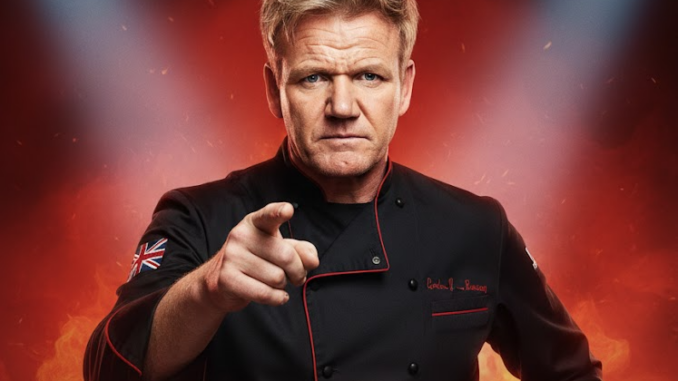
Selling Out the Flame: The Dark Truth Behind Gordon Ramsay’s 2026 Hell’s Kitchen UK Revival and the “Tourist Trap” Empire
As of January 2026, the culinary world is witnessing a transformation that many purists are calling a “cultural tragedy.” Gordon Ramsay, once the fierce guardian of Michelin-starred integrity, has officially pivoted his strategy toward mass-market commercialization. With the confirmed revival of Hell’s Kitchen UK on ITV and the aggressive opening of theatrical dining “concepts,” the “Dark Truth” is becoming impossible to ignore: Gordon Ramsay is no longer building a legacy; he is liquidating it for primetime paychecks and high-turnover tourist traps.
For a man who recently reported a staggering £15.8 million loss across his UK restaurant group, this 2026 expansion feels less like a homecoming and more like a desperate, corporate fire sale. The king of “Hell’s Kitchen” is trading his chef’s whites for a salesman’s suit, and the bill is being picked up by unsuspecting tourists and nostalgic TV viewers.
The ITV Paycheck: Why Hell’s Kitchen UK is a “Zombie” Reboot
The 2026 revival of Hell’s Kitchen on ITV is being marketed as a “full circle moment,” but the “Dark Truth” is far more cynical. The original 2004 British version was raw, unscripted, and focused on the grueling reality of professional cooking. However, insiders report that the 2026 reboot is being “Americanized”—imported with the same over-produced sound beds, staged drama, and repetitive editing that Ramsay once mocked.
Critics argue that this move is purely financial. By securing a massive “Golden Handcuffs” deal with ITV, Ramsay is shielding himself from the insolvency of his actual restaurants. He is no longer teaching people how to cook; he is playing a character in a “Spy Game” of television ratings. The 2026 reboot isn’t for the culinary world—it’s a content-generation machine designed to sell advertising space and keep his name in the tabloids while his Michelin stars gather dust.
The Rise of the “Tourist Trap”: Marble Arch and the Death of Fine Dining
The most visible sign of this “Selling Out” era is the Spring 2026 opening of the UK’s first Hell’s Kitchen Restaurant at The Cumberland Hotel near Marble Arch. This isn’t a restaurant in the traditional sense; it is a “thematic immersive experience” designed specifically for the tourist trade.
The Anatomy of a Tourist Trap:
Recycled Menus: The menu features the same “Signature Dishes” found in Las Vegas, Miami, and Dubai—Beef Wellington and Lobster Risotto—produced in mass quantities to ensure high turnover. There is no soul, no local sourcing, and no innovation; it is a culinary assembly line.
The “Notes from Gordon” Scam: The restaurant features gimmicks like the “Notes from Gordon” cocktail, which arrives with a printed “insult” or “message” from the chef. Critics have branded this as “recycled trash,” arguing that diners are paying premium prices for a scrap of paper rather than the quality of the gin.
High Prices, Low Standards: Positioned in the heart of Marble Arch, the venue is designed to trap international visitors who know Ramsay from TV but wouldn’t know a three-Michelin-starred meal if it hit them. It is a high-volume, high-profit machine that prioritizes “theatre and chaos” over the “perfection and discipline” Ramsay once stood for.
22 Bishopsgate: The “Billionaire’s Cafeteria”
Even Ramsay’s more upscale 2026 ventures, like the five-concept opening at the 22 Bishopsgate skyscraper, are facing backlash. While “Restaurant Gordon Ramsay High” and “Lucky Cat” claim to offer “unparalleled views,” the reality is a fragmented dining experience that feels like a high-altitude food court for the elite.
By spreading himself across five different concepts in a single building, Ramsay is diluting his own brand. You can now get a Ramsay burger, a Ramsay sushi roll, and a Ramsay beef wellington all in the same elevator ride. This isn’t curation; it’s saturation. Industry veterans suggest that these “Sky High” restaurants are more about the Instagram photo of the view than the food on the plate—the ultimate definition of a “next level” tourist trap.
The Financial “Dark Truth”: £15.8 Million and the Survival Hustle
Why is Ramsay doing this? Why would a man with eight Michelin stars risk his reputation on “recycled trash” and scripted TV reboots? The numbers don’t lie. The £15.8 million deficit reported by his group in early 2025 has left him with no choice but to chase the “ITV Paycheck.”
The expansion into the US franchise market and the 2026 London blitz are desperate attempts to create enough cash flow to service his £58.7 million in liabilities. Gordon Ramsay is a man running a race against his own balance sheet. Every “Street Pizza” and “Street Burger” he opens is another brick in a wall designed to keep the creditors at bay. He isn’t opening restaurants because he has something new to say; he’s opening them because he has something he needs to pay.
The Family Fallout: The Branding of a Dynasty
The “Selling Out” of the Ramsay legacy extends to his family life. The 2025 wedding of Holly Ramsay to Adam Ramsay Peaty was used as a branding exercise, with the groom even adopting the Ramsay name to strengthen the corporate “Power Pair” image.
The 2026 strategy is clear: the Ramsay name is no longer a mark of a great chef; it is a trademarked logo that can be slapped onto a hotel, a show, or even a son-in-law. While his son Jack Scott Ramsay remains the “Iron Shadow,” serving in the Marines and avoiding this commercial circus, the rest of the dynasty is being pulled into a world where “Legacy” is just another word for “Marketing.”
Conclusion: The Fire Has Gone Out
Gordon Ramsay used to be the man who would walk into a struggling restaurant and scream at the owner for “selling out” and “cutting corners.” In 2026, he would have to scream at the man in the mirror.
The Hell’s Kitchen UK revival and the Marble Arch “tourist trap” are the final nails in the coffin of the Ramsay of old. He has become the very thing he once despised: a commercial entity that prioritizes volume over value and theatre over taste. The bill for this “perfect” 2026 life is being paid by the fans who still believe in the myth of the “fiery chef.” But the “Dark Truth” is that the fire has gone out, replaced by the neon lights of a global franchise that is simply too big to care.
Gordon Ramsay isn’t a chef anymore—he’s the CEO of a “Recycled Trash” empire, and the kitchen door is finally closing on his legacy.