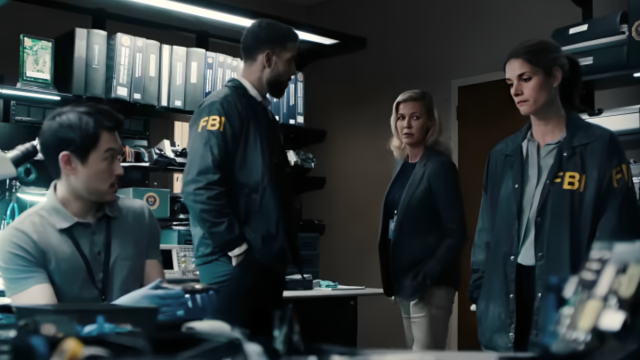
The high-stakes world of the New York FBI field office has always been defined by a sense of controlled chaos, but the latest developments in the franchise have taken a terrifying turn that no one saw coming. In an episode that has sent shockwaves through the fanbase, a central member of the elite squad has gone missing without a trace, leaving behind a vacuum of leadership and a trail of unanswered questions. This isn’t just a standard kidnapping plot or a tactical error during a raid; it is a calculated disappearance that suggests a deep-rooted conspiracy reaching into the very heart of the J. Edgar Hoover Building.
The tension began in the opening minutes of the most recent installment, where the usual morning briefing led by Jubal Valentine was interrupted by a chilling realization. Special Agent Stuart Scola, known for his analytical mind and stoic demeanor, failed to check in after a sensitive undercover meet-up. While the team initially assumed it was a communication blackout due to technical interference, the discovery of his abandoned vehicle in a remote part of the city—wiped clean of any forensic evidence—shifted the mood from concern to pure panic. The lack of a struggle or a digital footprint suggests that Scola was either taken by professionals or, more disturbingly, chose to vanish on his own terms.
This narrative pivot has provided John Boyd with his most compelling material in seasons. Throughout the episode, the focus shifts between the frantic search efforts of the team and the haunting silence of Scola’s absence. The chemistry between the remaining agents, particularly the partnership between Maggie Bell and OA Zidan, is put to the ultimate test as they are forced to operate without their tactical anchor. Maggie’s instinct to follow the evidence clashes with OA’s more visceral reaction to the loss of a brother-in-arms, creating a layer of internal friction that mirrors the audience’s own anxiety. The writers have expertly used this disappearance to highlight how much the team relies on Scola’s quiet competence to balance their more impulsive tendencies.
What makes this disappearance so unsettling is the timing. Scola had recently been digging into a series of cold cases involving former bureau officials, and the “gone without a trace” status implies that he may have stumbled onto something that someone in a position of power wanted to keep hidden. If a veteran agent can be erased from the grid so effectively, it raises the terrifying possibility of a mole within the higher echelons of federal law enforcement. Isobel Castille is seen navigating a political minefield as she tries to keep the investigation internal, fearing that involving outside agencies would only alert the people responsible for Scola’s fate.
The emotional stakes are magnified by Scola’s complicated personal life, specifically his relationship with Nina Chase. The news of his disappearance hits the FBI: Most Wanted crossover character with a devastating force, adding a layer of inter-agency drama that feels earned and visceral. Seeing the usually unshakable Nina struggle to maintain her professional focus while her partner is missing in action adds a human element that the show often brushes past in favor of procedural efficiency. It serves as a stark reminder of the invisible toll that these agents pay every day they put on the badge.
As the search expands, the evidence—or lack thereof—points toward a sophisticated shadow organization that has been operating on the periphery of the bureau for years. The episode ends on a haunting cliffhanger, with the discovery of a cryptic message left in Scola’s apartment that suggests he knew he was being watched. This changes the entire dynamic of the series from a “case of the week” to a long-form psychological thriller. The team isn’t just looking for a missing person anymore; they are hunting a ghost that seems to know their every move before they even make it.
Fans have already begun dissecting every frame of the episode, looking for clues in the background of the field office or in Scola’s final radio transmissions. The consensus is that the show has successfully raised the stakes to an atmospheric level. By removing such a stable and beloved character from the board, the creators have injected a sense of genuine danger that has been missing from the procedural genre. No one is safe, and the rules of engagement have been permanently rewritten.
The mystery of the agent who vanished is more than just a plot twist; it is a fundamental shift in the series’ tone. It promises a future where the line between the hunters and the hunted is thinner than ever, and where the greatest threats are the ones you never see coming. As we wait for the next chapter to unfold, the silence left by the missing agent is deafening, leaving the audience and the New York field office bracing for a truth that might be more painful than the disappearance itself.