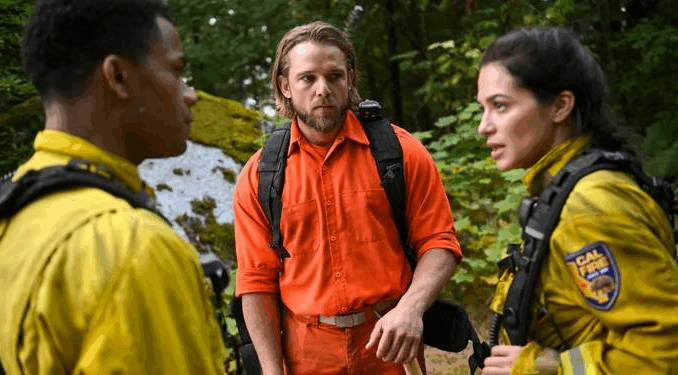
The Season 4 premiere of CBS’s Fire Country delivered the devastating news fans had feared since the Season 3 finale cliffhanger: Battalion Chief Vince Leone, played by beloved actor Billy Burke, did not survive the memory care facility fire. The loss of the third-generation firefighter, Station 42’s patriarch, and husband to Sharon Leone (Diane Farr), sent a shockwave through the show’s community and triggered significant backlash from a dedicated and heartbroken fanbase.
Stepping into the fray, actress Diane Farr, who plays Vince’s wife Sharon Leone, addressed the fan anger directly and with profound empathy. Farr took to social media to acknowledge the flood of negative feedback, writing, “I know some of y’all are angry. I see those notes also. And I FEEL you.”
However, Farr’s message went beyond simple validation. She posed a crucial question, articulating the showrunners’ creative justification for the painful decision: they believe the tragic loss was narratively necessary to honor the dangerous reality of the firefighting profession and to propel the series into its next dramatic chapter.
🎭 The Creative Justification: Honoring the Vocation
Diane Farr’s response centered on the idea that a show about first responders must eventually confront the devastating reality of the job’s risks. To do otherwise, she suggested, would be to fundamentally avoid the deepest truth of their profession.
The Profound Loss of Service
Farr challenged the angry fans with a powerful question designed to shift their perspective from character attachment to thematic realism:
“If we only show the risk in this vocation, week after week, without at least attempting to portray the profound loss that comes to both a firehouse and a family when a key player—when one of their own—falls… wouldn’t we be skipping the deepest part of portraying firefighters?”
-
Elevating the Stakes: The co-creators echoed this sentiment, explaining that they felt it was time for the show to have a loss that would truly “shake up the show and shake up our characters in the best way possible.” For a show built on the danger of wildfires, a major death—especially of a beloved, long-running character like Vince—was needed to keep the stakes believable and high.
-
The Actor’s Testament: Farr also ensured that the anger was channeled into appreciation for the man behind the character, stating that the “Big feelings for the exit of Billy and Vince are a testament to his beautiful work.”
The Real-World Connection
To further emphasize the real-world significance of the death, Farr shared a personal connection: a photo from the funeral of her uncle, a retired firefighter. She offered the image to the showrunner to illustrate the “big” loss that affects communities when someone dedicates their life to service. This gesture grounds the fictional tragedy in a relatable, national experience.
😢 Sharon’s Journey: Grieving and Rebuilding
Vince Leone was the foundation of the show’s central family unit. His death leaves a massive emotional and professional void for his wife, Sharon, and son, Bode (Max Thieriot). Farr acknowledged that filming without her long-time scene partner has been profoundly difficult.
Losing Half a Character
Farr described returning to the set without Billy Burke as losing “half of my own character” because of how tightly Sharon and Vince were tied together. Her character’s upcoming arc is defined by the messy, non-linear process of grief.
-
The Five Stages: Farr confirmed that she and the showrunner are using the five stages of grief as a map for Sharon’s Season 4 journey, moving through denial, anger, bargaining, and sadness. She noted that anger is a particularly active and engaging stage for the character.
-
The Mother’s Fear: A significant focus for Sharon is the fear that she will lose her son, Bode, to his own trauma and struggles with sobriety. Farr said Sharon’s immediate priority is, “I literally cannot lose another family member right now.”
A New Independence
Looking ahead, Farr expressed a strong hope for Sharon’s independence, wishing to avoid typical procedural clichés: “I hope she’s going to figure out who she is by herself.” Farr does not want Sharon to immediately fall into a relationship or overworking as a means to “mask pain,” but rather to explore her identity as a single person after decades as part of a unit. This direction promises a complex, mature, and rewarding arc for the character.
📈 The Narrative Ripple Effect: Bode and Station 42
The death of Vince Leone is not an isolated event; it is a narrative earthquake designed to generate consequences for the entire cast and Firehouse 42.
Bode’s Renewed Purpose
For Bode Leone, the loss of his father is a devastating tragedy that also serves as a potent catalyst for his commitment to his hometown. In Vince’s eulogy, Bode vows: “I’m gonna spend the rest of my career protecting my father’s town, my father’s stations, and my father’s mission.” The grief of losing Vince solidifies Bode’s redemption arc and gives him a singular, focused purpose.
The Station 42 Power Vacuum
Vince’s death leaves a massive leadership vacuum at Station 42. Showrunners confirmed that this change will shake up the action and professional dynamics of the firehouse, introducing new leadership and forcing the younger firefighters to “begin to grapple with growing up and what is the next step for them.” This void ensures that Vince’s presence is felt long after his passing, as the new Battalion Chief must measure up to the legacy he left behind.
🔑 Conclusion: Honoring the Impact
Diane Farr’s candid response to the fan backlash over Vince Leone’s death demonstrates respect for the audience’s grief while powerfully defending the creative decision. By stating, “I FEEL you,” she validated the sadness, but by posing the question about portraying “the deepest part of portraying firefighters,” she redirected the conversation toward the show’s commitment to realism and its dramatic necessity.
Vince Leone’s legacy is far from over. As Farr promised, “42’s chief is not going away easily or silently.” His death has set the stage for a compelling, emotional Season 4, forcing Sharon and Bode to navigate intense grief, while simultaneously elevating the stakes and themes of service and loss that define Fire Country. The season will be a continuous tribute to the impact of the character and the beautiful work of actor Billy Burke.