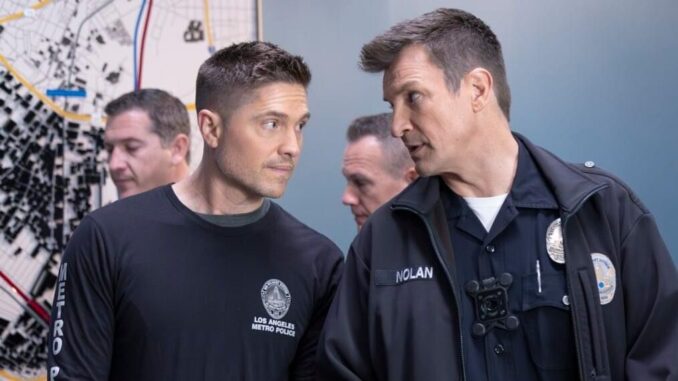
It started with a single, grainy black-and-white photo. A somber caption followed: “Gone too soon. We will miss you, Nathan.” Within sixty minutes, my own newsfeed was a graveyard of “RIP” emojis and crying face stickers. By hour three, the digital world was in a full-blown panic. But here’s the kicker—Nathan Fillion was perfectly fine, probably sipping a coffee or reading a script in Los Angeles.
We’ve all seen it happen, right? One minute you’re looking at pictures of your cousin’s new golden retriever, and the next, you’re mourning a TV icon who isn’t actually dead. The recent hoax involving a star from The Rookie isn’t just a prank; it’s a terrifyingly efficient case study in how misinformation survives and thrives in 2026. Why do we fall for it? And how does a lie travel halfway around the world before the truth even gets its boots on?
🕵️ The Anatomy of a Digital Hoax: How It Begins
Every great lie needs a grain of believability. In the case of The Rookie star, the scammers didn’t just pick a name out of a hat. They picked a beloved figure with a massive, emotionally invested fanbase.
The “Breaking News” Trigger
The post was designed to look like a legitimate news bulletin. It used bold red banners and the “Breaking News” tag that mimics major outlets like CNN or the Associated Press. Have you ever noticed how your brain goes into “high alert” mode when you see that specific shade of red? Scammers know this. They aren’t just writers; they are amateur psychologists tapping into our fight-or-flight response.
The Use of “Mourning” Aesthetics
The creators of this rumor used “memorial” styling—think candles, doves, and filters that make a vibrant actor look like a ghost from the past. It’s a visual shorthand that tells our brain “be sad” before we even read a single word. It’s the digital equivalent of a funeral dirge playing in the background.
🚀 The 3-Hour Explosion: A Timeline of Chaos
Three hours. That’s all it took to reach millions. If you tried to market a legitimate product that fast, you’d need a billion-dollar budget. For a lie? It’s free.
Hour 1: The Initial Spark
In the first hour, the post lived in obscure Facebook groups—fan clubs for The Rookie and general TV enthusiast pages. These are “echo chambers” where people are already primed to react emotionally to news about their favorite characters.
Hour 2: The Momentum Phase
By the second hour, the algorithm took over. Facebook’s “engagement” metrics saw people commenting “No!” and “Tell me this isn’t true!” and interpreted that as “This is great content! Show it to more people!” It’s a tragic irony: the more we try to debunk a lie in the comments, the more the platform helps it spread.
Hour 3: The Peak Panic
By the third hour, the rumor jumped platforms. It hit X (formerly Twitter) and TikTok. At this point, the “Truth Decay” was complete. People weren’t even looking at the original source anymore; they were just sharing the news because they saw other people sharing it. It’s like a digital game of “Telephone,” but with much higher stakes.
🧠 The Psychology of the “Share”: Why We Click
Why did you share that post without checking a second source? Don’t feel bad; it happens to the best of us. Our brains are hardwired for tribalism and empathy.
The Need to Be First
There is a strange social currency in being the person who breaks news to your friend group. We want to be the “informed” one. In 2026, where attention is the new gold, being the first to post “RIP Nathan” feels like an important social contribution.
Emotional Hijacking
Misinformation works because it bypasses the logical part of our brain (the prefrontal cortex) and goes straight for the emotional center (the amygdala). When we are shocked or saddened, our “fact-checking” filter turns off. It’s like trying to do math while a tiger is chasing you—your brain just isn’t focused on the numbers.
🛑 The Dark Reality: Who Profits from the Lie?
You might ask, “Why would someone bother making this up?” It isn’t just for a laugh. There is a dark, lucrative industry behind these death hoaxes.
Clickbait and Ad Revenue
Most of these viral posts lead to a third-party website that is absolutely plastered with ads. Each time a grieving fan clicks to “read the full story,” a scammer in a different time zone makes a few cents. Multiply that by a million shares, and you’re looking at a very profitable morning’s work.
Malware and Phishing Traps
Even worse, some of these links are digital landmines. They might prompt you to “log in” to view a video, effectively stealing your Facebook credentials. Or, they might download a “media player” that is actually spyware. That “RIP” post was actually a Trojan Horse.
📡 The Role of the Facebook Algorithm
We have to talk about the elephant in the room: the platform itself. Facebook is built for speed, not necessarily for accuracy.
The “Engagement over Everything” Model
The algorithm is a machine that craves heat. A post that gets 10,000 comments in ten minutes is “hot.” The machine doesn’t care if those comments are people screaming that the post is a lie. To the algorithm, a comment is a comment.
H3: The Failure of AI Fact-Checking
While Meta (Facebook’s parent company) uses AI to flag misinformation, the scammers are getting smarter. They use “leetspeak” (replacing letters with numbers) or hide text inside images to bypass the AI’s “reading” capabilities. It’s a constant cat-and-mouse game where the mouse currently has a head start.
👮 Case Study: The Specific Impact on ‘The Rookie’ Fandom
The Rookie has a particularly tight-knit community. Because the show focuses on themes of heroism and community, the fans feel a deep personal connection to the cast.
The “Chenford” and “Nolan” Connection
When the rumor hit, it specifically targeted fans who have spent years rooting for these characters. It wasn’t just a “celebrity” death; it felt like losing a mentor or a friend. This deep emotional hook is exactly what allowed the rumor to bypass common sense.
The Cost to the Real People Involved
Imagine being Nathan Fillion’s mother or best friend and seeing that headline before he has a chance to answer your text. These hoaxes have real-world psychological costs. They force publicists, managers, and the stars themselves to spend their day “proving” they are alive.
🛡️ How to Spot a Death Hoax in 3 Seconds
How do we stop this from happening again? We need to become digital detectives.
Check the Source URL
If the link isn’t from a household name (Variety, Hollywood Reporter, CNN, BBC), it’s probably fake. A site called “BreakingNews24-Daily.co” is not a legitimate news source. It’s a scammer in a trench coat.
Look for the “Verified” Checkmark
Go directly to the actor’s official Instagram or X account. If they passed away, their official page—or the show’s official page—will be the first to post a tribute. If Nathan Fillion is posting a picture of his lunch two hours after the “death” report, you’ve got your answer.
The “Google Test”
Open a new tab and type the actor’s name followed by “death.” If only one random Facebook post is talking about it, it didn’t happen. A major star passing away would be the lead story on every news site on the planet within five minutes.
⚖️ The Future of Truth in the Age of 2026
As we move further into the late 2020s, technology like “Deepfakes” will make these rumors even harder to spot. Soon, it won’t just be a photo; it will be a video of a news anchor announcing the death.
H3: The Need for Digital Literacy
We need to teach digital literacy in schools the same way we teach reading and writing. Understanding how to verify a source is now a survival skill.
H3: Holding Platforms Accountable
At some point, we have to ask if platforms like Facebook should be held liable for the “viral spread” of harmful lies. If a newspaper printed a fake death announcement, they’d be sued for libel. Why should social media be any different?
💡 Conclusion: The Power is in Your Thumb
The next time you see a shocking headline about a star from The Rookie or any other show, take a breath. Don’t let the “Breaking News” banner hijack your heart. Remember that in the digital age, a “Share” is an endorsement of truth. By taking ten seconds to verify, you aren’t just protecting your friends from a lie; you’re starving the scammers of the attention they crave. Let’s keep the drama on the screen where it belongs and leave the real-world rumors in the trash bin of history. Nathan Fillion is alive, The Rookie is still filming, and your newsfeed deserves better than a cheap hoax.
❓ 5 Unique FAQs After The Conclusion
Q1: Why did this specific rumor target “The Rookie” cast?
A1: Scammers target shows with high “active” engagement. The Rookie has a very vocal fanbase that interacts heavily on social media, making it the perfect “test kitchen” for a viral rumor.
Q2: Can I get a virus from just looking at the Facebook post?
A2: Usually, no. The danger lies in clicking the link attached to the post. That’s where the malware or phishing scripts usually live.
Q3: What should I do if I already shared the fake post?
A3: Delete it immediately and post a correction. This helps “break” the algorithm’s momentum and informs your friends that the news was a hoax.
Q4: Has Nathan Fillion ever responded to these hoaxes?
A4: Many stars, including Fillion, have used humor to debunk rumors, often posting “proof of life” photos with a witty caption. It’s their way of taking the power back from the trolls.
Q5: Is it illegal to start a death hoax?
A5: While it’s morally reprehensible, it’s often a legal gray area unless it involves direct fraud, harassment, or threats. However, platforms can—and do—ban accounts that repeatedly spread misinformation.