For fans of the “Leone-verse,” the town of Edgewater, California, feels like a real place you could visit. It’s a world of towering redwoods, misty mornings, and rustic storefronts where the drama of Fire Country and its high-stakes spinoff, Sheriff Country, unfolds. However, the most shocking secret of the franchise isn’t hidden in a plot twist—it’s hidden in the geography. While the two shows share a fictional zip code, they are actually filmed on opposite sides of North America.
A Tale of Two Cities
In a move that defies the standard Hollywood “spinoff” playbook, Sheriff Country does not share a backlot with its predecessor. While Fire Country has called Vancouver, British Columbia, home since its inception, Sheriff Country made a massive 2,100-mile leap across the continent to film in Toronto, Ontario.
The reason for this “Great Canadian Divide” is surprisingly personal. The series lead, Morena Baccarin (who plays Sheriff Mickey Fox), is a New York City resident. To balance the demands of a leading role with her family life, production was moved to the East Coast. This shorter commute allows Baccarin to fly home in under two hours, but it creates a massive challenge for the production team: how do you make the flat landscapes of Ontario look like the rugged mountains of Northern California?
Transforming Ontario into California
The magic of Sheriff Country lies in its ability to find “Edgewater” in the most unexpected places. If you find yourself wandering through the suburbs of Toronto, you might stumble upon some of the show’s most iconic locations.
-
Downtown Milton as “Main Street”: Much of the small-town charm we see on screen is found in Milton, Ontario. The production team carefully redresses local shops with California flags and “Edgewater County” signage. To fix the lack of mountains, digital artists use high-end CGI to superimpose the Cascades over Ontario’s flat horizon during post-production.
-
The Historic Peel Art Gallery (Brampton): For the legal drama that frequently pulls Mickey Fox into court, the show utilizes the Peel Art Gallery, Museum and Archives (PAMA) in Brampton. This historic building actually served as a real courthouse and jail in the 1800s, providing an authentic, gritty atmosphere that perfectly matches the show’s aesthetic.
-
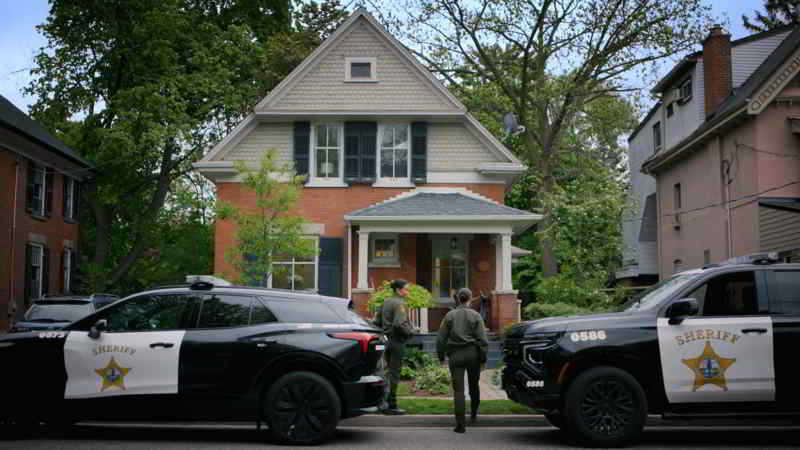
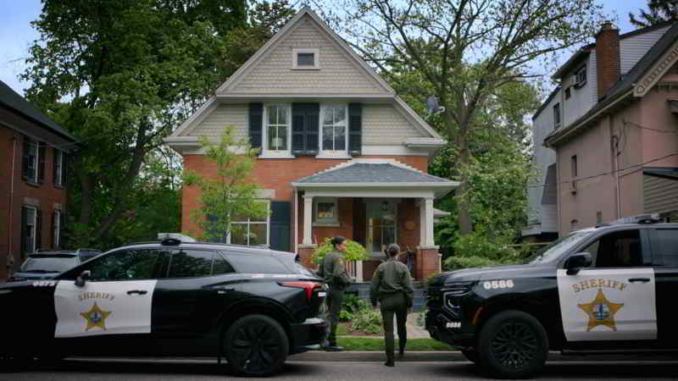
Mickey’s Iconic Yellow House: The residence of Sheriff Fox is a real home in Brampton. Interestingly, the house has its own Hollywood pedigree; it was previously used in the filming of the horror series Welcome to Derry.
-
The Halton Conservation Building: The exterior of the Edgewater County Sheriff’s Department is actually located in Lowville. The rustic wood and stone architecture blend seamlessly with the established look of the fire stations seen in Vancouver.
The “Crossover” Logistics
The distance between the two sets makes crossovers—the lifeblood of any shared universe—incredibly difficult. When stars like Max Thieriot (Bode) or Diane Farr (Sharon) appear on Sheriff Country, they aren’t just walking across a studio lot; they are taking a five-hour cross-country flight.
To make this work, the writers and producers employ a “block-shooting” strategy. Guest stars will fly into Toronto and film all of their appearances for several episodes in a single, intense week. For the actors, it’s a whirlwind of travel, but for the fans, the result is a seamless continuity that makes Edgewater feel like one big, connected community.
Why the Location Matters
While the change in scenery was born out of necessity, it has given Sheriff Country its own unique visual identity. Toronto’s distinct seasons and historic architecture provide a slightly sharper, more urban-adjacent “procedural” feel compared to the wilderness-heavy visuals of Fire Country.
As the show heads into its second season in 2026, the production team has mastered the art of “California Dreaming” in the Great Lakes region. They’ve proven that with a bit of CGI, some clever set dressing, and a lot of heart, you can build a beloved fictional world anywhere—even two thousand miles away from where it started.