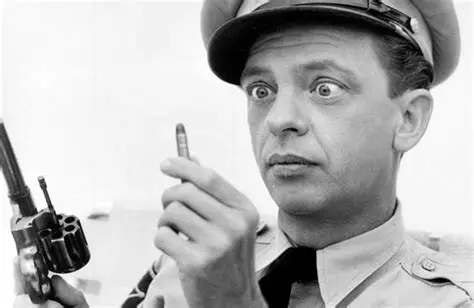
To millions of viewers, Don Knotts was pure comedy.
Nervous energy. High-pitched panic. Perfectly timed fear.
As Barney Fife on The Andy Griffith Show, he became one of the most beloved comedic characters in television history. But away from the laugh track, Don Knotts lived a life far more complicated—and far lonelier—than most fans ever realized.
A Childhood Marked by Fear and Instability
Don Knotts was born in 1924 in Morgantown, West Virginia, into a deeply troubled household. His father struggled with alcoholism and mental illness, and his mother lived in constant fear.
Comedy wasn’t just a talent—it became a survival mechanism.
From a young age, Knotts learned that making people laugh could ease tension, soften pain, and offer a sense of control in an otherwise unstable world. That nervous energy audiences later adored wasn’t an act—it was rooted in real experience.
Fame Didn’t Bring Emotional Security
When The Andy Griffith Show became a massive hit, Knotts finally achieved what many performers dream of: recognition, financial stability, and creative success.
Yet fame didn’t quiet his anxiety.
Off screen, Knotts was known to be:
-
Intensely private
-
Emotionally guarded
-
Deeply insecure about his own worth
He often worried that his success was temporary—that audiences would stop laughing, that he would be replaced, that he wasn’t truly talented outside one role.
Ironically, the man who played fear so convincingly never fully escaped it.
Marriages and the Search for Stability
Don Knotts was married three times, and each relationship reflected his ongoing struggle to find emotional balance.
Those close to him described Knotts as kind, generous, and gentle—but also distant and difficult to fully know. His need for reassurance, combined with the pressures of fame, made long-term relationships challenging.
Love, for Knotts, was something he wanted deeply—but never quite trusted.
Typecast and Trapped
Barney Fife made Don Knotts famous—but it also boxed him in.
Even after leaving The Andy Griffith Show, Knotts struggled to escape the image of the nervous, jittery sidekick. He found success in films and later sitcoms, but the shadow of Barney never fully disappeared.
Privately, this frustrated him. He wanted to be respected as an actor, not just remembered as a character.
Laughter as Armor
Friends later noted that Knotts often used humor defensively—not to entertain, but to protect himself. Jokes filled silences. Laughter softened conversations. Comedy became armor.
The same trait that made him brilliant on screen made intimacy off screen difficult.
A Gentle Legacy, Not a Loud One
Don Knotts never chased scandal. He avoided Hollywood excess. He didn’t cultivate a public persona beyond his work.
Instead, he left behind something quieter:
a body of work that made people feel safe enough to laugh.
Behind Barney Fife’s panic was a man who understood fear intimately—and turned it into joy for others.
The Final Irony
Don Knotts spent his career playing a man terrified of the world.
In real life, he was simply trying to feel at peace within it.
And perhaps that is why his comedy still resonates—because it wasn’t manufactured. It was honest.