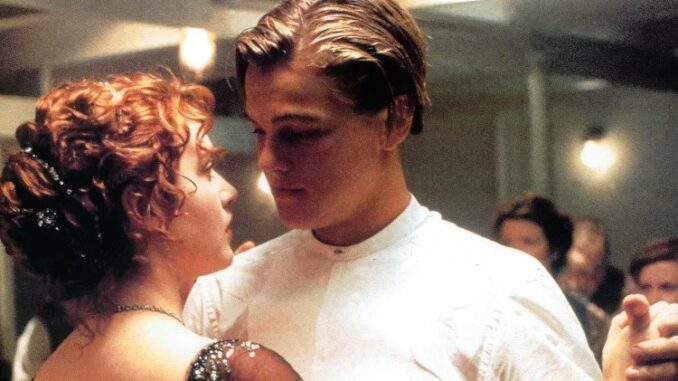
🗺️ The Crossroads of Stardom: A Career-Defining Choice
Imagine standing at a crossroads in your career, looking down two paths that both promise cinematic immortality, yet in radically different ways. One path leads to a massive, expensive, historical epic helmed by a visionary (and famously demanding) director, guaranteeing global recognition and immense financial reward. The other path promises an intimate, critically acclaimed, and emotionally complex role in an edgy, character-driven masterpiece from a brilliant independent filmmaker.
In 1997, that was the precise dilemma facing a young, already-acclaimed actor named Leonardo DiCaprio. The two films fighting for his time were James Cameron’s Titanic and Paul Thomas Anderson’s Boogie Nights. We all know which path he chose, but the question of “what if” has haunted Hollywood enthusiasts and cinephiles for decades. Recently, DiCaprio himself weighed in on the legendary decision, confirming what many already suspected: he has “no regrets” about choosing to star as Jack Dawson in the cinematic behemoth that became Titanic.
This admission isn’t just a casual celebrity quote; it’s a powerful statement about the strategic architecture of a career, the calculated risk of mass appeal versus niche artistry, and the fundamental differences in the types of cinematic legends actors strive to become.
🚢 The Titanic Phenomenon: Choosing Global Icon Status
Choosing Titanic was choosing a global phenomenon. It was a massive, expensive gamble, and the stakes could not have been higher. But for DiCaprio, the choice was about maximizing his reach and becoming an undeniable presence on the world stage.
The James Cameron Magnetism
James Cameron is a director who doesn’t just make films; he engineers cultural events. His track record (Terminator, Aliens, T2) guaranteed that Titanic would be a technical and narrative spectacle.
-
The Scale and Scope: DiCaprio knew that starring in Titanic meant starring in a film of unprecedented scale. The role of Jack Dawson—the charming, working-class artist who sweeps the aristocratic Rose off her feet—was the emotional anchor for a story that spanned history, romance, and tragedy. It was a role designed for maximum global connection.
-
The Global Audience: Titanic wasn’t just a movie; it was a phenomenon that captured the hearts of people across every demographic, continent, and generation. DiCaprio understood that this level of exposure—the posters on teenagers’ walls, the constant media coverage—would instantly transform him from a respected young actor into a global icon.
H3: The Calculated Career Pivot
Before Titanic, DiCaprio was known for gritty, challenging roles in films like What’s Eating Gilbert Grape and The Basketball Diaries. While critically acclaimed, these roles appealed to a niche, educated audience. Titanic was his pivot to commercial superstardom. It provided the financial freedom and the industry leverage that allowed him to be selective for the next two decades, ultimately enabling him to return to challenging artistic projects, but on his own terms.
🌟 The Boogie Nights Alternative: The Path of Cult Artistry
Now, let’s look at the other path. Paul Thomas Anderson’s Boogie Nights is widely considered a cinematic masterpiece, a sprawling, compassionate, and intense look at the adult film industry in the 1970s. DiCaprio was Anderson’s first choice for the central role of Dirk Diggler (a role ultimately played brilliantly by Mark Wahlberg).
The Artistic Appeal: A Different Kind of Legacy
Choosing Boogie Nights would have aligned DiCaprio with the emerging movement of independent auteurs who prioritize deep character studies over blockbuster budgets.
-
Actor’s Showcase: The role of Dirk Diggler—the naive busboy who transforms into a porn star with a massive ego—is an absolute acting showcase, demanding vulnerability, comedy, and ultimate tragedy. It’s the kind of role that burns itself into the critical consciousness forever.
-
The P.T.A. Factor: Working with Paul Thomas Anderson, even in his early career, was a guarantee of uncompromising artistic quality. It would have solidified DiCaprio’s identity as an actor’s actor willing to venture into the cinematic fringe.
H4: Why Boogie Nights Was Never the Right Fit
While Boogie Nights earned critical adoration, it was never destined for Titanic-level success. It was too long, too niche, and too explicit for the mass market.
-
Niche Audience: Starring in Boogie Nights would have cemented his status as a brilliant, edgy actor, but likely would have relegated him to the “cult film” category for a while longer.
-
Lack of Leverage: Had he chosen Boogie Nights, he wouldn’t have gained the immediate, massive box-office leverage that Titanic provided, leverage that later allowed him to champion projects with Scorsese and other top directors.
⚖️ “No Regrets”: The Justification of Global Impact
DiCaprio’s recent statement confirming “no regrets” speaks volumes about his professional priorities. The justification is rooted in the outcome: Titanic made him untouchable.
The Power of Control and Selectivity
DiCaprio used the power gained from Titanic‘s success as a shield and a sword.
-
The Shield: The financial success of Titanic allowed him to effectively shield himself from having to take on roles he didn’t believe in, securing his financial future and artistic freedom for decades.
-
The Sword: He used his box-office power to champion difficult, non-commercial projects and work almost exclusively with cinematic masters like Scorsese, Tarantino, and Nolan. Without Titanic‘s billions, would he have had the same pull? Unlikely.
The true regret, for an actor as ambitious as DiCaprio, would have been missing the opportunity to gain that supreme professional control.
🤝 The Unbreakable Bond: DiCaprio and Artistic Integrity
It’s crucial to acknowledge that the Boogie Nights path—the path of high artistic integrity—is the one DiCaprio eventually returned to, proving he didn’t sacrifice his artistic soul by choosing Titanic. He just deferred it.
H3: The Return to Character Work
Look at his filmography post-Titanic: Gangs of New York, The Aviator, The Departed. These are deeply complex, character-driven roles that demand the kind of artistry Boogie Nights would have offered.
-
Strategic Delay: By choosing Titanic first, he didn’t abandon the Paul Thomas Anderson school of acting; he simply ensured that when he did return to that style of performance, he did so from a position of absolute power, allowing him to choose the best directors and the most challenging scripts without financial anxiety.
H4: The Mark Wahlberg Comparison
Mark Wahlberg’s career was fundamentally shaped by the Dirk Diggler role. While it was a massive critical success for Wahlberg, he never achieved the same level of consistent, unassailable global status as DiCaprio. This is why DiCaprio’s “no regrets” statement rings true: he wouldn’t trade his current position for anyone else’s, not even the career that came out of the role he passed up.
🎬 The Butterfly Effect: How DiCaprio’s Choice Reshaped Hollywood
DiCaprio’s decision didn’t just affect his career; it sent ripples through Hollywood.
-
The Rise of Blockbuster Romances: Titanic proved that massive-budget special effects could be paired with intimate, character-focused romance, essentially setting the stage for decades of event cinema that blends action and heart.
-
The Star-Making Machine: The decision proved that a young, serious actor could pivot to mega-stardom and still maintain critical respect. This gave other young actors a blueprint for managing ambition and artistry.
DiCaprio’s career is a testament to the fact that sometimes, the seemingly commercial choice is, in the long run, the most powerful artistic move of all.
🔮 Final Verdict: The Wisest Career Move
If you ask any professional in the film industry, they will confirm that choosing Titanic over Boogie Nights was the single wisest career move Leonardo DiCaprio could have made. Titanic gave him the universal key to open every door in Hollywood. Boogie Nights would have given him a very prestigious key to one specific, beautiful room. DiCaprio chose the entire mansion, and he has since decorated it with the finest artistic achievements.
Final Conclusion
Leonardo DiCaprio’s definitive statement that he holds “no regrets” about choosing the global phenomenon of Titanic over the cult artistry of Boogie Nights offers a clear window into his strategic genius. While starring as Dirk Diggler would have secured him immediate critical acclaim and an acting showcase, choosing Jack Dawson provided him with unparalleled international leverage, box-office power, and financial independence. This power allowed him to spend the next two decades partnering exclusively with cinematic masters like Martin Scorsese, effectively returning to the high-art path, but from a position of ultimate control. DiCaprio’s decision was not a rejection of art, but a calculated, long-term acquisition of the power to make any art he desired.
❓ 5 Unique FAQs After The Conclusion
Q1: Which actor ultimately played the role of Dirk Diggler in Boogie Nights?
A1: The role of Dirk Diggler, originally offered to Leonardo DiCaprio, was ultimately played by Mark Wahlberg, which became a pivotal, Oscar-nominated role in Wahlberg’s career.
Q2: Was Boogie Nights a commercial success despite DiCaprio passing on the lead role?
A2: Boogie Nights was a critical success and did well financially relative to its smaller budget, grossing about $43 million domestically. However, its box office was dwarfed by Titanic, which went on to earn over $2.2 billion globally.
Q3: Did Leonardo DiCaprio and Paul Thomas Anderson ever collaborate on a film later in their careers?
A3: No. Despite the initial interest in Boogie Nights, Leonardo DiCaprio and Paul Thomas Anderson have not yet collaborated on any film project since then.
Q4: How old was Leonardo DiCaprio when Titanic was released in 1997?
A4: Leonardo DiCaprio was approximately 23 years old when Titanic premiered in December 1997, solidifying his transition into a global superstar.
Q5: What was the main reason DiCaprio hesitated about taking the role in Titanic initially?
A5: DiCaprio reportedly hesitated because the role of Jack Dawson was less complex and morally challenging than the edgy, dark characters he preferred at the time. He was concerned about the film’s massive commercial nature overshadowing the emotional story.