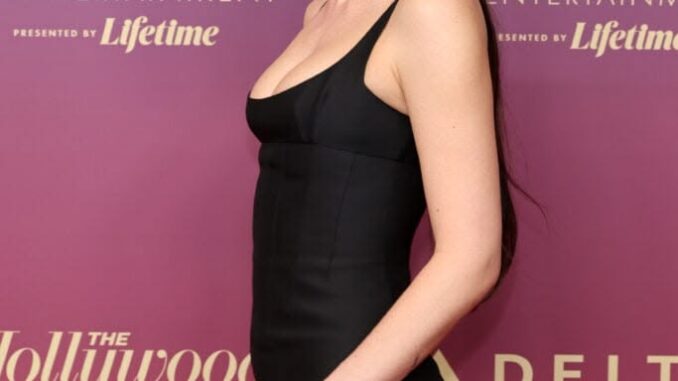
Dakota Johnson has built a career defined by bold choices and quiet evolution. From her breakout in The Social Network to the global spotlight of the Fifty Shades trilogy, and into acclaimed indie work like The Lost Daughter, Cha Cha Real Smooth, and recent hits such as Materialists (2025), she has consistently chosen projects that probe vulnerability, desire, and human connection. In recent reflections—amid press for Materialists and festival appearances in late 2025 and early 2026—Johnson has shared how time and maturity have reshaped her perspective on those earlier roles, particularly the ones that launched her into superstardom.
The Fifty Shades films remain the most defining chapter. Johnson signed on at 23 for what she describes as a “very different version” of the story than what ultimately unfolded. In interviews revisited and echoed in 2025 discussions, she has called the production “psychotic,” “mayhem all the time,” and marked by constant creative battles—largely due to author E.L. James’s heavy involvement and frequent script overhauls. The first film, directed by Sam Taylor-Johnson, felt “extraordinary” to her, but the sequels shifted tone under new direction. She has been candid about the challenges: physical strain from repetitive intimate scenes, emotional exposure on closed sets, and the pressure of turning erotic fiction into cinema amid scrutiny.

Yet, looking back now, Johnson expresses no regret. “If I had known at the time that’s what it was going to be like, I don’t think anyone would’ve done it,” she said in earlier profiles, adding that the experience was “weird. So, so weird.” But she also acknowledges its gifts: career acceleration, financial security, and the chance to work with Jamie Dornan, whom she calls a supportive partner in navigating the chaos. More importantly, maturity has brought nuance. She now sees Anastasia Steele not just as a cultural lightning rod but as a character who allowed her to explore power dynamics, consent, and female desire in a mainstream space—albeit imperfectly. The role’s intensity taught her resilience and boundaries, lessons that inform her current work.
In recent interviews, including those tied to Materialists—a romantic comedy where she plays a matchmaker entangled in modern love triangles—Johnson has highlighted growth. She appreciates how past vulnerability paved the way for more layered portrayals. Films like Suspiria, Persuasion, and The Lost Daughter let her delve into complexity without the blockbuster glare, and she views them as extensions of what Fifty Shades began: honest examinations of intimacy and self-discovery. “Everything turns out the way it’s supposed to,” she has reflected, framing the trilogy as a formative, if chaotic, stepping stone.
This shifted lens extends beyond Fifty Shades. Johnson has spoken about embracing authenticity over perfection, influenced by her Hollywood lineage (daughter of Don Johnson and Melanie Griffith) and personal experiences. In 2025 festival talks, such as at the Red Sea International Film Festival, she discussed Hollywood’s “grim” state but found renewed inspiration elsewhere, tying it to a broader reevaluation of her path. She no longer sees early roles solely through the lens of criticism or memes; instead, she recognizes their role in building her voice as an actress and producer.
Today, Johnson’s career reflects deliberate curation: producing through her company, selecting scripts that challenge norms, and leaning into romance with depth rather than sensationalism. Materialists, praised for her nuanced performance, exemplifies this—exploring ambition, exes, and imperfect love in a witty, contemporary way. She sees her past not as baggage but as evolution: the young woman who endured exposure has become a confident artist who owns her narrative.
As she continues blending indie prestige with accessible storytelling, Johnson’s reflections reveal an actress at peace with her journey. The roles that once overwhelmed now illuminate her growth, proving that perspective, like performance, deepens with time.