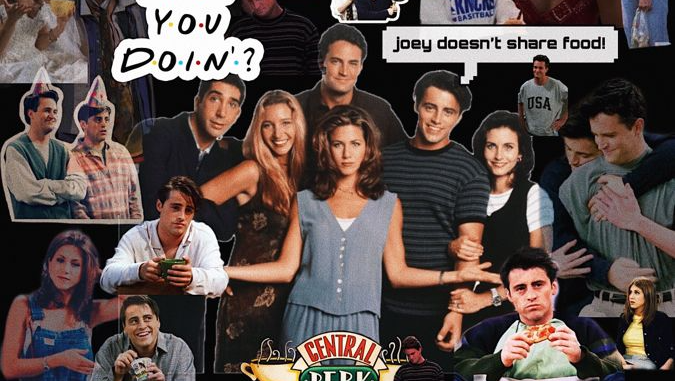
For more than two decades, Friends hasn’t just been a sitcom. It’s been comfort food television. A cultural time capsule. A show people return to during heartbreak, boredom, or nostalgia overload.
And now? It’s back at the center of a conversation no one saw coming.
In early 2026, renewed speculation about a possible continuation—or reinvention—of Friends has ignited intense debate across social media and entertainment circles. No official green light. No confirmed scripts. Just carefully worded interviews, nostalgic cast appearances, and one particular shift that changed everything.
Let’s unpack why the fandom is louder than it has been in years.
The Reunion That Reopened the Door
When the cast reunited for the unscripted special Friends: The Reunion, it was meant to be a celebration—not a launchpad.
But time has a funny way of reframing moments.
The emotional weight of that reunion, especially seeing Jennifer Aniston, Courteney Cox, Lisa Kudrow, Matt LeBlanc, and David Schwimmer back together on the recreated set, felt unfinished to many viewers. It wasn’t closure. It was a reminder of chemistry that still works.
And after the heartbreaking loss of Matthew Perry in 2023, that reminder carries even more emotional gravity.
The Matthew Perry Factor
Any modern conversation about Friends now carries an unavoidable question:
How could the story move forward without Chandler Bing?
Perry’s passing reshaped the emotional landscape of the fandom. Interviews from the remaining cast over the past year have reflected both grief and reflection. Several have spoken about honoring his legacy rather than replacing it.
That has led to speculation that if a continuation ever happens, it would not be a traditional reboot. It would be a tribute. A next-generation evolution. Something that acknowledges absence rather than pretending it never existed.
And that possibility alone has divided fans.
Why 2026 Feels Different
For years, the cast firmly shut down revival rumors. “We ended it perfectly,” they said. “It’s done.”
But recently, the tone has softened.
In red-carpet conversations and press interviews, phrases like “never say never” and “if the idea is right” have replaced the absolute no’s of the past. That subtle linguistic shift has been enough to send the internet into full detective mode.
Streaming numbers also play a role. Despite ending in 2004, Friends remains one of the most-watched sitcoms globally. Its licensing battles between platforms proved just how valuable the brand still is.
In today’s franchise-driven industry, intellectual property rarely sleeps forever.
The Cast at the Center of the Storm
The most discussed figure right now? Jennifer Aniston.
Her recent comments about missing the “daily rhythm” of ensemble comedy have been widely interpreted as openness to something collaborative again. Meanwhile, Courteney Cox has expressed affection for revisiting Monica—if the tone felt meaningful.
David Schwimmer has been the most cautious, emphasizing that the ending remains sacred. Lisa Kudrow has suggested that a story focusing on the characters’ children might be more appropriate than rehashing Central Perk nostalgia.
That idea—next generation—has caught fire online.
A Next-Generation Twist?
Imagine Emma, Ben, Erica, and Jack as adults navigating a radically different New York. Social media pressures. Career instability. Modern dating culture.
The original group appearing as mentors, parents, or recurring anchors rather than central leads.
It wouldn’t erase the past. It would build on it.
And it would allow the show to evolve rather than imitate itself.
Some fans love this concept. Others argue that Friends belongs to a specific era—the pre-smartphone, pre-streaming, pre-everything world that gave it its charm.

Nostalgia vs. Risk
Reboots are notoriously dangerous.
For every revival that thrives, another collapses under expectations. The original Friends finale drew over 50 million viewers in the United States alone. That kind of cultural moment is nearly impossible to replicate.
So the question becomes:
Do you protect the legacy?
Or do you expand it?
It’s the same dilemma long-running franchises face across television and film. End perfectly—or risk imperfection in pursuit of evolution.
The Streaming Chessboard
Behind the emotional debate lies corporate strategy.
Streaming platforms are hungry for built-in audiences. A new chapter of Friends would be a global event overnight. Merchandise, media coverage, nostalgia marketing—virtually guaranteed success at launch.
But creative approval remains in the hands of the original creators, David Crane and Marta Kauffman, who have consistently prioritized integrity over profit.
If they say yes, it won’t be casual.
Why the Fandom Is So Divided
This isn’t just about episodes. It’s about memory.
Friends represents a particular feeling—Thursday nights, laugh tracks, a simpler pace of life. Revisiting it risks disrupting that emotional time capsule.
Yet for younger audiences discovering the show for the first time, the idea of seeing these characters older and wiser feels compelling rather than sacrilegious.
The debate isn’t really about a reboot.
It’s about ownership of nostalgia.
Reading Between the Lines
No scripts have been confirmed. No production dates announced. No official revival declared.
And yet, the energy surrounding the possibility feels louder than ever.
Cast members are appearing together more frequently. Anniversary celebrations continue to trend. Interviews keep circling back to “what if.”
Ambiguity fuels conversation. Conversation fuels demand.
The Legacy Question
Few sitcoms achieve what Friends did:
Global syndication dominance
Endless meme culture longevity
Multi-generational appeal
Career-defining roles for all six leads
Its influence on ensemble comedy is undeniable.
That’s precisely why any movement—real or rumored—feels seismic.
So… Is Something Actually Happening?
Here’s the honest truth: nothing official.
But something is shifting.
The language has changed. The tone has softened. The possibility is no longer dismissed outright.
In an industry built on revivals, reunions, and reinventions, silence doesn’t always mean “no.” Sometimes it means “not yet.”
The Crossroads Moment
If a continuation happens, it won’t look like 1994. It can’t.
It would be older. Reflective. Possibly bittersweet. Almost certainly shaped by Matthew Perry’s absence.
And that emotional weight might be exactly what gives it purpose.
Conclusion: The End of a Perfect Goodbye—or the Beginning of a New One?
More than twenty years after its finale, Friends remains culturally alive. The renewed revival whispers of 2026 have reignited debate about legacy, loss, and the risk of revisiting something iconic.
Is this just another cycle of nostalgia-fueled rumor?
Or are we standing on the edge of television’s most talked-about comeback?
One thing is certain:
If those six orange couch silhouettes ever return in any form, the world will be watching.
And this time, it won’t just be about laughs.