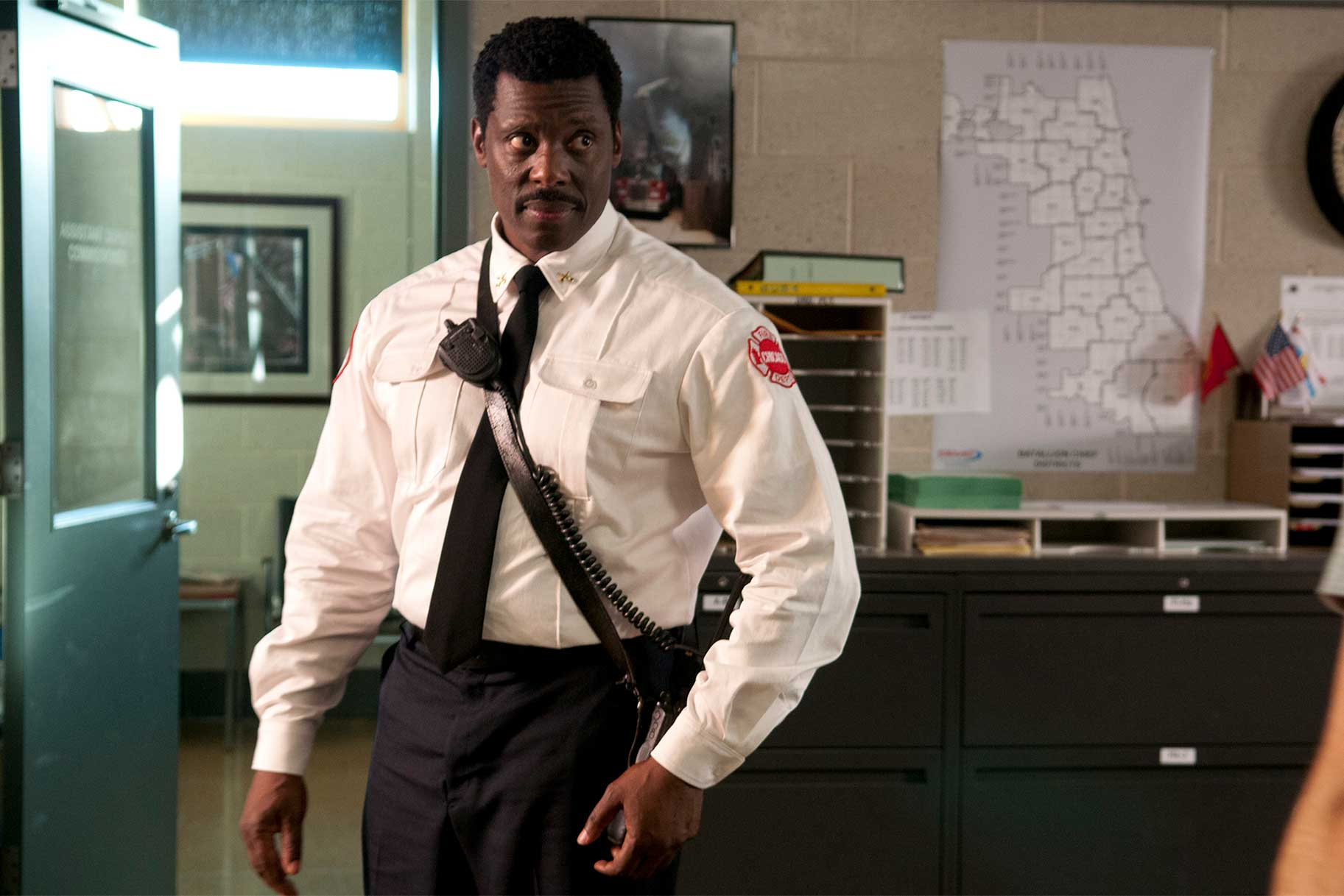
The heavy scent of diesel and the rhythmic hum of the firehouse are the backdrop to a legacy defined by one man’s unwavering moral compass, but the latest narrative shift in Chicago Fire has placed Deputy District Marshal Wallace Boden in a psychological vice. For over a decade, Eamonn Walker has portrayed the patriarch of Firehouse 51 with a gravelly authority and a protective instinct that has shielded his crew from both physical flames and political firestorms. However, the current season has introduced a catastrophic scenario that transcends the typical tactical emergency, forcing Boden to face the toughest call of his career—a decision where the lives of his firefighters are pitted against a devastating systemic failure.
The brilliance of Wallace Boden’s character has always been his role as the anchor of the One Chicago universe. He is the man who balances the impulsive heroism of Kelly Severide and the gritty determination of Stella Kidd with a wisdom born of decades on the front lines. In this newest high-stakes arc, a massive multi-agency response to a high-rise disaster goes horribly wrong, leaving Boden at the command post with incomplete information and a rapidly deteriorating structural environment. The conflict arises when he is ordered by high-ranking city officials to prioritize the preservation of a specific infrastructure over the immediate extraction of his own team. This puts Boden in a direct collision course with the brass, challenging his oath to his city and his loyalty to the family he built at 51.
Eamonn Walker delivers a powerhouse performance during these sequences, utilizing his commanding presence to show the cracks in a previously impenetrable facade. We see the physical toll of command—the way he grips the radio, the silent calculations behind his eyes, and the visceral pain of hearing Mayday calls from his own people while being told to hold his position. This isn’t just a professional crisis; it is a spiritual one. For a man who has always believed in the purity of the mission, being forced to weigh the value of a human life against a political or economic directive is a burden that threatens to break him. The “toughest call” isn’t just about the tactical move; it is about whether he can live with the consequences once the smoke clears.
The internal dynamics of the firehouse are predictably strained as the crew watches their leader grapple with this impossible choice. Characters like Christopher Herrmann and Joe Cruz, who look to Boden as a surrogate father, are forced to witness a version of their chief that is uncharacteristically vulnerable. This vulnerability has humanized the leadership of the Chicago Fire Department in a way that standard procedurals rarely attempt. By placing Boden in the center of a “no-win” scenario, the showrunners are highlighting the lonely reality of command—the fact that at the end of the day, the weight of the badge rests on one pair of shoulders.
Furthermore, the fallout from this decision is expected to have permanent repercussions for the hierarchy of the department. If Boden defies direct orders to save his crew, he faces a career-ending court-martial and the potential dissolution of Firehouse 51 as an independent unit. If he follows orders and a tragedy occurs, the guilt will likely drive him from the service he loves. This narrative trap is a masterclass in tension, ensuring that every briefing and every radio transmission feels like a potential turning point for the entire series. The fans are left in a state of high anxiety, knowing that the “Boden era” of the windy city might be reaching its most defining, and perhaps final, chapter.
The technical execution of these command-center scenes provides a fascinating look at the “chess match” of firefighting. While the action in the hallways of the burning building provides the adrenaline, it is the quiet intensity of Boden’s decision-making process that provides the heart. Walker’s ability to convey a sense of mounting dread through a single look or a hesitant command is what has kept the audience invested for hundreds of episodes. He has transformed a high-ranking officer into a tragic hero, a man caught between the gears of a massive machine and the people he swore to protect.
As we look toward the resolution of this harrowing arc, the legacy of Wallace Boden remains the focal point. Whether he remains at the helm or is forced to step away, his actions during this crisis will redefine what it means to lead under fire. The show has successfully proven that the most dangerous heat isn’t found in the basement of a warehouse, but in the heart of a leader forced to choose between the mission and the men. Firehouse 51 is holding its breath, and the city of Chicago is watching to see if its most resilient commander can survive his toughest call yet.