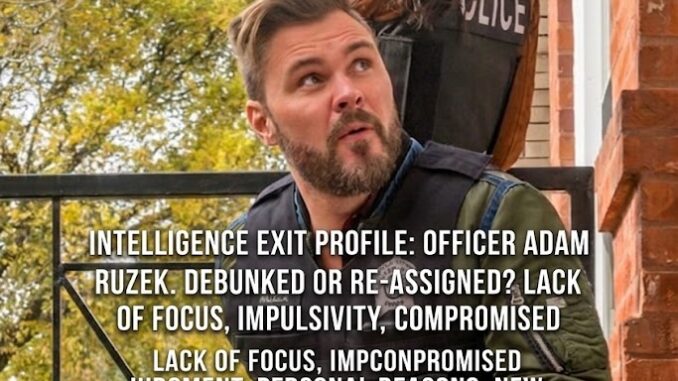
Another departure has shaken Chicago P.D., but this time, the conversation isn’t just about who left — it’s about who keeps getting left behind. As the dust settles from the latest character exit, fans are turning their attention to a frustrating pattern that’s becoming impossible to ignore: Carver may be the most consistently mistreated character in the entire series.
At first glance, the exit feels like just another emotional shake-up in a show known for its revolving door of intense storylines and character arcs. But look a little closer, and a different narrative begins to emerge — one that places Carver at the center of a cycle of missed opportunities, underdeveloped growth, and narrative neglect.
From the moment Carver was introduced, there was a sense of potential. A complex personality, a troubled past, and a clear internal struggle — all the ingredients for a compelling long-term arc. And yet, instead of fully exploring that depth, the show has repeatedly sidelined him in favor of more established characters or short-term dramatic twists.
The latest exit only reinforces that pattern.
While other characters are given emotional send-offs, layered development, and meaningful closure, Carver often finds himself stuck reacting rather than evolving. In Episode after Episode, he’s positioned as an outsider looking in — present, but rarely central. And when the story does shift toward him, it often feels temporary, quickly overshadowed by bigger plotlines or more “marketable” character dynamics.
Fans have started to notice — and they’re not staying quiet.
Across social media, discussions have exploded with viewers pointing out how Carver seems to be consistently shortchanged. Some argue that his storylines are rushed or abruptly cut off. Others highlight how his relationships, both personal and professional, never seem to get the same level of attention or payoff as those of his counterparts.
One of the biggest frustrations? The lack of continuity.
Every time Carver appears to be on the verge of real growth — whether it’s confronting his past, building trust within the team, or stepping into a stronger role — something resets the progress. It’s a cycle that leaves fans feeling like they’re watching the same version of the character over and over again, without the evolution that makes long-running TV arcs so satisfying.
The recent exit has only amplified that sentiment.
Instead of using the departure as a chance to deepen Carver’s story or give him a defining moment, the narrative once again shifts away from him. It’s subtle, but noticeable — a missed opportunity that speaks volumes about how the character is positioned within the larger ensemble.
And it raises an important question: why?
In a show that thrives on character-driven storytelling, it’s unusual for someone with as much built-in complexity as Carver to remain on the sidelines. Some fans speculate that it’s a matter of screen time competition, with limited space forcing writers to prioritize certain arcs over others. Others believe it’s a creative oversight — an underestimation of how invested viewers have become in Carver’s journey.
Whatever the reason, the impact is clear.
Carver has become a symbol of unrealized potential within Chicago P.D. — a character who could be so much more, but is repeatedly held back by inconsistent writing and narrative choices. And as more characters come and go, that contrast becomes even sharper.
What makes it even more frustrating is that the audience clearly cares.
There’s a growing demand for deeper, more meaningful storytelling around Carver. Fans want to see him challenged, yes — but also allowed to grow, to change, to lead. They want arcs that don’t just start strong, but actually go somewhere.
Because right now, it feels like he’s stuck in place while the rest of the show moves forward.
The latest exit may not have been about Carver on the surface, but its aftermath has put a spotlight squarely on him. And in doing so, it’s exposed a long-standing issue that the show can no longer quietly ignore.
If Chicago P.D. wants to maintain the emotional investment of its audience, it may need to rethink how it treats one of its most overlooked characters.
Because at this point, it’s not just a pattern — it’s a problem.
And fans are watching closely to see if anything finally changes.