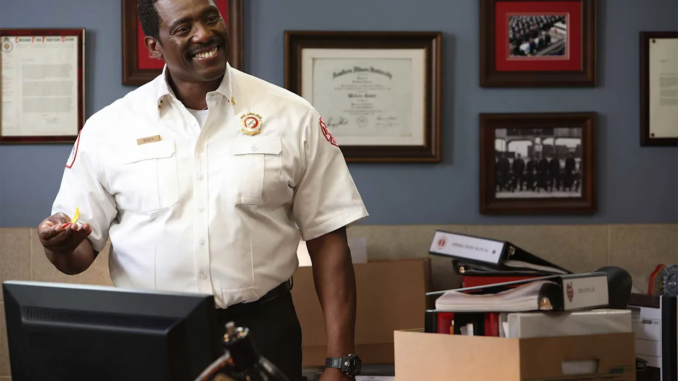
When fans think of the moral compass and the beating heart of Firehouse 51, one name immediately commands the room: Wallace Boden. For over a decade, Eamonn Walker has inhabited the role of the steadfast Battalion Chief with a level of gravitas and soul that is rarely seen in procedural television. As Chicago Fire continues to evolve through its 2026 and 2027 seasons, taking a moment to celebrate the man behind the badge is essential. Walker is not just a lead actor on a hit NBC show; he is the foundation upon which the entire One Chicago universe was built.
From the very first episode that aired years ago, Eamonn Walker established Chief Boden as a leader who leads by example rather than just by rank. His performance is defined by a unique combination of a booming, authoritative voice and a quiet, observant empathy. Whether he is standing on the sidewalk of a burning skyscraper or sitting across his desk from a struggling firefighter, Walker brings a sense of grounded reality to every scene. It is his ability to convey immense weight and responsibility with just a look that has made Boden one of the most respected characters in modern television history.
The legend of Eamonn Walker on the set of Chicago Fire extends far beyond what the cameras capture. Within the industry and among his fellow cast members, Walker is known as a mentor and a true professional. Many of the younger actors who have joined the franchise over the years credit him with setting the tone of the set. He fosters an environment of mutual respect and dedication, mirroring the very leadership qualities that Boden displays on screen. This synergy between the actor and the character is a major reason why the chemistry within Firehouse 51 feels so authentic and lived-in for the audience.
Throughout his tenure, Walker has navigated some of the most complex and heartbreaking storylines in the Dick Wolf library. We have seen Boden deal with political corruption within the department, personal health scares, the joys of late-life fatherhood, and the devastating loss of his own men. In every instance, Walker’s portrayal remains nuanced. He avoids the clichés of the tough-as-nails boss, instead showing the vulnerability and the mental toll that comes with being a first responder. This humanity is what makes the viewers so protective of him; when Boden hurts, the fans hurt with him.
As the television landscape shifts toward the 2027 broadcast cycle, the legacy of Eamonn Walker serves as a reminder of the power of consistent, high-quality character work. In an era where many shows rely on flashy gimmicks or constant cast turnovers, Walker’s steady presence has provided a sense of security for the “Chi-Hard” community. His departure from a full-time series regular role was a significant milestone for the series, yet his influence continues to ripple through every hallway of the fictional firehouse. The characters he mentored, like Christopher Herrmann and Stella Kidd, now carry the torch he lit, proving that a great leader’s impact is measured by how those they leave behind continue the mission.
Beyond the firehouse, Eamonn Walker’s career is a testament to his incredible range as a performer. From his powerful work in classic series like Oz to his Shakespearean stage presence, he has always been an actor’s actor. However, it is his decade-plus journey in the Windy City that has cemented his status as a household name. He managed to take a role that could have been a standard authority figure and turned it into a cultural icon of strength, integrity, and fatherly love. The iconic “Chief’s office” scenes have become a staple of the show, serving as the place where the most important lessons are learned and the deepest bonds are forged.
Celebrating Eamonn Walker is also about celebrating the diversity and depth he brought to the screen. As a Black man in a high-ranking leadership position on a major network drama, Boden represented progress and authority in a way that felt both earned and necessary. He navigated the racial and social complexities of the city with grace, making Boden a hero that everyone, regardless of background, could look up to. His legacy is one of breaking barriers while maintaining the highest standards of the craft.
As Chicago Fire moves into its next chapter, the shadow of Chief Wallace Boden remains long and comforting. Eamonn Walker did more than just play a part; he created a symbol of what it means to be a hero in the modern world. Whether he is appearing in a guest capacity or being mentioned in the stories of the new recruits, his spirit is baked into the DNA of the show. We celebrate a legend who taught us that the greatest fire one can light is the fire of passion, dedication, and unwavering loyalty to one’s family, both born and chosen. The sirens will continue to wail, but the echoes of Boden’s “Let’s go, 51!” will forever be the pulse of the city.