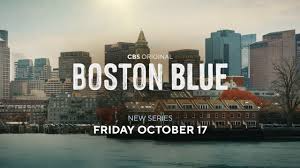
When a franchise dares to follow in the footsteps of a long-running television institution like Blue Bloods, expectations aren’t just high — they’re unforgiving. And after only three episodes, Boston Blue has already ignited fierce debate among viewers who are asking a blunt, uncomfortable question: Is this new series fundamentally missing what made its predecessor iconic?
For fourteen seasons, Blue Bloods thrived on a simple but powerful formula: family plus layered storytelling equals emotional gravity. The Reagan family wasn’t just a backdrop — they were the narrative engine. Each episode felt expansive, almost cinematic, because multiple storylines unfolded simultaneously. We followed Danny’s street-level investigations, Frank’s political chess matches as commissioner, Erin’s courtroom battles, and Jamie’s patrol duties. Often four different cases would play out in a single hour — from small neighborhood disputes to city-shaking crises.
That structural ambition created something rare in network procedural television: scale. Viewers didn’t just watch one case; they experienced the entire justice ecosystem in motion. And when those storylines intersected at the dinner table or collided unexpectedly in the field, it felt earned — organic, not engineered.
Now comes Boston Blue, the ambitious successor attempting to recreate that blend of family and law enforcement drama in a new city with a new clan. The casting choices have drawn early buzz, especially with a strong ensemble anchored by rising procedural stars and veteran television talent. Industry chatter has praised the performances, noting that the emotional beats are handled with sincerity and restraint. Early audience reactions suggest that the acting itself is not the issue.
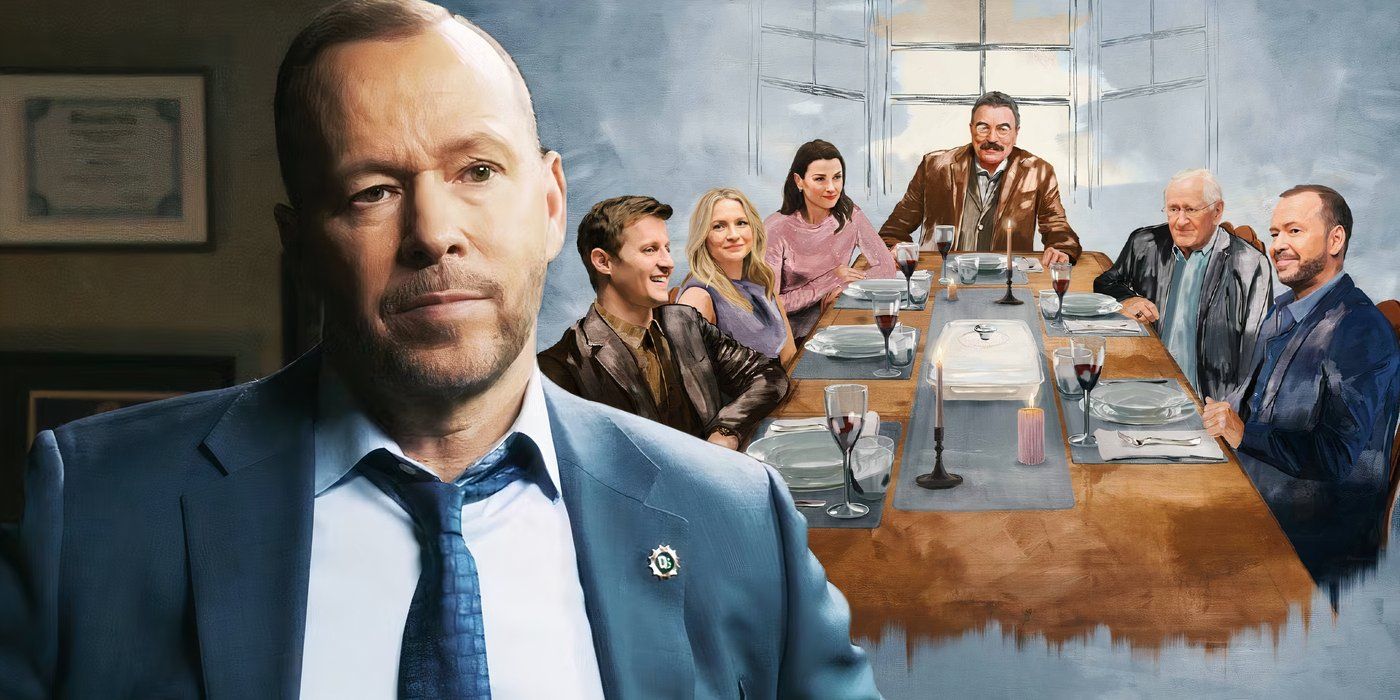
The issue is scope.
So far, Boston Blue episodes have centered on just one or two cases per installment. That narrower focus creates a very different rhythm. Instead of juggling multiple perspectives across the justice system, the narrative feels linear. The pacing slows. The world shrinks. Even when family members cross paths professionally, the impact doesn’t carry the same electricity — because we haven’t been immersed in their separate battles long enough to feel the collision.
This is where comparisons become unavoidable.
Blue Bloods wasn’t just a procedural; it was a mosaic. In one hour, viewers might witness a tense interrogation, a political scandal threatening the commissioner’s career, a moral debate in the DA’s office, and a patrol officer navigating a street-level ethical dilemma. That multiplicity gave the show density. Every episode felt full.
By contrast, Boston Blue feels more intimate — and that may be intentional. Modern procedural storytelling often leans toward character introspection over case quantity. There’s a chance the creators are aiming for emotional depth rather than narrative breadth. But for longtime fans accustomed to the layered structure of Blue Bloods, the shift feels like subtraction rather than evolution.
The most heated online discussions revolve around this exact divide. Some viewers appreciate the tighter storytelling and argue that fewer cases allow for richer character development. Others insist that the magic of the franchise was never just about family dinners — it was about seeing how different branches of law enforcement collided within that family framework. Without that multi-angle storytelling, the series risks feeling like any other well-acted police drama.
And that’s the uncomfortable truth: competence isn’t enough.
No one is saying Boston Blue is bad. In fact, many early reviews describe it as solid, grounded, and emotionally sincere. But “solid” doesn’t replace cultural momentum. “Grounded” doesn’t recreate fourteen seasons of narrative layering. Legacy shows cast long shadows, and sometimes those shadows define audience perception before a spinoff has time to find its footing.
Three episodes are not a verdict. Yet first impressions matter — especially in an era of ruthless viewer retention metrics. If Boston Blue wants to escape constant comparison, it may need to expand its narrative canvas. Give us overlapping cases. Let institutional politics collide with street-level drama. Allow family intersections to feel inevitable rather than scheduled.
Because the fear many fans are quietly voicing isn’t that the new series is failing.
It’s that it might never feel as big.
And when you inherit a legacy built on scale, heart, and multi-layered storytelling, “smaller” can feel like a step backward — even if the intentions are noble.
The question now isn’t whether Boston Blue can be good.
It’s whether it can ever be unforgettable.