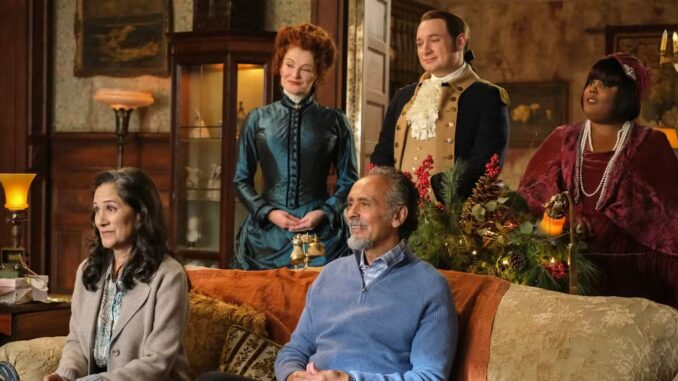
🛋️ The Woodstone Mansion Dilemma: When a Classic Trope Overstays Its Welcome
I absolutely love CBS’s Ghosts. It’s a warm blanket of a show, a rare comedic gem that manages to balance historical satire with genuine heart. We’ve all fallen for the eclectic residents of Woodstone Mansion—from the pantless 90s finance bro Trevor to the slightly-too-stiff Revolutionary War hero Isaac. But even the best dinner party starts to feel long if the same joke gets told every fifteen minutes. For me, and a growing segment of the fandom, that “joke” is the possession trope.
Don’t get me wrong; the first time it happened, it was comedic gold. Seeing Utkarsh Ambudkar channel his inner Hetty or Rose McIver embody the flamboyant essence of Isaac is a masterclass in physical comedy. It’s like a spicy seasoning—great in small doses, but if you dump the whole bottle into the stew, you can’t taste anything else. As we look ahead to future seasons, I’m putting it on my holiday wish list: Please, Ghosts writers, give us the gift of no more possessions. Let’s talk about why this trope is starting to wear thin and what the show could do instead to keep the spark alive.
🎭 The Comedy of Identity Theft: Why We Loved It Initially
In the early days of the series, possession was a brilliant tool. It allowed the ghosts—who are essentially trapped in a spiritual cage—to finally taste life again. It provided a bridge between the living and the dead that felt earned and high-stakes.
The Performance Masterclass
Let’s give credit where it’s due. The primary reason possessions worked so well is the sheer talent of the cast. Watching Sam or Jay “transform” into one of the ghosts is like watching a live-action impression reel. These moments allowed the “living” actors to flex their muscles and showed how deeply they understood their ghostly co-stars’ mannerisms.
The Emotional Highs
When Hetty possessed Jay to eat a massive plate of “heavenly” food, it wasn’t just funny; it was a poignant reminder of what these spirits have lost. It used the trope to deepen our empathy for the ghosts. However, there’s a law of diminishing returns in television, and we’ve reached the tipping point where the “wow” factor has turned into a “here we go again” sigh.
📉 The Problem of Predictability: When Magic Becomes Routine
The biggest issue with the possession trope is that it has become a “get out of jail free” card for the writers. Whenever a plot needs a sudden jolt of energy or a physical obstacle, someone accidentally touches a ghost near an outlet or trips into a spiritual vortex.
H3: Diminishing the Rules of the World
Every great supernatural show needs a set of rules. In Ghosts, the boundary between the living and the dead is supposed to be thick. When possessions happen once a season, the stakes feel high. When they happen every few episodes, it starts to feel like the mansion has a revolving door. If anyone can jump into Sam or Jay at any time, the tension of “how will the ghosts communicate this?” evaporates.
H3: Stunting Character Growth
If a ghost can simply “take over” a living person to solve their problems, they don’t have to learn how to grow within their own limitations. The beauty of Woodstone is seeing how these people from different eras find common ground. If Isaac can just inhabit Jay to give a speech, he doesn’t have to find the courage to communicate his feelings through Sam or via his own ghostly power.
🗣️ The Communication Breakdown: Losing the “Translator” Dynamic
The core of Ghosts is the fact that Sam is the only one who can see and hear them. This creates a wonderful, chaotic game of “telephone” where Jay is constantly trying to keep up.
Jay’s Disconnection is the Show’s Secret Weapon
Jay being unable to see the ghosts is arguably the funniest part of the show. His efforts to connect with people he can’t see—like his “friendship” with Pete—are heart-wrenching and hilarious. When Jay is possessed, that dynamic disappears. Instead of Jay trying to interpret the ghosts, he is the ghost. While fun for a minute, it robs us of the unique comedy that comes from Jay’s “blind” interactions with the spiritual realm.
H4: Overcomplicating the Plot
Possession episodes often require a lot of “explaining away” to other living characters. We’ve seen the “oh, he’s just acting weird because of a carbon monoxide leak/stress/method acting” excuse too many times. It forces the narrative into a corner where the living characters have to act oblivious to keep the secret, which can sometimes feel like a regression in intelligence for the sake of a gag.
👻 The “Special Powers” Alternative: A Better Use of Supernatural Lore
If the writers want to shake things up, they should lean into the ghosts’ individual powers rather than the catch-all solution of possession.
-
Thorfinn’s Electricity: We’ve seen him flicker lights, but how could that be used in more complex ways?
-
Alberta’s Hum: Her ability to be heard by the living is a goldmine for tension that doesn’t involve body-swapping.
-
Flower’s Effect: What happens if a living person gets “high” off her in a high-stakes situation?
Developing these specific abilities creates puzzles for the characters to solve using their unique traits, rather than just bypassing the physical barrier through possession.
🏰 Woodstone’s History: Let’s Look Backward, Not Just Inward
Instead of jumping into Sam’s skin, why don’t we see more of the ghosts’ pasts? The show is at its strongest when it uses flashbacks to explain why these characters are the way they are.
H3: Unexplored Eras and New Spirits
There are hundreds of years of history at Woodstone. We’ve barely scratched the surface of the “basement ghosts” or the potential for spirits from different eras we haven’t met yet. Expanding the lore through new characters or deeper historical dives provides much more sustainable “meat” for the show than the sugar-high of a possession episode.
H4: The Mystery of “Sucking Toes” and Going Down
There is still so much we don’t know about the mechanics of the afterlife in this world. Why do some ghosts “go up” and others stay? What determines their powers? Focusing on the “mythology” of the show feels like a more mature path for a series that has already established its heart and humor.
🌈 The Gift of No More Possessions: A Creative Challenge
Asking for “no more possessions” isn’t a critique of the show’s quality; it’s an invitation for the writers to challenge themselves. When you take away the easiest comedic tool, you’re forced to find humor in dialogue, situation, and character growth.
Imagine an episode where the ghosts have to stop a disaster at the mansion without Sam’s help and without taking over Jay’s body. They would have to use their wits, their limited physical interactions (like Trevor’s finger), and their teamwork. That is where the real magic of Ghosts lies—in the bond between these misfit spirits who have nothing but time and each other.
Final Conclusion
While possession episodes in Ghosts provided some of the show’s most iconic comedic performances, it’s time to retire the trope to save the show’s long-term health. The constant body-swapping has become a predictable crutch that undermines the established rules of the Woodstone world and stunts the individual growth of the spirits. By moving away from possessions, the show can focus on the unique “special powers” of the ghosts, Jay’s hilarious attempts to connect with the invisible, and the rich historical flashbacks that give the series its soul. The best gift the writers can give us is a Woodstone Mansion where the living stay in their bodies and the dead find new, creative ways to make their presence felt.
❓ 5 Unique FAQs After The Conclusion
Q1: Which ghost was the first to possess a living character in the US version of Ghosts?
A1: The first possession occurred in Season 1, when Hetty accidentally possessed Jay after he fell while trying to fix a light fixture near a “spiritual thin spot” and an electrical outlet. This set the precedent for the trope throughout the series.
Q2: Does the UK version of Ghosts use the possession trope as frequently?
A2: No, the original UK series (which inspired the US version) is much more conservative with the possession trope. It focuses more on the physical limitations of the ghosts and their internal bickering, which many fans feel gives the show a slightly more grounded and poignant tone compared to the more “slapstick” US approach.
Q3: What is the scientific “explanation” the show gives for how possessions happen?
A3: The show suggests that possessions happen when a living person and a ghost occupy the same physical space at the exact moment of a surge of energy, usually involving electricity or a specific supernatural “soft spot” in the mansion. It’s essentially a freak accident of physics and metaphysics.
Q4: Has Sam ever been possessed by more than one ghost at once?
A4: While we haven’t seen a “double possession” in a single body simultaneously, we have seen episodes where the “spirit” jumps quickly from one host to another, or where multiple characters are affected by different ghosts in a single chaotic event. However, a “dual occupancy” remains one of the few things the show hasn’t fully explored (and perhaps shouldn’t!).
Q5: Why is Jay’s inability to see ghosts considered so important to the show’s dynamic?
A5: Jay represents the audience’s grounded perspective. His “faith” in Sam and his willingness to participate in a world he cannot perceive is the emotional anchor of the show. If he could see them or be possessed regularly, he would lose that “outsider” status that makes his character so relatable and funny.