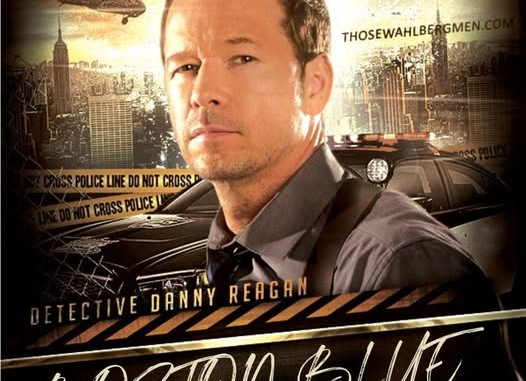
For years, Blue Bloods defined family-driven police drama. Sunday dinners. Moral dilemmas. The Reagan legacy. But now, the universe has shifted. Enter Boston Blue—the bold new chapter that relocates the legacy to unfamiliar streets, unfamiliar politics, and far more dangerous emotional territory.
And after its newest episode aired, one thing is clear: this is not just a continuation. It’s a reinvention.
So what exactly happened—and why are fans already calling it the most talked-about procedural launch of the year?
The Star at the Center of the Storm
At the heart of the frenzy is Donnie Wahlberg, reprising his role as Danny Reagan—but not in the way anyone expected.
Danny’s transfer to Boston initially seemed like a routine jurisdictional shift. A fresh start. A narrative excuse to expand the franchise.
Instead, the premiere revealed something far more layered: Danny isn’t just chasing criminals. He’s confronting legacy—his own and his family’s.
Early scenes show him navigating a department that doesn’t automatically respect the Reagan name. In New York, he carried weight. In Boston, he’s an outsider. And that tension? It’s electric.
Viewers immediately began dissecting Wahlberg’s performance, calling it more restrained, more internal, and surprisingly vulnerable compared to his later seasons on Blue Bloods.
A Premiere Twist That Changed the Tone
The biggest shock of the new episode wasn’t a shootout. It wasn’t a political scandal.
It was a betrayal.
Midway through the hour, Danny discovers that a trusted Boston detective may have leaked operational intel tied to a cold case with connections to organized crime. But here’s the kicker: the case may intersect with past Reagan investigations in New York.
Suddenly, this isn’t just about Boston. It’s about reopening wounds the original series left buried.
Fans immediately began speculating online:
Is this setting up a crossover?
Will members of the Reagan family appear?
Is this how the franchise reconnects to its roots?
The writing makes one thing clear—the ghosts of New York are not staying behind.

Why “Boston Blue” Feels Different
Unlike its predecessor, which leaned heavily into tradition and family ritual, Boston Blue is colder. More urban. More politically tense.
The department is fractured. Internal affairs plays a larger presence. City leadership is less forgiving. And Danny? He’s no longer protected by familiarity.
The new ensemble cast has also sparked discussion. While no character has yet reached Reagan-level emotional attachment for viewers, the dynamic is intentionally unstable. Partnerships are uneasy. Trust is conditional.
This isn’t comfort television. It’s pressure-cooker drama.
The Episode’s Hidden Message
What truly stands out is the thematic pivot.
Where Blue Bloods often centered on duty versus family, Boston Blue asks a sharper question:
What happens when your identity is tied to a name that no longer shields you?
Danny’s authority is challenged repeatedly in the episode—not because he’s wrong, but because he’s unknown.
In one standout interrogation-room scene, Wahlberg plays the moment almost entirely through silence. No explosive temper. No table-slamming. Just calculation. It’s a deliberate evolution of the character.
Longtime viewers are calling it “Danny 2.0.”
Social Media Reaction: Divided but Hooked
The reaction has been immediate and intense.
Some fans argue the show risks losing the warmth that made the original beloved. Others praise its willingness to take creative risks instead of replicating a formula.
Trending conversations focus on three questions:
-
Will the Reagan family appear in person?
-
Is Boston Blue darker by design?
-
Is this meant to surpass the emotional depth of its predecessor?
What’s undeniable is the engagement. For a franchise extension, it’s generating debate at a level most spin-offs never achieve.
What the New Episode Quietly Set Up
Beyond the headline betrayal, the script planted several narrative seeds:
-
A long-term organized crime arc connected to interstate corruption
-
A potential internal power struggle within Boston PD leadership
-
Subtle hints that Danny’s past cases may resurface with unintended consequences
There’s also a lingering suggestion that Danny didn’t transfer solely for professional reasons. The episode drops vague dialogue about “unfinished business,” a phrase fans are already overanalyzing.
Was he pushed out?
Did he choose exile?
Or is there something bigger unfolding behind the scenes?
A Franchise Reinventing Itself
Television history shows that spin-offs often struggle under the shadow of their origin series. Boston Blue appears determined not to live in that shadow.
The cinematography is sharper. The pacing tighter. The emotional beats less sentimental and more restrained.
If Blue Bloods was about legacy stability, Boston Blue is about legacy disruption.
And that may be exactly why it’s working.
Is This the Future of the Franchise?
The premiere makes one thing clear: this isn’t a nostalgic epilogue. It’s a calculated evolution.
By stripping Danny of the comfort zone that defined him for years, the show forces growth—both for the character and the audience.
If the writers continue leaning into moral ambiguity and long-form conspiracy arcs, Boston Blue could reshape what this franchise represents.
The real question now isn’t whether it can survive without Sunday dinners.
It’s whether it’s bold enough to thrive without them.
Final Verdict: Reinvention or Risk?
The newest episode of Boston Blue doesn’t play it safe. It dismantles assumptions. It isolates its lead. It challenges the mythology that built the original show.
And that’s exactly why people can’t stop talking about it.
Is this the dawn of a grittier era?
A bridge back to the Reagan legacy?
Or the beginning of a complete transformation?
One episode in, and the message is unmistakable:
Boston isn’t just a new city.
It’s a battleground—for identity, loyalty, and the future of a television dynasty.