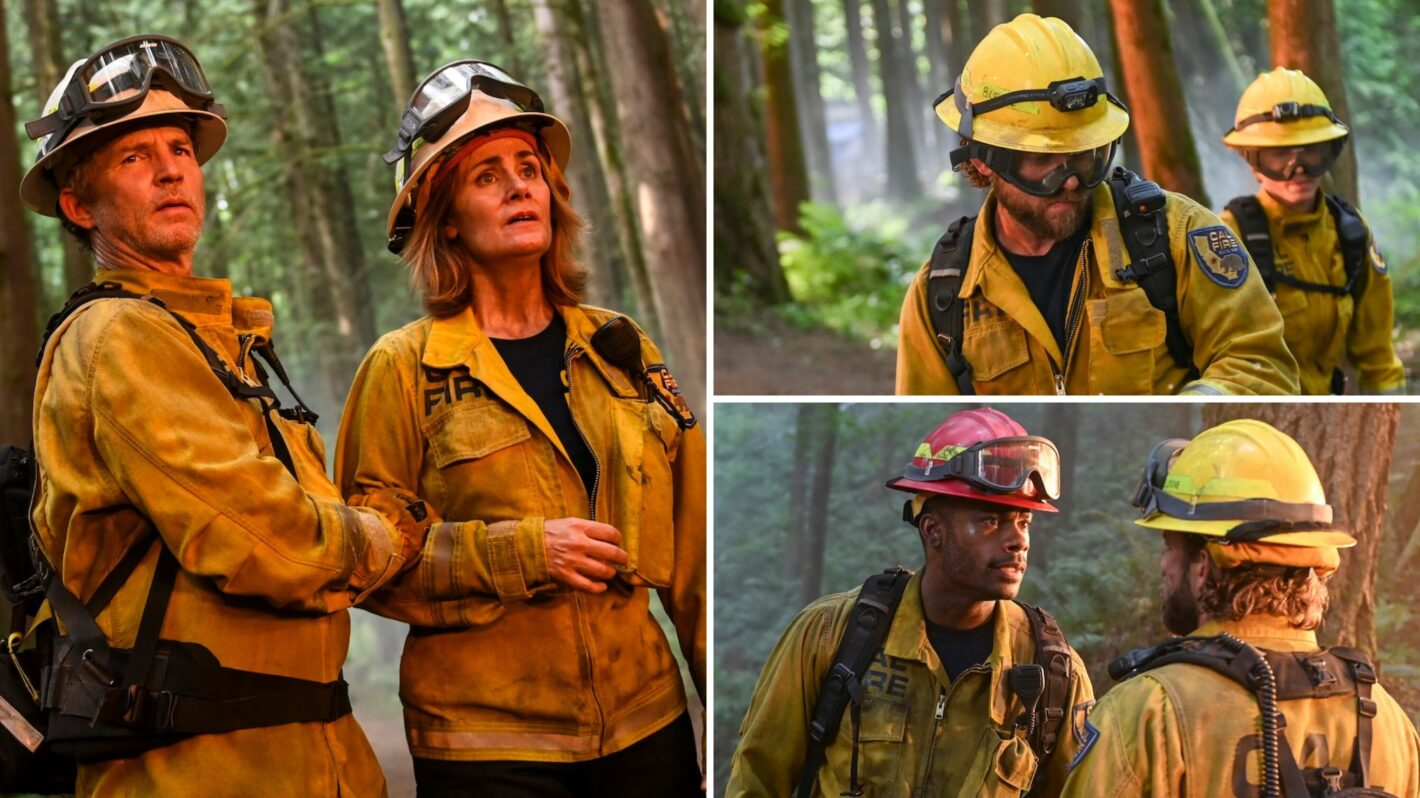
In the scorched landscape of Fire Country, where the roar of the wildfire often drowns out the quietest whispers of the heart, Season 4 has stood as a definitive chapter of loss and evolution. Yet, even in a season defined by the seismic death of Vince Leone and the departure of Gabriela Perez, it is the midseason return, Episode 10, that serves as the true emotional turning point. While earlier episodes dealt with the immediate, visceral shock of grief, Episode 10—appropriately titled to reflect a new beginning—forces every character to stop running from the smoke and finally face the ashes of their former lives. It is the moment where “survival” shifts into “rebuilding,” and the stakes move from the physical threat of the flames to the internal battle for the soul of Firehouse 51 and Three Rock.
The emotional weight of Episode 10 is anchored by Bode Leone’s startling transformation. For three seasons, Bode was the “human wildfire”—impulsive, reactive, and driven by a desperate need for redemption. However, in the wake of his father’s death and Gabriela’s exit, Episode 10 presents us with a Bode who has reached a precarious maturity. Trapped in a literal “chimney” of rising fire during a high-stakes rescue of a wayward youth named Tyler, Bode is forced to embody the restraint his father always preached. The irony is profound: Bode, the man who spent years defying authority, finds himself mentoring a reflection of his younger, more reckless self. This episode marks the first time Bode isn’t just fighting to save his own reputation; he is fighting to honor the legacy of the man he spent his life trying to please. The scene where Bode and Tyler are forced into a single-person fire shroud is a masterclass in tension, serving as a claustrophobic metaphor for Bode’s own internal struggle.
For Sharon Leone, Episode 10 represents the breaking point of her “Vince and Sharon cocoon.” After weeks of benched service and quiet mourning, the midseason return thrusts her back into the command chair, only to realize that her grief is a fire that cannot be contained by duty. The arrival of interim Battalion Chief Brett Richards—a man Vince despised—acts as the catalyst for Sharon’s emotional eruption. It is in this episode that Sharon finally accepts that she cannot protect the station or her son by simply “holding the line.” Her journey in Episode 10 is a harrowing exploration of survivor’s guilt, as she realizes that leading the division means facing the reminders of what she lost every single day. The “emotional turning point” for Sharon is the realization that her husband’s death didn’t just leave a vacancy at the station; it left a hole in the moral center of the community that only she can fill.
The episode also serves as a critical juncture for Jake Crawford and Eve Edwards. Following the collapse of their respective romantic lives—specifically Eve’s devastating breakup with Francine—the two friends find themselves at a crossroads. Episode 10 strips away the distractions of their love stories and forces them back into the “brotherhood” that defined the pilot. As they navigate the fallout of a catastrophic rig accident that leaves Jake’s fate hanging in the balance, the episode explores the theme of “unresolved business.” Jake’s confrontation with the ghost of his past, via his half-brother Malcolm, mirrors Bode’s internal growth, suggesting that everyone in Edgewater is currently in a state of “rising from the ashes.” The emotional core of these scenes lies in the realization that while the fire department is built on procedures, the people within it are held together by fragile, often fractured, human connections.
Perhaps the most significant reason Episode 10 stands as the season’s turning point is the introduction of a new “spark”—the arrival of Chloe, played by Alona Tal. Her presence immediately shifts the narrative gravity away from the “Bodiella” drama of the past and toward a future that feels both nostalgic and dangerous. As a woman from Bode’s past, Chloe represents a version of Bode that existed before the tragedy of Riley and the trauma of prison. Her arrival in the midseason premiere isn’t just a plot device; it is an emotional lifeline for a character who was dangerously close to falling apart. It signals to the audience that while Season 4 began with “the end” of the Leone family as we knew it, Episode 10 is the official “beginning” of whatever comes next.
As the smoke clears on Episode 10, the landscape of Fire Country is permanently altered. The episode successfully balances the adrenaline of a “life-or-death” cliffhanger with the quiet, devastating realization that some things can never be fixed—only outgrown. It is the most emotional turning point of the season because it demands honesty from its characters. No longer shielded by the presence of Vince or the hope of a quick romantic fix, the heroes of Edgewater are left with nothing but their own grit and each other. Episode 10 doesn’t just ask them to survive the fire; it asks them who they want to be once the flames finally die down. It is a haunting, beautiful, and necessary transition that ensures the back half of Season 4 will be about more than just fighting fires—it will be about the courage to heal.