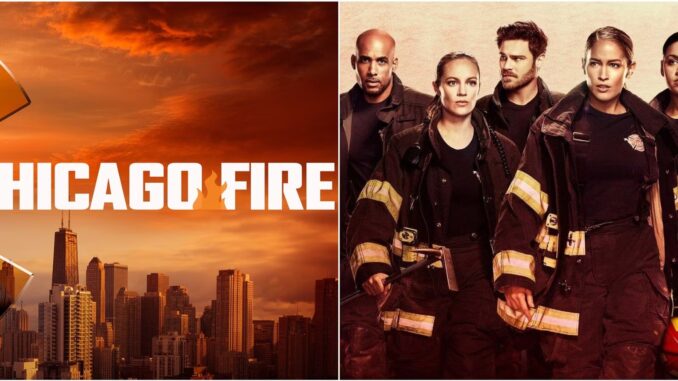
🔥 The Firefighter Showdown: Two Giants of TV Drama
Let’s get one thing straight: procedural dramas, especially those centered around first responders, are the bedrock of network television. They give us heroes we can believe in, high-stakes action that quickens the pulse, and enough emotional turmoil to keep the weekly ratings consistent. When you talk about firehouse dramas, two titans immediately command the conversation: NBC’s Chicago Fire (the cornerstone of the sprawling One Chicago universe) and ABC’s Station 19 (the passionate, dramatic spin-off born from Grey’s Anatomy).
Both shows offer adrenaline-pumping rescues and deep dives into the lives of the brave men and women who run toward danger. Yet, they approach the genre with fundamentally different DNA. Chicago Fire leans into the Dick Wolf procedural formula: efficiency, action-first, and a vast, interconnected professional universe. Station 19, conversely, is steeped in the ShondaLand tradition: high-octane emotional relationships, complex personal drama, and socially conscious storytelling.
So, who wins the battle of the blaze? It’s not a simple answer. We’re putting these two beloved series head-to-head, dissecting 5 ways Station 19 is arguably superior to Chicago Fire and 5 crucial areas where the veteran Chicago Fire still reigns supreme.
✅ 5 Ways Station 19 is Better Than Chicago Fire
When Station 19 gets things right, it truly sizzles. Its strengths lie in the things Chicago Fire often treats as secondary: emotional depth, relationship intensity, and a willingness to confront hard topics head-on.
1. Deeper, More Complex Relationship Dynamics
If Chicago Fire is about the brotherhood of the firehouse, Station 19 is about the chosen family and the romantic intensity within it. ShondaLand’s influence ensures that the relationships are always the main event, often driving the plot forward more than the fires themselves.
-
The Emotional Leverage: Station 19 elevates couples like Maya and Carina (Marina) and Andy and Sullivan by giving their personal stakes—like struggles with family trauma, career ambition, or infertility—the same weight as a five-alarm blaze. These intense, complex relationship arcs generate more immediate fan investment and viral discussion than the typically slower, more restrained romantic plots in Chicago Fire.
-
The Emotional Risk: The characters in Station 19 are not afraid to be messy, volatile, and deeply flawed, making their emotional victories and failures feel more earned and resonant.
2. More Progressive and Inclusive Representation
Station 19 consistently champions diversity and representation in ways Chicago Fire has historically struggled to match.
-
LGBTQ+ Centrality: The relationship between Maya Bishop (bisexual) and Carina DeLuca (lesbian) is one of the most visible and beloved lesbian couples on television. Their storyline has dealt authentically and respectfully with issues like adoption, immigration, and mental health within a mainstream network show.
-
Intersectionality: The show skillfully explores the challenges faced by women and people of color in leadership roles, specifically with characters like Captain Andy Herrera and Chief Robert Sullivan, making the firehouse feel more reflective of modern urban life.
3. Greater Integration of Social Issues and Real-World Policing
While Chicago Fire often skirts around major social commentary, Station 19 leans into it, sometimes sacrificing realism for powerful dramatic commentary.
-
Direct Confrontation: The show tackled the Black Lives Matter movement, police brutality, and systemic racism head-on, particularly through the character of Dean Miller and his community outreach efforts. These storylines were highly topical and added a necessary, intense layer of social relevance that procedural shows often avoid.
-
The Crossover Benefit: The frequent connection to Grey’s Anatomy allows Station 19 to explore not just the immediate rescue, but the complex medical and societal aftermath of trauma, giving their stories more thematic depth.
4. Faster Pace and Higher Emotional Stakes
The ShondaLand formula demands that every episode feels like a finale. This creates an exhilarating, if exhausting, viewing experience.
-
Constant Jeopardy: Station 19 regularly puts its main characters in immediate, often life-threatening, personal jeopardy. This constant feeling that anyone could die or lose their job keeps the audience on the edge of their seat.
-
The ‘Big Moment’ Guarantee: Station 19 delivers massive, cathartic emotional moments—breakdowns, tearful confessions, and dramatic medical emergencies—at a much higher frequency than the more measured pace of Chicago Fire.
5. Superior Cliffhangers and Season Structure
Because Station 19 focuses so heavily on relationship plot twists, its season finales and mid-season breaks often create more effective, gut-wrenching cliffhangers than the One Chicago universe. The emotional fate of the characters is prioritized over the outcome of a single fire, making the wait between seasons excruciatingly intense.
❌ 5 Ways Station 19 is Worse Than Chicago Fire
Despite its emotional superiority, Station 19 has structural weaknesses that the long-running, disciplined Dick Wolf procedural formula of Chicago Fire consistently avoids.
1. Realistic Firefighting Procedures and Action
This is where Chicago Fire unquestionably takes the gold. The primary focus of the One Chicago show is the job.
-
Authenticity is Key: Chicago Fire excels at depicting the detailed, methodical process of firefighting, from the terminology to the hierarchy and the equipment. The fires and rescues feel grounded and respectful of real-world procedures.
-
Action-First Narrative: Chicago Fire spends most of its screen time on the calls, treating the action sequences as central set pieces, whereas Station 19 often treats the actual fire as a mere backdrop for a character having a major emotional realization.
2. Consistent Tone and Suspension of Disbelief
Station 19‘s insistence on injecting maximum drama often leads to a jarring, inconsistent tone that tests the viewer’s patience.
-
The Soap Opera Overload: The continuous internal drama—the affairs, the power struggles, the relentless medical emergencies that befall the main cast—sometimes makes the firehouse feel less like a professional unit and more like a daytime soap opera dressed in turnout gear. Chicago Fire, while having drama, maintains a more even, professional tone that keeps the focus firmly on the job.
3. Overreliance on the Grey’s Anatomy Crossover
For years, Station 19 relied heavily on its “Mother Ship,” which diluted its ability to stand completely on its own two feet.
-
Narrative Crutch: The most critical medical events, relationship milestones (like Ben and Bailey), and emotional payoffs often required the viewer to watch both shows, making Station 19 feel like an extended adjunct rather than a fully independent entity. Chicago Fire stands alone, supported by its sibling shows (P.D., Med) but not reliant on them for essential plot propulsion.
4. Excessive Internal Conflict and Poor Leadership
The leadership structure at Station 19 has been a rotating disaster of petty, often nonsensical, power struggles.
-
Lack of Authority: Captains and chiefs are constantly demoted, promoted, or caught up in unprofessional ethical quandaries (looking at you, Sullivan). This relentless cycle of internal squabbling creates unnecessary “boss drama” that is less compelling than external threats.
-
Chicago Fire features the iconic Chief Boden, a rock-solid, morally upright figure whose authority is rarely questioned, giving the firehouse a necessary feeling of stability and professionalism.
5. Character Proliferation and Focus Management
The constant pressure for emotional drama means Station 19 often struggles to balance its large ensemble cast, leading to uneven character development and sudden, inexplicable plot shifts.
-
The ‘Character of the Week’ Feel: Some secondary characters fade into the background for long stretches, only to be resurrected for a singular, high-intensity crisis. Chicago Fire, due to its procedural structure, handles its main cast more consistently, giving each member a defined role on the team and a focused personal arc throughout the season.
🤝 Conclusion: A Tale of Two Fires
The debate between Station 19 and Chicago Fire is essentially a choice between Heart vs. Hardware.
-
If you prioritize deep emotional resonance, complex identity politics, and relationships that drive the narrative, Station 19 will be your unmatched champion. It is the perfect evolution of the ShondaLand formula into the first responder genre, offering intense emotional payoff and high-stakes personal drama.
-
If you prioritize authentic procedural detail, grounded action, consistent professional tone, and clear command structure, Chicago Fire remains the superior program. It is the gold standard for Dick Wolf’s stable, delivering reliable, action-first television.
Ultimately, both shows succeed because they give us heroes who run into the heat. We just prefer different flavors of storytelling in the face of the inferno.
❓ 5 Unique FAQs After The Conclusion
Q1: Which show, Station 19 or Chicago Fire, has been on the air longer?
A1: Chicago Fire has been on the air significantly longer. It premiered in October 2012 and is the flagship show of the One Chicago franchise, predating Station 19‘s March 2018 premiere by over five years.
Q2: Do both shows feature characters who are also surgeons, creating crossover opportunities?
A2: Yes, Station 19 features Ben Warren (Jason George), who trained as a surgeon at Grey Sloan before becoming a firefighter/EMT. Chicago Fire does not have a firefighter who is also a surgeon, but its crossover partner, Chicago Med, provides the necessary medical interface.
Q3: Which show is known for having a higher rate of main character deaths?
A3: Station 19 is known for having a higher rate of significant main character deaths and major professional traumas (like demotions or career-ending injuries), maintaining the unpredictable, high-stakes nature established by Grey’s Anatomy.
Q4: Is Station 19 a part of the One Chicago universe?
A4: No. Station 19 is a part of the ShondaLand/Grey’s Anatomy Universe on ABC. Chicago Fire is the foundation of the One Chicago Universe (alongside Chicago P.D. and Chicago Med) on NBC, and the two franchises have no direct narrative or network connection.
Q5: Which show features more specialized technical rescue squads, like a rescue squad company?
A5: Chicago Fire places a stronger, consistent focus on the Rescue Squad 3, with characters like Kelly Severide being specialists in technical rescue, diving, and hazardous materials. This high-level specialization is a key feature that bolsters its procedural realism.