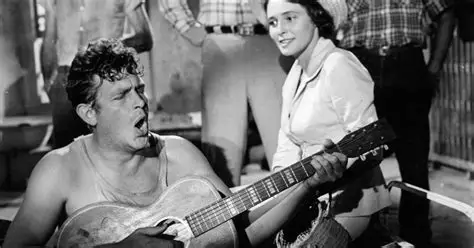
Mayberry felt untouched by time. Its streets were always quiet, its problems always solvable within thirty minutes, its people forever kind. While the world outside changed rapidly, The Andy Griffith Show offered something rare — a place where life seemed simple and safe.
But time, gentle or cruel, waits for no one.
And when the show ended, it began working on the people behind it.
Andy Griffith: Carrying Mayberry Longer Than He Expected
For Andy Griffith, Mayberry was both a gift and a weight.
After the series ended, he tried to step into new roles, new identities. But audiences kept seeing the sheriff — calm, wise, reassuring. Years passed before he found his footing again with Matlock, a role that finally allowed him to age on screen without pretending to be someone else.
Yet even then, Mayberry followed him.
In interviews late in life, it was clear: no matter how far he traveled, he never truly left that town. Time changed him — softened him — but Mayberry remained the chapter people loved most.
Ron Howard: Growing Up While the World Was Watching
Ron Howard didn’t remember a life before fame. He grew up in Mayberry, learned responsibility under studio lights, and aged in front of millions of eyes.
Unlike many child stars, he wasn’t trapped by nostalgia. Instead, he learned from it.
Behind the camera, Howard built a career rooted in discipline and patience. Films like Apollo 13 and A Beautiful Mind carried echoes of Mayberry’s values — quiet strength, empathy, moral clarity — even as he moved far beyond the town that raised him.
Time didn’t erase Mayberry for Ron Howard.
It taught him how to transform it.
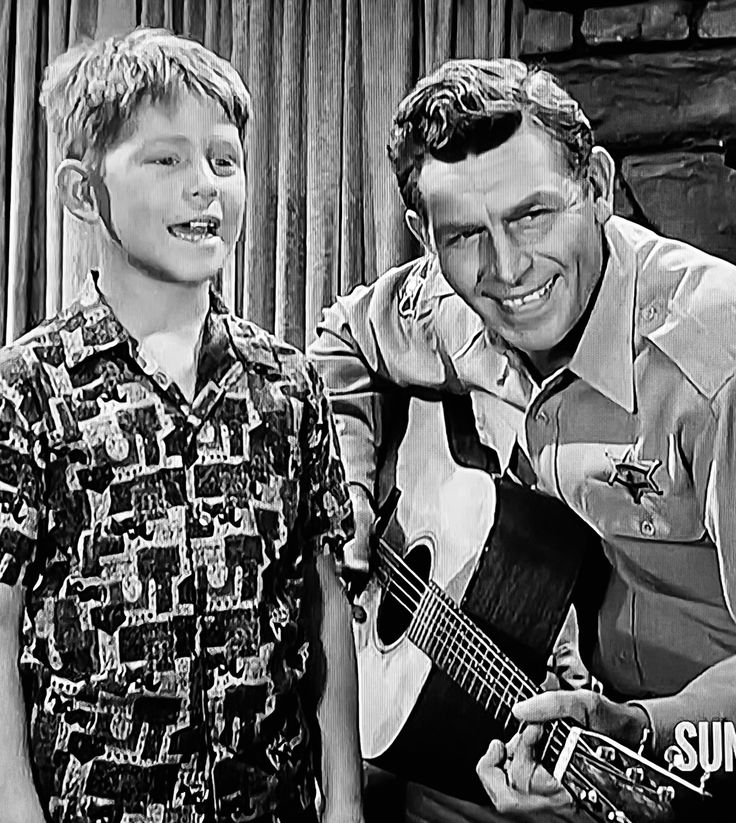
Don Knotts: When a Character Refuses to Let Go
Barney Fife was unforgettable — and that was the problem.
Don Knotts spent years trying to outrun the role that made him famous. He found work, success, applause — but always as a variation of the same nervous, lovable man. It took decades for Knotts to accept that Barney wasn’t a cage, but a legacy.
In his later years, he embraced the laughter instead of resisting it. Time taught him what fame couldn’t: sometimes the role that defines you is also the one that keeps you alive in memory.
Frances Bavier: The Silence After the Applause
Perhaps no one was changed more quietly by time than Frances Bavier.
To audiences, Aunt Bee was warmth incarnate. Off-screen, Bavier grew tired of Hollywood, tired of expectations, tired of being mistaken for the character she played. She withdrew, choosing isolation over illusion.
Her later years were spent far from Mayberry, in a life marked by solitude and reflection. Time gave her distance — but it also took companionship. When she passed away, fans mourned the loss of someone who had felt like family, even if she no longer felt connected to that world herself.
A Town That Stayed Young While Its People Aged
Mayberry never grew old.
Its reruns stayed crisp. Its lessons stayed gentle. Its people stayed kind.
But the actors aged. They struggled. They adapted. They endured.
Time reshaped them all — not dramatically, not loudly — but honestly. Some found reinvention, some found peace, and some found quiet distance from the place that made them famous.
What Remains Beyond Mayberry
Beyond Mayberry lies the truth we often forget: perfect worlds don’t exist — but meaningful ones do.
The people behind The Andy Griffith Show gave audiences something timeless, even as time asked everything of them in return. Their lives remind us that nostalgia freezes moments, not people.
And maybe that’s why Mayberry still matters.
Because while time changed the people behind the show,
what they gave us remains unchanged.