💔 A Love Story on an Iceberg: The Genius of James Cameron’s Vision
Let’s be honest: who hasn’t shed a tear for Jack Dawson and Rose DeWitt Bukater? The doomed lovers aboard the ill-fated RMS Titanic have become cinematic icons, their romance symbolizing fleeting beauty and tragic loss. Yet, the enduring power of James Cameron’s 1997 masterpiece, Titanic, isn’t just about their fictional fling. It is the masterful, meticulous way Cameron weaved their story through the actual, documented history of the greatest maritime disaster of the 20th century.
This movie didn’t just tell a love story; it built a time machine. It resurrected the grandeur, the class hierarchy, and the horrifying reality of the night of April 14, 1912. The ability to make us feel deeply for two fictional characters while simultaneously educating and honoring the real-life victims and heroes is the true, unsinkable genius of the film. Titanic became the highest-grossing film of all time because it gave us a personal, emotional lens through which to view an unimaginable historical event. We weren’t just watching a disaster movie; we were feeling the history.
👑 The Three-Tiered Structure: Fact, Fiction, and Frame
Cameron’s narrative strategy was sophisticated, using three distinct layers to ensure maximum emotional resonance and historical accuracy.
The Frame Narrative: The Search for the Past
The movie begins and ends in the present day (the 1990s), focusing on the fictional search for a valuable necklace, the “Heart of the Ocean.” This storyline serves a crucial function:
-
The Historian’s Eye: The search team, led by Brock Lovett, acts as the modern historian, obsessed with the ship’s wreckage. Lovett’s team provides the factual, engineering, and documentary context that anchors the film in reality. They show us the actual wreck , using real footage, which validates the entire historical reconstruction.
-
The Witness: The elderly Rose, as the last living witness, validates the emotional reality of the past. Her narrative voice is the bridge between the cold, hard facts of the wreck and the passionate, chaotic human story of 1912.
The Fictional Core: Jack and Rose
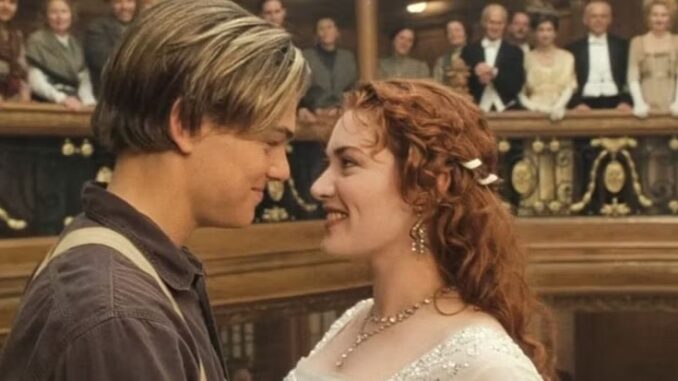
This is the main event: the class-defying romance between the steerage artist, Jack Dawson, and the first-class socialite, Rose DeWitt Bukater.
-
The Emotional Anchor: This storyline carries the emotional weight of the film. We experience the ship’s entire journey, from joyous sailing to catastrophic sinking, through their eyes. Their fictional, beautiful story is designed to make the audience vulnerable to the tragedy that follows.
-
The Universal Theme: Their romance serves as a metaphor for the class division aboard the ship, a central, documented historical theme Cameron wanted to explore.
The Historical Backdrop: Real People, Real Events
Crucially, the fictional characters constantly interact with documented historical figures and events, grounding their romance in reality. This constant cross-pollination is where the magic happens.
🚢 The Real People Behind the Screen: Historical Accuracy as a Character
Cameron didn’t merely use the Titanic as a setting; he treated the historical accuracy of the ship’s structure, schedule, and passengers with deep reverence.
The Real Heroes and Villains
Many characters who interact with Jack and Rose were real people who sailed on that voyage. This inclusion is a masterful touch of narrative realism.
-
Captain Edward Smith: Portrayed as a confident, yet ultimately flawed, commander who felt the weight of the disaster. His final moments and sense of duty are based on historical accounts.
-
J. Bruce Ismay: The real managing director of the White Star Line, Cameron chose to portray him as a cowardly figure who pressured the Captain to go faster and later snuck onto a lifeboat. While his historical culpability is debated, Cameron used him to symbolize the greed and entitlement of the first class.
-
Molly Brown: The “Unsinkable Molly Brown” is accurately depicted as a feisty, compassionate American socialite who genuinely helped those in need and tried to get her lifeboat to return for survivors. She embodies the true spirit of heroism among the wealthy.
H4: Documented Moments of Horror
The film reconstructs many horrific, documented moments, giving the fictional chaos a chilling authenticity:
-
The Engineers: The dedication of the engineers working below deck, trying to keep the lights on until the last possible second, is an act of real-life heroism featured in the film.
-
The Musicians: The band continuing to play on the deck as the ship sank—a quiet, dignified act of courage—is a historically confirmed moment that enhances the film’s tragic beauty.
-
The Locked Gates: The terrifying reality of the third-class gates being locked, trapping many lower-deck passengers, is a documented, controversial fact that fuels Jack’s desperate fight for survival.
💔 The Power of Fiction: Why We Needed Jack and Rose
If the historical accuracy was so meticulous, why create two completely fictional leads? Because history often lacks the personal, intimate arc required for a three-hour film.
The Emotional Accessibility of the Everyman
Jack and Rose serve as the audience surrogates. We enter the massive, overwhelming world of the Titanic through their small, relatable perspective.
-
Crossing Class Lines: Their romance provides a vehicle for exploring the strict class lines of 1912. We get access to the gilded luxury of the A-Deck galas and the raucous, communal spirit of the Third-Class dances, scenes that the real historical record couldn’t fully capture.
-
The Perfect Sacrifice: Jack Dawson’s final, heroic act—sacrificing himself so Rose could survive on the floating door—is the ultimate narrative device. It elevates the tragic loss into a beautiful, selfless romantic ideal, giving meaning to the overwhelming, senseless death count of the real disaster.
🛳️ The Technical Genius: Rebuilding the Unsinkable
Cameron’s commitment to factual detail went beyond the script; it defined the technical production of the film, which required immense perplexity in engineering and design.
H3: The Scale and Design of the Set
The filmmakers meticulously recreated the ship, ensuring that the fictional action took place on a physically accurate stage.
-
Scale Model: They built a nearly full-scale (90%) replica of the ship’s exterior and numerous, lavish recreations of the interiors, including the famous Grand Staircase.
-
Accurate Sinking: Cameron used computer modeling to ensure the ship’s breakup and sinking sequence was as scientifically accurate as possible based on the evidence from the wreck site. When the propeller rises out of the water, that detail is based on engineering and physics, not just dramatic license.
H4: The Integration of Real Footage
By interspersing scenes filmed on the set with real underwater footage of the Titanic wreckage (shot by Cameron himself), the film constantly reminds the viewer that the fictional drama they are watching is unfolding on the site of a very real tragedy. This blending of cinema vérité with Hollywood blockbuster production is groundbreaking.
🥇 The Unsinkable Legacy: A Masterpiece of Historical Fiction
Titanic wasn’t just a movie; it was a global phenomenon that taught an entire generation about the 1912 disaster. It achieved this by doing something truly difficult: making the historical reality feel as important as the fictional romance.
The film serves as a powerful reminder that history is not just dates and figures; it is a collection of individual stories, fears, and acts of heroism. Cameron skillfully used the invented, beautiful tragedy of Jack and Rose as a magnifying glass to focus our attention on the real, collective tragedy of all 1,500 victims. The film worked because it gave us a profound reason to care—not just about a ship, but about the thousands of lives that the ship carried.
Final Conclusion
James Cameron’s Titanic achieved its “unsinkable” status by brilliantly merging meticulous historical fact with compelling fictional drama. The film’s genius lies in its multi-layered approach: using the modern search team to validate the historical reality, meticulously recreating documented events and real-life passengers like Molly Brown, and employing the sweeping, tragic romance of Jack and Rose to make the massive disaster personally accessible and emotionally resonant. By grounding the fictional love story in the undeniable tragedy of the real 1912 voyage, Cameron created a disaster epic that is not only historically informative but remains one of the most powerful and enduring films ever made.
❓ 5 Unique FAQs After The Conclusion
Q1: Was the character of Rose DeWitt Bukater based on any specific real-life passenger of the Titanic?
A1: No, the characters of Jack Dawson and Rose DeWitt Bukater are entirely fictional. However, their story and characteristics were inspired by the general accounts and cultural context of the class divisions and specific dynamics (like the strictness of first-class society) observed among the real passengers.
Q2: Was the necklace “Heart of the Ocean” a real diamond that went down with the Titanic?
A2: No, the “Heart of the Ocean” necklace is a purely fictional creation for the film. There were, however, many extremely valuable jewels and possessions lost in the disaster, fueling the fascination and treasure-hunting efforts seen in the film’s modern-day frame story.
Q3: Which real-life passenger did James Cameron portray most negatively in the film?
A3: J. Bruce Ismay, the Chairman and Managing Director of the White Star Line, is generally considered the most negatively portrayed real-life figure. The film shows him pressuring Captain Smith to increase the ship’s speed and later sneaking onto a nearly empty lifeboat, accusations that align with controversial historical accounts of his conduct.
Q4: Did James Cameron use actual footage of the Titanic wreck in the film?
A4: Yes, James Cameron personally conducted several dives to the wreck site and incorporated actual underwater footage of the RMS Titanic wreckage into the film’s opening and closing sequences, giving the fictional story an undeniable foundation in reality.
Q5: Which scenes involving real historical figures were confirmed to be highly accurate based on survivor accounts?
A5: The film accurately recreates several scenes, including: The Titanic band playing near the Grand Staircase; Isidor and Ida Straus, the elderly couple who chose to die together; and Molly Brown attempting to convince her lifeboat to return to rescue more people.