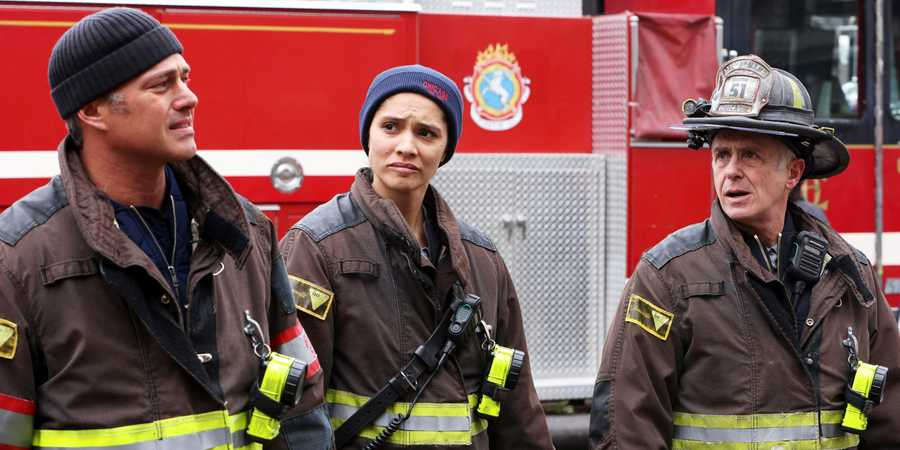
The social fabric of Firehouse 51 has always been built on a foundation of unyielding trust, but in Season 14 of Chicago Fire, that foundation is showing dangerous cracks. The introduction of the ambitious newcomer, Vasquez, has brought a fresh energy to Truck 81, but it has also sparked a “betrayal in the making” that has fans glued to their screens. What began as a standard mentor-protégé relationship between Lieutenant Stella Kidd and the talented rookie has rapidly devolved into a cold war of professional egos, conflicting instincts, and a growing sense of territorial tension. As the season progresses, it is becoming clear that Vasquez is not just here to learn the ropes; she is here to challenge the status quo, and Stella Kidd is standing directly in her path.
The friction between the two women is rooted in their fundamentally different approaches to firefighting. Stella, who climbed the ranks through grit and a deep respect for the “old school” traditions of the CFD, leads with a mix of intuition and communal responsibility. Vasquez, on the other hand, represents a new breed of firefighter—highly analytical, tech-savvy, and possessing a streak of individualism that often borders on insubordination. In early Season 14 episodes, we have seen Vasquez question Stella’s tactical calls on the fire ground, sometimes suggesting alternative routes that, while successful, undermine Stella’s authority in front of the crew. For a Lieutenant who has worked tirelessly to earn the respect of her house, these subtle challenges feel less like helpful suggestions and more like a calculated play for dominance.
The tension reached a boiling point during a recent high-rise rescue where Vasquez took a unilateral risk to save a victim, ignoring Stella’s direct order to wait for backup. While the save was successful, the breach of protocol left Stella reeling. In the world of firefighting, a “cowboy” mentality is often a precursor to tragedy, and Stella’s frustration stems from a place of genuine concern for her team’s safety. However, Vasquez’s defensive reaction suggested she views Stella’s caution as a sign of being “out of touch” or overly bureaucratic. This ideological clash has created a palpable chill in the common room, forcing other members of the house, like Mouch and Herrmann, to walk on eggshells as they navigate the fallout between their Lieutenant and the rookie.
Beyond the tactical disputes, there is a deeper, more personal layer to the betrayal. Stella has always taken pride in her “Girls on Fire” program, seeing herself as a bridge for young women entering the service. She initially saw Vasquez as a success story in the making—someone she could mold into a future leader. To see that same person use the skills Stella taught her to undermine her authority feels like a personal slap in the face. On the other side, Vasquez feels stifled by Stella’s shadow. She is eager to prove she belongs at 51 on her own merits and resents the implication that she owes her success solely to Stella’s mentorship. This “student surpassing the master” dynamic is being played out with a sharp, antagonistic edge that threatens the cohesion of Truck 81.
Adding fuel to the fire is the way the rest of the department perceives the conflict. Rumors of a leadership struggle at 51 have reached the ears of the new Chief Pascal, who is already looking for ways to streamline operations and eliminate internal friction. If the tension between Stella and Vasquez begins to affect their performance on calls, it could provide the administrative leverage needed to shake up the leadership of Truck 81. Some fans have even theorized that Vasquez may be working as a “mole” or an informant for higher-ups who want to see Stella replaced, adding a layer of conspiratorial intrigue to her every move.
As the second half of Season 14 unfolds, the question remains: is this a temporary growing pain or the start of a permanent rift? If Stella cannot find a way to rein in Vasquez, she risks losing the locker room. If Vasquez continues to prioritize her own glory over the chain of command, she risks a dishonorable exit from the CFD. The tragedy of this building betrayal is that both women are exceptional firefighters who want the same thing: to save lives. However, in the high-pressure cooker of Firehouse 51, there is often only room for one person at the top of the ladder. Fans are bracing for an inevitable confrontation that will force every member of the house to choose a side, a choice that could change the face of Chicago Fire forever.