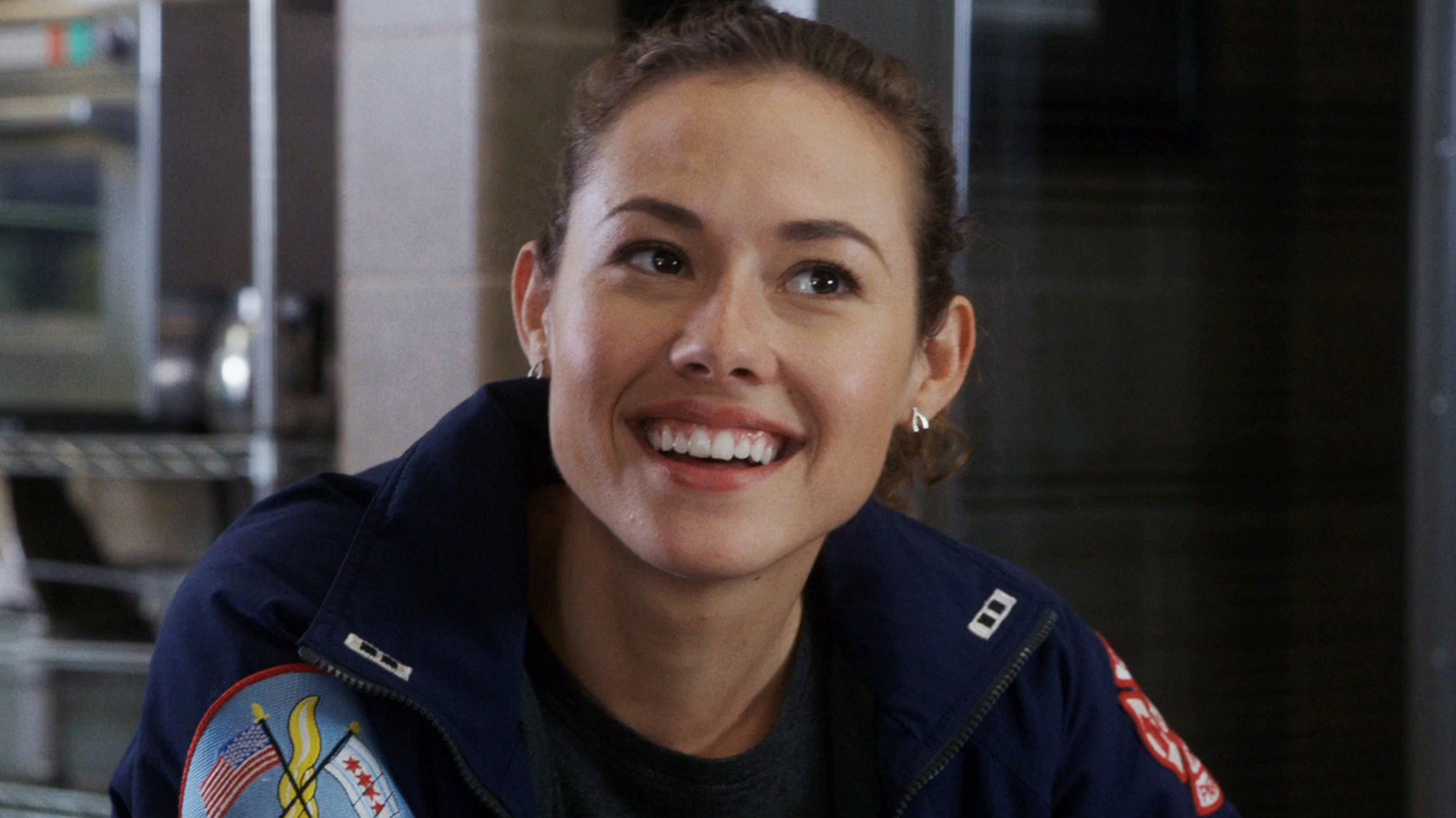
When Dora Madison’s character, Jessica “Chili” Chilton, was written out of Chicago Fire in the middle of Season 4, it marked one of the most jarring and realistic exits in the history of the “One Chicago” franchise. Unlike the many characters who leave Firehouse 51 for a promotion or a move to another city, Chili’s departure was a stark, tragic exploration of grief and substance abuse—a creative choice that the showrunners felt was necessary to maintain the show’s high stakes.
The decision to write off Chili was not due to behind-the-scenes drama or the actress wanting to leave. Instead, executive producer Matt Olmstead explained that the creative team wanted to demonstrate that even “good” characters in high-pressure jobs can spiral out of control. Following the death of her sister, Chili began making critical errors on the job and drinking while on duty. The writers chose a “three strikes” approach to her narrative, culminating in Chief Boden being forced to fire her.
Olmstead noted at the time that for a show about first responders to feel authentic, there had to be consequences that weren’t always tied to a “heroic” death or a happy ending. By having Chili fired, the show highlighted the very real mental health struggles and the “burnout” factor that paramedics face. It was a risky move because it made a previously likable character difficult to root for, but it served as a powerful catalyst for the development of her partner, Sylvie Brett, and the rest of the 51 crew.
Dora Madison’s performance during this downward spiral was widely praised for its raw vulnerability. While fans were shocked to see her go so suddenly, the creative choice ensured that Chili’s arc remained one of the most memorable cautionary tales in the series. It reinforced the idea that Firehouse 51 is a family, but it is also a professional environment where the safety of the public must always come first—even at the cost of a friend’s career.
Since her exit, Madison has moved on to various independent film projects and guest roles, but her time as Chili remains a definitive example of Chicago Fire’s willingness to tackle “messy” exits that reflect the harsh realities of the real world.