🚢 The Unsinkable Debate: Jack and Rose in the Age of AI
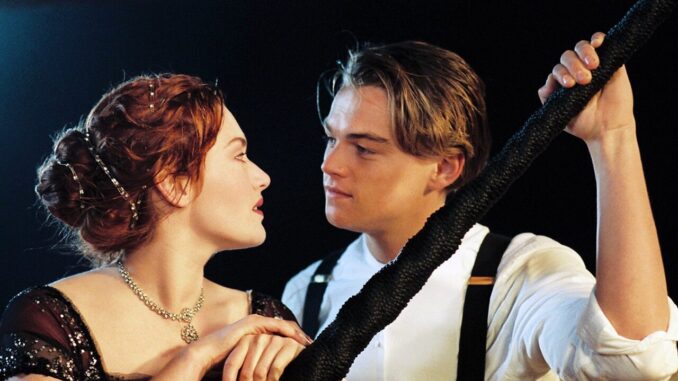
It’s been nearly thirty years since James Cameron’s Titanic first sailed into our hearts, leaving us all wondering why on earth there wasn’t enough room for Jack on that door. But as we hit 2026, the conversation isn’t about buoyancy anymore—it’s about bits, bytes, and the ethics of digital “resurrection.” A new anniversary project, leveraging the hyper-realistic generative AI of 2026, has reportedly recreated the likenesses of a young Leonardo DiCaprio and Kate Winslet for a series of immersive “lost scenes.”
The announcement has sent shockwaves through Hollywood and social media alike. On one hand, you have fans who are dying to see more of that 1912 magic. On the other, you have a fierce ethical debate: just because we can bring Jack and Rose back through a computer, should we? It’s a classic case of technology moving faster than our moral compass.
🤖 The Tech Behind the Transformation: How 2026 AI Works
To understand the outcry, we first have to look at how far the tech has come. We aren’t talking about the clunky deepfakes of 2022. The AI tools of 2026, often referred to as “Neural Narrative Engines,” can analyze every frame of the original 1997 film to perfectly replicate skin texture, micro-expressions, and even the specific vocal timber of the actors from three decades ago.
Generative Likeness and the “Grief Tech” Connection
This technology didn’t just appear out of a vacuum. It evolved from “grief tech”—software designed to let people “talk” to deceased loved ones. When applied to cinema, it becomes a powerful tool for nostalgia.
-
Pixel-Perfect Replication: Every freckle on 1997-era Kate Winslet is mapped and rendered in 8K.
-
Vocal Synthesis: AI models trained on old interviews allow “Digital Jack” to say lines he never actually spoke on set.
⚖️ The Consent Crisis: Who Owns a Digital Soul?
The heart of the 2026 debate lies in one word: Consent. While the actors are still very much alive and active today, the project uses their younger selves. Does a studio own the “image” of an actor from 1997 indefinitely? Or does the actor have the right to say, “No, don’t use my 22-year-old face for new profit”?
Posthumous vs. De-Aged Rights
We’ve seen digital resurrections of deceased stars before—think Ian Holm in Alien: Romulus—but recreating living actors at a specific age is a legal gray area. Critics argue that using AI to “gift” roles to digital versions of stars robs current, living actors of work and strips the original performers of their legacy.
🎨 Artistic Integrity vs. Commercial Spectacle
Is this still art, or is it just high-end puppetry? James Cameron has famously been a pioneer of tech, yet even he has voiced concerns about “horrifying” AI actors replacing the “soul” of a performance.
The “Uncanny Valley” of Emotion
Can an algorithm truly capture the chemistry that Leo and Kate shared on that deck? Many purists argue that the “spark” of Titanic came from the human unpredictability of the actors. An AI might get the tears right, but can it replicate the reason for the tears?
“AI can give us the ending we think we want, but it often loses the tragedy that made the original matter.” — Industry Critic, 2026.
💔 The “Jack Survived” Ending: Rewriting History
One of the most controversial leaks from the 2026 project is an “Alternate Reality” feature where users can use AI to change the ending. In this version, Jack gets on the door. While it sounds like every fan’s dream come true, it raises a massive narrative question: If we change the tragedy, do we kill the movie’s meaning?
H3: The Dangers of Fan-Service via AI
If we let AI rewrite every sad movie ending to satisfy our “feels,” we risk turning cinema into a giant, meaningless feedback loop. Titanic worked because Jack died. By using AI to “fix” the past, we might just be breaking our culture’s ability to handle grief and loss.
🎭 The Industry Stance: SAG-AFTRA and the 2026 Guidelines
By 2026, the actors’ unions have fought hard for protections. New legislation in California now requires explicit, up-to-date consent for digital likenesses. However, “anniversary tributes” often hide in the fine print of old contracts signed before AI was even a glimmer in a programmer’s eye.
H4: The Robert Downey Jr. Precedent
Following the lead of stars like Robert Downey Jr., who vowed to sue any studio using his digital likeness posthumously, many in the Titanic cast are reportedly reviewing their “perpetuity” clauses. This project might become the landmark case that finally defines “digital dignity” in the 21st century.
🌊 Why the Titanic Anniversary Matters More Than Others
Why all the fuss over Titanic specifically? Because it represents a pinnacle of practical and digital effects blending perfectly. It’s the “Sacred Cow” of 90s cinema. To see it “AI-fied” feels like a violation of a shared cultural memory for millions of people.
🌍 The Global Reaction: A Divided Audience
In a 2026 poll, the audience split was almost 50/50.
-
The Pro-AI Group: Mostly younger Gen Alpha viewers who see it as a “remix” culture. They want the most immersive experience possible.
-
The Anti-AI Group: Millennials and Gen Xers who feel the AI recreation is “ghoulish” and disrespectful to the original craft.
🔍 Conclusion
The 2026 Titanic anniversary project isn’t just a movie event; it’s a mirror reflecting our complicated relationship with technology. As we stand on the deck of this digital revolution, we have to decide if we’re going to steer toward the iceberg of “profit at any cost” or change course to protect the human soul of our stories. AI-recreated Jack and Rose might look like the stars we remember, but without their real-time human essence, they might just be beautiful, hollow ghosts.
Whatever happens, the debate is officially unsinkable. We may have finally found something more powerful than the Atlantic: the power of an algorithm to make us question what is real.
❓ 5 Unique FAQs
Q1: Is the 2026 Titanic AI project an official sequel?
A1: No, it is currently framed as an “Experimental Anniversary Tribute” consisting of reimagined scenes and immersive VR experiences, rather than a full-length “Titanic 2.”
Q2: Did Leonardo DiCaprio and Kate Winslet give permission for this?
A2: Reports are conflicting. While some “legacy clauses” in their 1990s contracts might allow for certain digital uses, the stars themselves have not publicly endorsed the new AI-generated footage as of early 2026.
Q3: Can I actually watch an ending where Jack survives using AI?
A3: Yes, certain versions of the 2026 project include “Branching Narrative” tech, allowing the AI to generate a real-time ending where Jack and Rose both fit on the debris.
Q4: Is this project legal under the new 2025 AI laws?
A4: That is the multi-million dollar question. Lawyers are currently debating whether “anniversary expansions” count as new work or simply “re-mastering” of existing intellectual property.
Q5: How does this AI differ from the de-aging seen in movies like The Irishman?
A5: The Irishman used CGI over a live performance. The 2026 tech can generate entirely new movements and dialogue without a physical actor even being present on a soundstage.