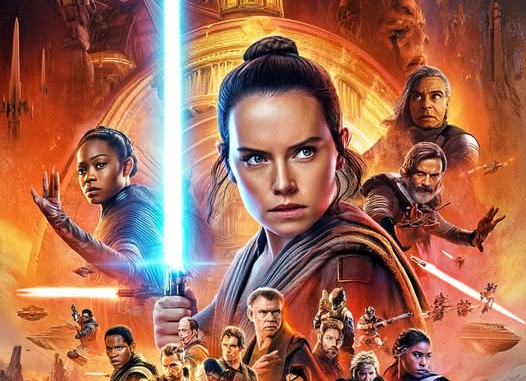
For nearly five decades, Star Wars has been more than a film franchise. It has been a generational myth. A cultural compass. A battlefield of hope and ideology. And now, as Lucasfilm pushes forward with its next theatrical chapter, the fandom finds itself staring at a question no one expected to ask:
Is the future of Star Wars about to change course—again?
With major updates surrounding the upcoming Star Wars: New Jedi Order, the return of Daisy Ridley, and swirling rumors of creative shifts behind the scenes, the galaxy far, far away feels more unpredictable than ever.
Let’s break down the shockwaves.
The Rey-Centered Film That Suddenly Feels… Uncertain
When Lucasfilm first announced that Daisy Ridley would return as Rey in a post–Skywalker saga film, the reaction was explosive. For some, it was redemption. For others, controversy reborn.
The premise was bold: Rey rebuilding the Jedi Order fifteen years after the events of Star Wars: The Rise of Skywalker. A fresh era. A clean slate. A chance to redefine what “Jedi” means in a fractured galaxy.
But recent industry chatter suggests the production timeline has quietly shifted. Writers have reportedly come and gone. Development has slowed. And insiders hint that Lucasfilm may be reworking the creative direction entirely.
Is this normal Hollywood turbulence—or a deeper recalibration?
Daisy Ridley Breaks Her Silence
In recent interviews, Ridley has expressed enthusiasm—but also careful restraint. She’s described the script as “evolving” and emphasized that the story is still taking shape.
That word—evolving—has become the focal point of debate.
Fans have dissected every syllable. Is the film being strengthened? Or reimagined from the ground up?
Ridley’s return was meant to signal stability after years of divisive discourse surrounding the sequel trilogy. Instead, it has reignited passionate discussions about legacy, direction, and creative risk.
A Franchise at a Crossroads
Since the release of Star Wars: The Last Jedi, the franchise has lived in a state of tension between innovation and nostalgia.
The sequel trilogy divided audiences. Some praised its bold themes. Others criticized its tonal shifts and narrative pivots.
Now, with theatrical films returning after a prolonged pause, Lucasfilm faces enormous pressure. The success of Disney+ series like The Mandalorian proved the universe still thrives—but cinematic expectations are different. Higher stakes. Louder scrutiny.
A Rey-led film isn’t just another entry. It’s a statement.
The Director Factor
Originally attached to the project was filmmaker Sharmeen Obaid-Chinoy, a choice that signaled a desire for fresh perspective and grounded storytelling.
But as development evolves, speculation about creative adjustments has intensified. In blockbuster filmmaking, script revisions are common. Yet in the Star Wars universe, every change feels seismic.
History has shown that behind-the-scenes turbulence can either produce brilliance—or fragmentation.
Fans remember the creative reshuffling during Rogue One: A Star Wars Story, which ultimately delivered one of the franchise’s most beloved modern installments.
Could lightning strike twice?
The Larger Galaxy Strategy
Lucasfilm isn’t building just one film. It’s mapping an interconnected future.
Projects tied to Dave Filoni aim to culminate storylines from the streaming universe. Meanwhile, other standalone concepts are reportedly in development, each targeting a different era of galactic history.
So where does New Jedi Order fit?
Is it the anchor of the future timeline? Or one branch among many?
The uncertainty has created a fascinating dynamic: anticipation mixed with anxiety.
Fan Reactions: Hope, Hesitation, and Heated Debate
Social platforms erupted as rumors of script overhauls surfaced.
Some fans argue that careful development is a positive sign. Rushing a high-stakes return could repeat past missteps. Others fear that delays signal lack of confidence in the direction.
There’s also a broader philosophical divide:
Should Star Wars move beyond legacy characters entirely?
Or does the saga still need familiar faces to guide its next chapter?
Rey rebuilding the Jedi Order offers narrative symmetry. But it also risks reopening old arguments about the sequel trilogy’s legacy.
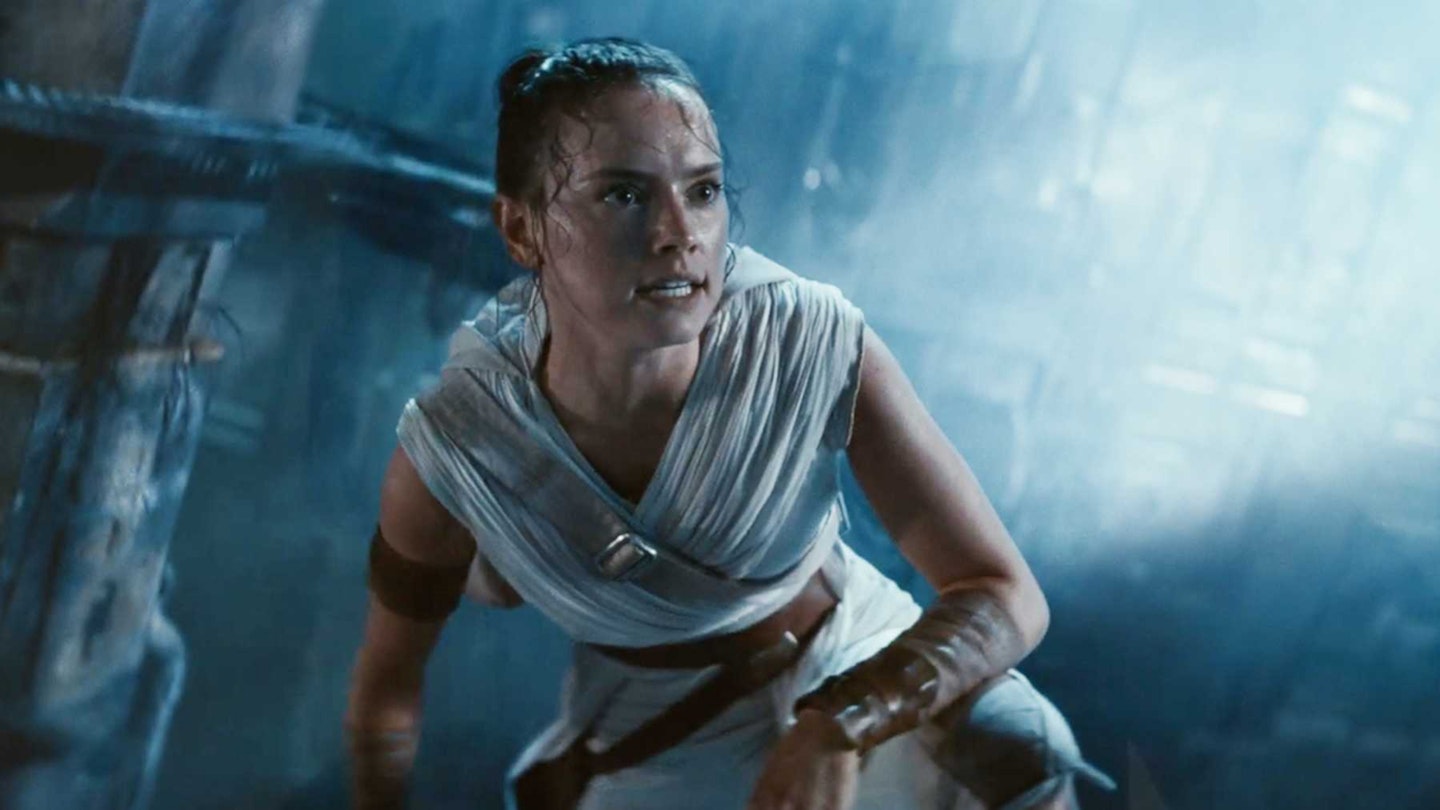
The Pressure of Reinventing the Jedi
Perhaps the most compelling aspect of the upcoming film is thematic.
The Jedi Order has fallen before. It has been corrupted, destroyed, reborn. But this time, the responsibility rests solely on Rey—a character who inherited a fractured tradition.
What does a new Jedi philosophy look like in a post-Skywalker galaxy?
More inclusive?
Less dogmatic?
Or something entirely unexpected?
The creative team’s answer could redefine the mythology for a new generation.
Are We Witnessing a Strategic Reset?
Some analysts believe Lucasfilm is intentionally slowing development to ensure long-term cohesion. After years of rapid content expansion, a measured approach might restore cinematic prestige.
Others speculate that audience reception to past films has made executives cautious.
Blockbuster filmmaking in 2026 is a high-risk arena. One misstep can reshape an entire franchise’s trajectory.
And Star Wars is no ordinary franchise.
The Legacy Question
Every new chapter must wrestle with the shadow of the originals.
From Star Wars to the sequel era, each generation has defined its own heroes. Luke. Anakin. Rey.
The challenge isn’t just continuing the story. It’s convincing audiences that the future matters as much as the past.
Rey standing alone at the end of The Rise of Skywalker was meant to symbolize hope. Now, that hope must translate into a compelling cinematic vision.
So… Is the Force Strong or Flickering?
At this moment, nothing is officially canceled. Nothing is officially delayed beyond repair. But the tone surrounding the project has undeniably shifted.
Instead of triumphant certainty, we have cautious development.
Instead of concrete timelines, we have evolving drafts.
Instead of clear direction, we have strategic silence.
And in the world of Star Wars, silence speaks volumes.
The Bigger Picture: A Galaxy in Transition
What makes this moment so fascinating is not just one film’s status. It’s the broader transformation of the franchise.
Streaming success.
Theatrical reinvention.
New creative leadership.
Legacy balancing acts.
The Rey film stands at the center of that transformation.
If it succeeds, it could launch a new era of cinematic dominance.
If it falters, it could push Lucasfilm further into serialized storytelling instead of theatrical spectacle.
Conclusion: The Calm Before a Galactic Storm?
The announcement of a Rey-centered New Jedi Order film was meant to unify the fandom. Instead, it has ignited one of the most intense debates in recent Star Wars history.
Is this meticulous refinement leading to something extraordinary?
Or are we witnessing another chapter of creative uncertainty in a galaxy that thrives on mythic clarity?
One thing is undeniable: the Force is shifting.
And when Star Wars shifts, the entire entertainment universe pays attention.