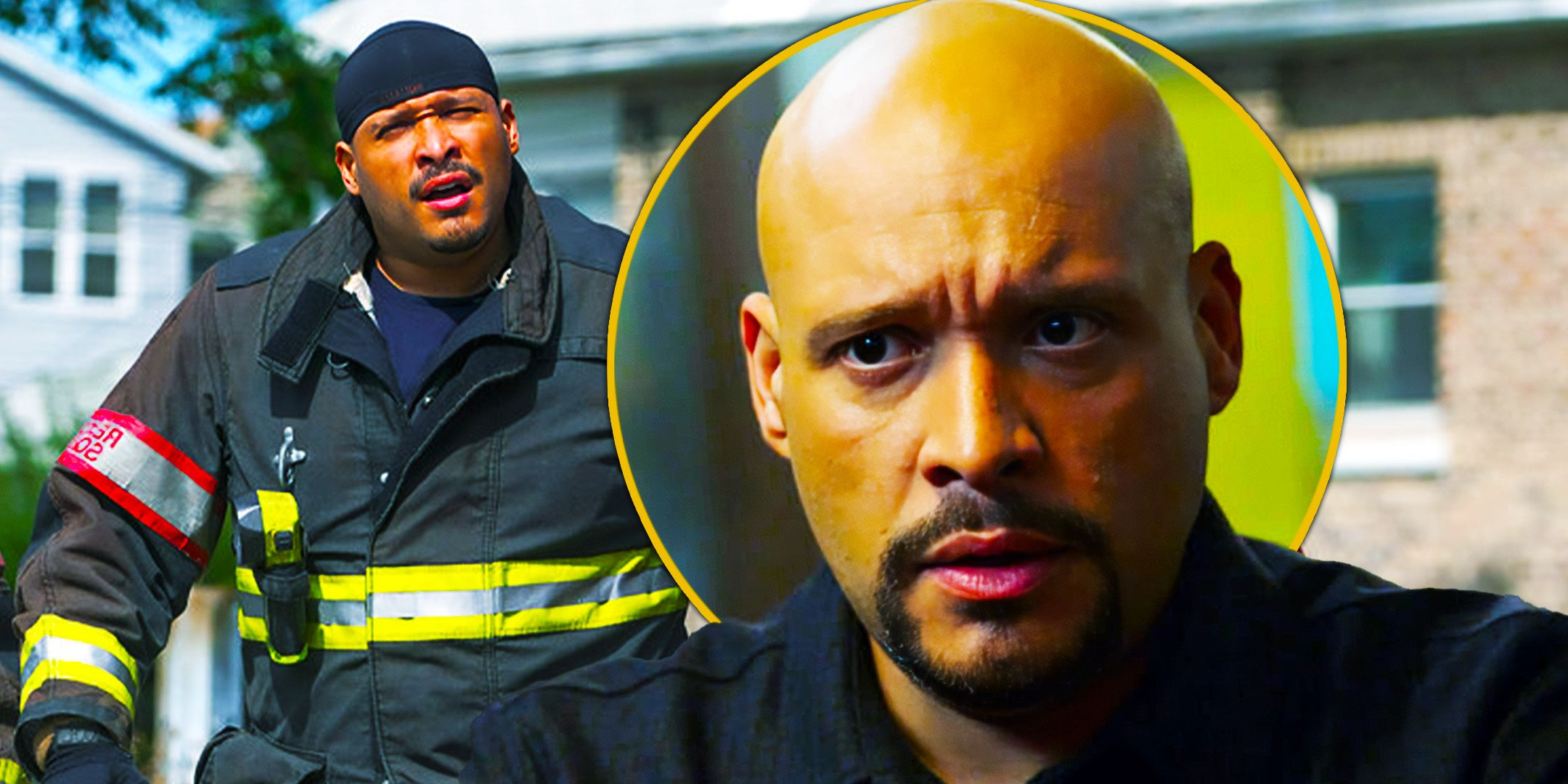
The sirens of Firehouse 51 have long served as the heartbeat of the “One Chicago” universe, but lately, they have carried a more melancholic tone as the community prepares for one of its most difficult transitions: the departure of Joe Cruz. For over a decade, Joe Minoso has portrayed Cruz with a masterclass in emotional range, evolving the character from a peripheral member of the squad into the very soul of the station. As the curtain begins to fall on his journey at 51, “A Hero’s Goodbye” serves as a poignant reflection on the lasting impact of a man who proved that true heroism isn’t just about the daring rescues in burning buildings, but about the quiet, steadfast loyalty to the family we choose.
Joe Cruz’s legacy at Firehouse 51 is defined by a journey of profound redemption and resilience. When we first met him, he was a man struggling with the weight of his environment, often caught between the violent pull of his neighborhood and his aspirations as a firefighter. The narrative arc involving his brother, Leon, and the impossible choice Joe made to protect his family by letting a gang leader perish in a fire, remains one of the most complex moral dilemmas ever explored in the series. It was this moment that forged the Cruz we know today—a man who carries his scars with humility and uses his past to mentor others. His presence on Squad 3 became a symbol of stability; he was the technical expert who could fix any machine and the emotional anchor who could fix any fractured spirit.
The impact of Joe Cruz is perhaps most visible in his relationship with Kelly Severide and the late Brian “Otis” Zvonecek. The “Crotis” bromance provided the show with its much-needed levity and heart for years, and the way Cruz carried the torch of Otis’s memory after his tragic passing was a masterclass in portraying grief. Cruz didn’t just mourn; he grew. He became a father, both literally to little Otis and figuratively to the younger candidates at the house. Watching him transition from a hot-headed firefighter into a compassionate leader has been one of the most rewarding experiences for long-term viewers. He taught us that a hero is someone who shows up every day, stays consistent, and leads with empathy rather than ego.
Technically and tactically, Cruz was irreplaceable. As the driver of the squad, his expertise was the literal vehicle that delivered the heroes to the scene. His invention of the “Slamigan”—the hybrid sledgehammer and Halligan tool—became a meta-symbol for his character: practical, innovative, and designed entirely to help others. This “Hero’s Goodbye” highlights that while tools can be replaced, the intuition and the decade of experience Cruz brought to the rig cannot. His departure leaves a tactical void on Squad 3 that will likely take seasons to fill, forcing the team to recalibrate their entire rescue protocol.
The emotional blow of his exit ripples through every corner of the firehouse. For Stella Kidd, he was a confidant; for Mouch and Herrmann, he was the bridge to the younger generation; and for Chief Boden, he was the son who finally found his way. The final episodes featuring Cruz have been handled with a delicate touch, focusing on legacy rather than just a quick exit. We see him looking back at the common room, his hand lingering on the table where so many meals and arguments were shared, realizing that his work there is done. He isn’t just leaving a job; he is leaving the place where he became the man he was always meant to be.
The legacy of Joe Cruz also extends to the fans. In a landscape of television heroes who often feel invincible, Cruz was refreshingly human. He struggled with his weight, his temper, his finances, and his heart. He was the everyman hero. His “Lasting Impact” is the message that you don’t have to be the captain or the chief to be the most important person in the room. You just have to be the person who refuses to give up on your friends. His goodbye is a celebration of the “Blue Collar Hero,” the one who does the heavy lifting without asking for the spotlight.
As the final bell rings for Joe Cruz at Firehouse 51, the atmosphere is one of bittersweet gratitude. While the station will move forward—because the calls never stop—the spirit of “Cruz” will remain in every Slamigan used to breach a door and every quiet moment of support offered between shifts. He has earned his retirement or his next chapter, whatever it may be, having left 51 better than he found it. Joe Cruz didn’t just fight fires; he warmed the hearts of everyone around him. And as he walks out those bay doors for the last time, he leaves behind a blueprint for what it truly means to be a hero: to be brave enough to care, and strong enough to stay.