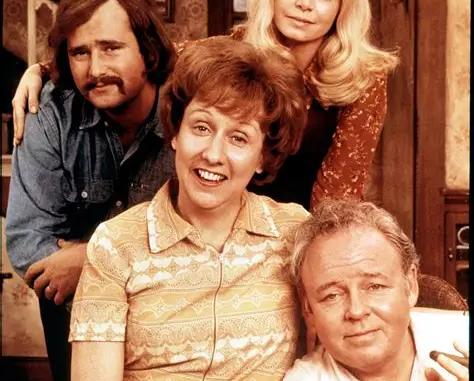
When modern audiences think about television shows that dared to push boundaries, they often mention gritty dramas, controversial streaming series, or politically charged comedies from recent years. But long before television became known for “bold” storytelling, All in the Family was already changing the rules of what a sitcom could be.
Premiering in 1971, the series shocked audiences by talking openly about topics most television networks were terrified to touch. Racism, unemployment, inflation, women’s rights, generational conflict, war, and economic anxiety were suddenly appearing in American living rooms every week — not through serious dramas, but through a family sitcom.
At a time when television was filled with idealized families and harmless comedy, All in the Family felt startlingly real.
That is why the show was decades ahead of its time.
The genius of the series came from its willingness to embrace uncomfortable conversations instead of avoiding them. Most sitcoms of the era focused on light misunderstandings and neatly wrapped-up endings. All in the Family, however, understood that real families argued about difficult issues.
And nobody argued more than Archie Bunker and his son-in-law Mike Stivic.
Played by Carroll O’Connor, Archie Bunker became one of the most controversial characters in television history. Archie was loud, opinionated, politically incorrect, and deeply resistant to social change. Across from him stood Mike, portrayed by Rob Reiner, a younger, liberal college student determined to challenge Archie’s worldview at every opportunity.
Their arguments about race, politics, feminism, and the Vietnam War became the emotional heartbeat of the show.
What made these scenes revolutionary was that they did not feel like scripted “TV lessons.” They felt like real conversations happening across America during the 1970s. Families everywhere were dealing with generational division, changing social values, economic uncertainty, and political frustration. All in the Family simply brought those tensions onto television in a way no sitcom had done before.
The series also explored issues that many networks considered far too risky for comedy.
Episodes dealing with unemployment and financial struggles showed the fear many working-class Americans experienced during economic instability. Unlike glamorous television families who never seemed worried about paying bills, the Bunkers often felt financially vulnerable. That realism made the characters relatable to millions of viewers.
The show’s treatment of women’s roles was equally groundbreaking.
Gloria Bunker Stivic, played by Sally Struthers, represented a younger generation of women beginning to question traditional expectations surrounding marriage and independence. Edith Bunker, portrayed beautifully by Jean Stapleton, initially appeared soft-spoken and submissive, but the series gradually revealed her emotional intelligence and quiet strength.
At a time when female sitcom characters were often limited to simplistic stereotypes, All in the Family allowed its women to feel human and emotionally layered.
Perhaps even more remarkable was the show’s handling of racism and prejudice. Archie frequently expressed offensive opinions that shocked audiences, but the series was not celebrating those views. Instead, the show used Archie’s character to expose the fears, contradictions, and ignorance that existed within parts of American society.
This created an unusual viewing experience. Audiences laughed, but they also felt uncomfortable. They recognized real social tensions hiding beneath the comedy.
That balance between humor and seriousness became one of the defining reasons the show changed television forever.
Another reason All in the Family feels modern today is because its conflicts rarely had simple solutions. Unlike traditional sitcoms where problems disappeared by the final scene, the show often left emotional tension unresolved. Characters continued disagreeing. Family members hurt one another. Social problems remained complicated.
That emotional realism is now common in prestige television, but in the early 1970s, it was almost unheard of for a sitcom.
The performances themselves also helped elevate the material beyond ordinary television comedy. Carroll O’Connor gave Archie moments of vulnerability beneath his anger, preventing the character from becoming one-dimensional. Jean Stapleton brought warmth and humanity to Edith, turning her into the emotional center of the family. Rob Reiner and Sally Struthers added youthful energy and emotional conflict that reflected a changing America.
Together, the cast created characters who felt less like sitcom archetypes and more like real people trying to survive a rapidly changing world.
Looking back today, many of the issues explored in All in the Family still feel surprisingly current. Political polarization, generational division, debates about gender roles, economic insecurity, and cultural conflict continue dominating modern conversations. In many ways, the show predicted the kind of socially conscious television audiences praise today.
That is why younger viewers discovering the series are often shocked by how modern it feels.
The show was not merely trying to entertain audiences. It was challenging them.
And perhaps that is the greatest reason All in the Family remains such an important piece of television history. It proved sitcoms could be funny while also being fearless, emotional, uncomfortable, and socially relevant.
Long before television became known for pushing boundaries, All in the Family was already doing it.
That is why it was not just ahead of its time.
It was decades ahead of its time.