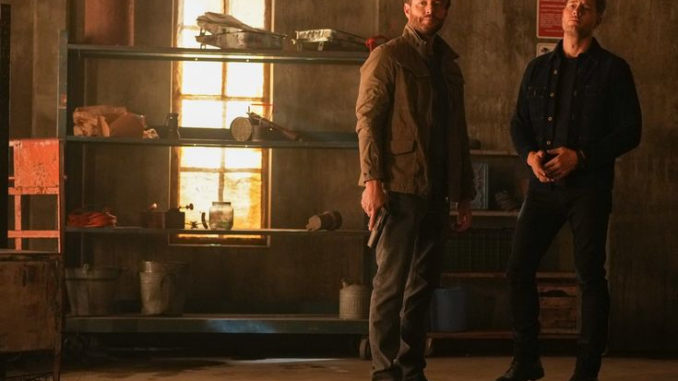
Television trends can change overnight, but the current shift feels more like a quiet takeover than a sudden collapse. Not long ago, Tracker was the show everyone seemed to be talking about. With Justin Hartley leading a gripping, character-driven narrative, it quickly positioned itself as a must-watch. But now, a different force appears to be dominating the conversation—Yellowstone.
The contrast between the two shows couldn’t be more striking. “Tracker” thrives on sleek storytelling and modern procedural tension, while “Yellowstone” leans into sprawling drama, generational conflict, and a cinematic sense of scale. Yet it’s that very difference that may explain the shifting tides. As audiences increasingly gravitate toward immersive, high-stakes storytelling, “Yellowstone” has found a way to capture attention in a way that feels almost cultural.
For “Tracker,” the challenge isn’t necessarily a decline in quality—it’s a matter of visibility. In an era where content is abundant, even successful shows can find themselves overshadowed. “Yellowstone,” bolstered by its expansive universe and loyal fan base, has become more than just a TV series; it’s an event. Each episode feels like part of a larger narrative ecosystem, drawing viewers deeper into its world.
Meanwhile, “Tracker” operates on a more contained scale. Its episodic structure, while effective, may struggle to compete with the layered storytelling that defines “Yellowstone.” Audiences today aren’t just watching shows—they’re investing in universes. And in that regard, “Yellowstone” has a clear advantage.
There’s also the matter of cultural momentum. “Yellowstone” has steadily built its reputation over time, evolving into a phenomenon that extends beyond television. Conversations about the show aren’t limited to plot twists or character arcs—they touch on themes of power, identity, and legacy. That broader resonance has helped it dominate not just ratings, but also public discourse.
“Tracker,” on the other hand, arrived with immediate impact but now faces the challenge of sustaining that initial buzz. The absence of major headline moments or viral storylines has led some to question whether the show is losing its grip on the audience. It’s not that viewers have turned away entirely—it’s that their attention is being pulled elsewhere.
Of course, competition in television isn’t always a zero-sum game. Multiple shows can succeed simultaneously, each carving out its own space. But when one series begins to dominate the narrative, others inevitably feel the pressure. In this case, “Yellowstone” isn’t just competing—it’s redefining what success looks like in the current landscape.
For Justin Hartley, the situation presents both a challenge and an opportunity. His performance remains a central strength of “Tracker,” and his ability to connect with audiences hasn’t diminished. If anything, the current moment could serve as a catalyst for the show to evolve, pushing it toward bolder storytelling and deeper character exploration.
Industry analysts suggest that the key to survival lies in adaptation. Shows that recognize shifts in audience preferences and respond accordingly are more likely to endure. Whether “Tracker” can make that leap remains an open question. The foundation is there, but the path forward may require a reimagining of its narrative approach.
At the same time, it’s worth noting that television cycles are inherently unpredictable. Today’s dominant show can become tomorrow’s underdog, and vice versa. The rise of “Yellowstone” doesn’t necessarily signal the end for “Tracker”—but it does highlight the intensity of the competition.
For viewers, the result is a dynamic, ever-changing landscape where loyalties are constantly tested. Some will stick with “Tracker,” appreciating its grounded storytelling and compelling lead. Others will be drawn to the expansive world of “Yellowstone,” captivated by its scale and ambition.
In the end, the question isn’t whether one show replaces another, but how each adapts to the evolving expectations of its audience. “Tracker” may no longer be the sole focus of attention, but it’s far from irrelevant. The real story lies in what happens next—whether it fades quietly into the background or finds a way to reclaim its place in the spotlight.
Because in television, as in any form of storytelling, relevance isn’t just about where you start. It’s about how you respond when the spotlight begins to shift.