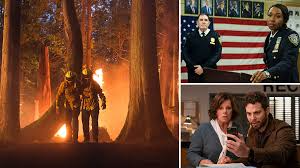
The television landscape is currently weathering a significant storm as CBS initiates a major programming shift that has left fans of procedural dramas in a state of shock. In a move that reflects the tightening belt of traditional broadcast networks, the network has officially confirmed a reduction in episode orders for several of its flagship programs. Leading the charge in this unexpected shake-up is the firefighting hit Fire Country, which, along with three other major dramas, will see its upcoming season significantly trimmed. This strategic pivot marks a turning point for the network as it attempts to balance rising production costs with the evolving consumption habits of a global audience that increasingly favors shorter, more serialized narratives.
Fire Country emerged as a breakout sensation for CBS, blending the high-stakes intensity of Cal Fire rescue missions with the personal redemption arc of Bode Leone. Its success seemed to guarantee a long-term future of full twenty-two-episode seasons, but the reality of the 2025-2026 television season has proven otherwise. The decision to shorten the season stems from a complex intersection of financial and creative pressures. High-octane dramas like Fire Country are notoriously expensive to produce, requiring massive pyrotechnic setups, specialized stunt teams, and extensive location filming in rugged terrains. As advertising revenue on linear television continues to fluctuate, the cost-to-benefit ratio of producing nearly two dozen episodes of such a high-budget series has become harder for the network to justify.
Joining Fire Country in this reduced order are three other staple dramas that have long defined the CBS brand. While the network has been careful with its public messaging, insiders suggest that the move is part of a broader effort to prioritize quality over quantity. By reducing the episode count, the network aims to eliminate the “filler” episodes that often plague long-running procedurals. This allows writers to focus on a tighter, more cohesive narrative arc that can keep viewers engaged without the mid-season lulls that frequently occur in traditional broadcast schedules. However, for a loyal audience accustomed to the comfort of a nearly year-round television presence, this shift feels like a loss of connection with their favorite characters.
The creative implications for Fire Country are particularly profound. The show has spent several seasons building a dense web of relationships and legal hurdles for its protagonist. A shortened season forces the writers to accelerate the pacing, which could either result in a more thrilling, prestige-style drama or a rushed conclusion that leaves fans unsatisfied. There is a delicate balance to maintain between the procedural “emergency of the week” format and the overarching soap-opera elements that have become the show’s hallmark. If the production team can harness the shortened runtime to deliver higher stakes and more cinematic production values, Fire Country may actually benefit from this constraint, evolving into a more “event-style” television experience.
Furthermore, this shake-up is inextricably linked to the expansion of the Fire Country franchise. With the spin-off Sheriff Country already moving through the pipeline, CBS is clearly attempting to build a cinematic universe similar to the successful FBI or NCIS brands. Managing multiple shows within the same world requires an immense amount of executive oversight and creative resources. By shortening the flagship show’s season, the network may be trying to prevent creative burnout among the showrunners and lead actor Max Thieriot, who balances his time between acting, producing, and directing. It is a strategic move to ensure the longevity of the brand, even if it means less screen time for the original series in the short term.
The broader industry trend cannot be ignored. We are seeing a fundamental shift in how broadcast networks compete with streaming giants. Platforms like Netflix and HBO have conditioned audiences to expect ten to thirteen episodes of high-quality storytelling. By adopting a similar model, CBS is attempting to modernize its approach and make its content more “bingeable” for the Paramount+ audience. The challenge lies in keeping the traditional broadcast viewer—who still values the weekly ritual of the twenty-two-episode season—satisfied while pivoting toward a future that looks increasingly different.
As production begins on these shortened seasons, the pressure is on the creators to prove that this new model works. For Fire Country, the stakes have never been higher. The show must prove that it can maintain its ratings dominance and emotional resonance with fewer episodes. If this experiment succeeds, it may become the new blueprint for all broadcast dramas moving forward. If it fails, it could signal the beginning of a decline for the once-untouchable procedural format. Fans remain hopeful that the heroes of Station 42 can make every minute of their reduced screen time count, turning a network setback into a creative triumph. For now, the audience is left to wonder if this is a necessary evolution or the first sign of a diminishing era for network television.