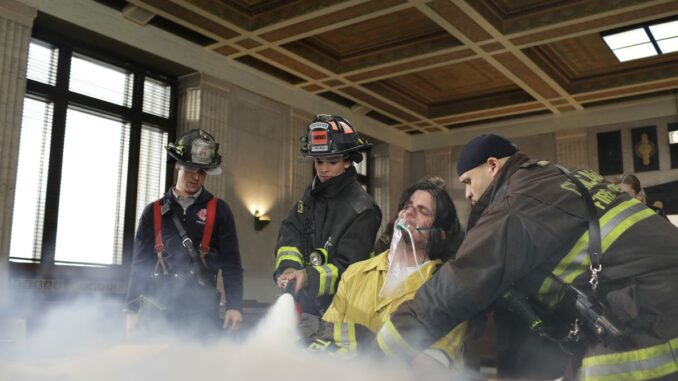
With over a decade of rescues, heartbreak, heroism, and unforgettable character moments, Chicago Fire has delivered many standout episodes. But among longtime fans, one chapter is often mentioned above the rest—the episode that captured everything the series does best.
Season 8’s emotional landmark featuring the death of Brian “Otis” Zvonecek remains, for many viewers, the most powerful hour Chicago Fire has ever produced.
It wasn’t just shocking.
It was devastating.
Television often uses tragedy for quick impact, but this episode did something harder: it earned the heartbreak. Otis had been with the show for years, not as the loudest or most dramatic character, but as one of its emotional anchors. He represented warmth, humor, loyalty, and the family spirit of Firehouse 51.
That’s why losing him hit differently.
From the opening moments, the episode carries a weight that fans could feel immediately. There’s urgency, fear, and the kind of tension Chicago Fire has mastered over the years. But unlike many rescue-driven episodes where viewers expect everyone to survive somehow, this story refuses to offer comfort.
And that made it unforgettable.
The performances across the cast elevated the hour into something special. Reactions felt raw rather than scripted. Grief moved through Firehouse 51 like a real shockwave, touching every corner of the ensemble. Each character processed the loss differently, which gave the episode emotional depth instead of relying on one-note sadness.
That realism is what separates it from ordinary TV drama.
Joe Minoso, Taylor Kinney, Eamonn Walker and the rest of the cast delivered some of the strongest work of the series, balancing heartbreak with restraint. Nobody overplayed the moment. That made it hurt even more.
Fans still talk about one particular reason the episode stands above others: consequences.
In many network dramas, dangerous situations come and go with little lasting impact. Chicago Fire chose a different route here. It reminded audiences that this job is genuinely dangerous, and that even beloved characters are not protected by plot armor.
That decision changed the tone of the show afterward.
The loss of Otis created ripple effects in friendships, team chemistry, and the emotional identity of Firehouse 51. Great episodes don’t just shock in the moment—they reshape what comes next. This one did exactly that.
There are other contenders for best episode status, of course. Some fans prefer major wedding episodes, crossover events, or high-scale rescues. Others point to Casey-centered or Severide-centered emotional chapters. But when viewers discuss the single most unforgettable hour, Otis’ final story repeatedly returns to the top.
Because it combined everything Chicago Fire does well:
High stakes.
Strong ensemble acting.
Emotional realism.
Lasting consequences.
A deep sense of family.
Most importantly, it reminded audiences why they cared so much in the first place. Firehouse 51 was never only about fires. It was about the people who ran into them together.
That’s why this episode remains difficult to rewatch for many fans.
And that’s also why it’s often called the best.
Some episodes entertain. Some surprise. A rare few become part of a show’s legacy.
This one became part of Chicago Fire’s soul.