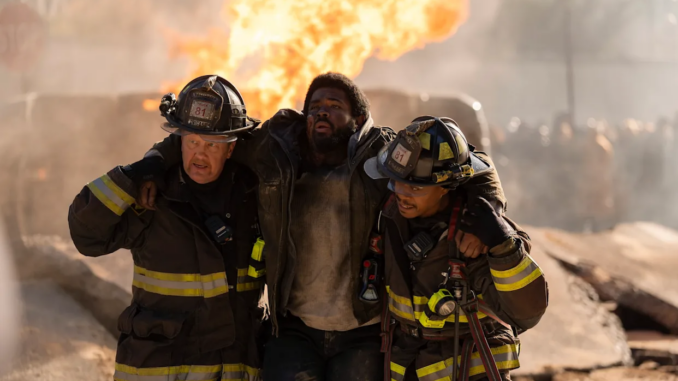
The sirens of Firehouse 51 have echoed through the streets of the Windy City for over a decade, providing a rhythmic heartbeat to NBC’s Wednesday night lineup. As one of the most successful procedural dramas in television history, Chicago Fire has built a legacy on the foundations of courage, sacrifice, and an unbreakable sense of family. However, a shadow of uncertainty has begun to loom over the firehouse. With the latest production updates and shifting cast dynamics, fans across the globe are asking the same anxious question: is the sun finally setting on the heroes of Chicago Fire?
The whispers of a potential series finale have gained momentum following several high-profile departures and transitions. For years, Firehouse 51 felt like an immovable object, anchored by veteran leaders and familiar faces. But the landscape has shifted significantly. The exit of iconic characters, most notably the departure of Chief Wallace Boden, played by Eamonn Walker, has signaled a changing of the guard that feels more permanent than previous transitions. When the literal and figurative father figure of the station hangs up his helmet, it forces the audience to confront the reality that no story lasts forever.
Rumors regarding the final season often stem from the natural lifecycle of long-running dramas. Maintaining the high-octane energy of a rescue series for more than twelve seasons is a monumental task. The writers have navigated every imaginable disaster, from warehouse infernos and chemical spills to personal tragedies that have left the fandom devastated. There is a fine line between keeping a show fresh and repeating the same beats of peril. Many industry insiders suggest that NBC might be looking to consolidate the One Chicago universe, ensuring that the flagship show goes out on a high note rather than fading away.
However, the strength of Chicago Fire has always been its ability to regenerate. The introduction of younger characters and the evolution of veterans like Stella Kidd and Kelly Severide have provided the show with new emotional territory to explore. The chemistry between Taylor Kinney and Miranda Rae Mayo remains a primary draw for millions of viewers. Their journey from colleagues to a married couple navigating the complexities of leadership has given the series a modern anchor. As long as the ratings remain competitive, there is a strong argument for the show to continue, even if the roster looks different than it did in the pilot episode.
From a production standpoint, the costs of filming a major action drama in a city like Chicago are substantial. Specialized stunts, pyrotechnics, and location shoots require a massive budget. As streaming services and broadcast networks re-evaluate their portfolios, veteran shows often face the chopping block because their licensing fees and actor salaries increase every year. Yet, Chicago Fire continues to dominate its time slot, often leading the night in total viewers. This commercial success is the strongest shield the show has against cancellation. NBC knows that the loyal Chi-Hard fanbase is a rare commodity in today’s fragmented media world.
The narrative tension of the current season seems to be building toward a major crossroads. The writers are leaning heavily into themes of legacy and what it means to pass the torch. If this were to be the final season, the storytelling would likely focus on the ultimate fate of the firehouse itself. Would 51 be decommissioned, or would we see a flash-forward to a new generation of heroes? The uncertainty adds a layer of poignancy to every episode. Every time the bells ring and the trucks roll out, there is a sense that we should cherish these moments because the road ahead is unwritten.
While NBC has not released an official statement confirming an expiration date, the atmosphere surrounding the show feels transitional. Whether the series concludes this year or carries on for several more, its impact on the television landscape is undeniable. It redefined the firefighting subgenre by focusing as much on the quiet moments in the common room as the loud moments on the fire ground. The heroes of 51 have become household names, and their bravery has inspired a real-life appreciation for first responders.
Ultimately, the future of Chicago Fire rests on the balance between creative storytelling and network economics. If the creators feel there are still stories worth telling and the audience continues to show up in droves, the fire might burn for a long time yet. For now, fans should keep their eyes on the official announcements but also enjoy the ride. The beauty of Firehouse 51 is that no matter how dark the smoke gets, they always find a way to see each other through to the other side. If this is indeed the final chapter, it promises to be a blaze of glory that no viewer will ever forget.
Is the end truly near for our favorite firefighters? Only time will tell, but one thing is certain: the legacy of Chicago Fire is already etched in stone.