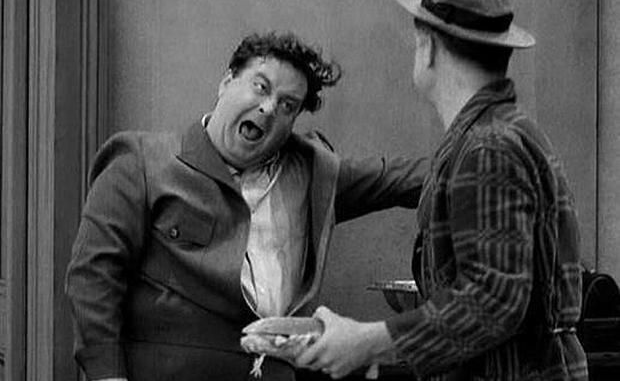
Few classic television series are as beloved as The Honeymooners. Known for its unforgettable characters, explosive humor, and working-class Brooklyn setting, the show helped define what a television sitcom could be. While audiences remember the loud arguments between Ralph Kramden and Alice Kramden or the cheerful antics of Ed Norton, the real magic of the series was happening behind the scenes.
From filming in front of a live studio audience to the unique rehearsal style of its star, the production of The Honeymooners reflected the exciting and experimental era of 1950s television production. Looking back today, the way the show was created reveals just how groundbreaking it truly was.
Filming in Front of a Live Studio Audience
One of the defining elements of The Honeymooners was its decision to film in front of a live audience. At a time when many television programs were broadcast live or recorded with minimal editing, the show embraced a format that blended elements of theater and television.
Episodes were filmed at New York’s famous Adelphi Theatre, where the cast performed scenes in front of hundreds of spectators. This gave the series a vibrant energy that viewers at home could feel immediately.
The audience’s laughter was genuine and spontaneous. Unlike modern sitcoms that sometimes rely on artificial laugh tracks, The Honeymooners captured real-time reactions from people watching the performance unfold. When Ralph delivered one of his over-the-top rants or when Norton performed a comedic bit of physical humor, the room erupted in laughter.
This environment pushed the actors to perform with the timing and intensity of stage performers. The live audience experience also allowed scenes to evolve naturally. If a line received unexpected laughter, the actors might pause slightly or react to the audience, creating an organic comedic rhythm.
Many television historians believe this approach helped make the show’s humor feel more authentic and immediate than other sitcoms of the era.
The Studio Production Process in the 1950s
Producing a sitcom in the 1950s was very different from the television production methods used today. Technology was limited, editing tools were minimal, and most filming relied on large studio cameras that required careful coordination.
For The Honeymooners, the production team used multiple cameras positioned around the set. This allowed scenes to be captured from different angles simultaneously, reducing the need for complex editing later. The sets themselves were simple but effective—especially the iconic Kramden apartment, which became one of the most recognizable locations in television history.
Lighting was bright and intense to accommodate the black-and-white cameras of the era. Because television screens were smaller and less detailed than modern displays, production designers focused on strong contrasts and simple visual compositions.
Scenes were typically filmed in sequence, much like a stage play. This method allowed the actors to maintain the natural flow of the story while keeping the audience engaged.
Despite the technological limitations, the production team managed to create a visually dynamic show. Camera operators frequently shifted angles to capture reactions, particularly during arguments between Ralph and Alice or comedic exchanges between Ralph and Norton.
Jackie Gleason’s Unusual Rehearsal Style
At the center of the show’s production was its star and creative force, Jackie Gleason. Known for his larger-than-life personality, Gleason had a unique philosophy about rehearsals that often surprised his fellow actors.
Unlike many television performers who practiced their lines repeatedly, Gleason preferred minimal rehearsal. He believed that too much practice could make the performance feel stiff or predictable. Instead, he wanted the actors’ reactions to feel spontaneous—almost as if the events were happening for the first time.
This approach meant that co-stars sometimes didn’t know exactly how Gleason would deliver certain lines during filming. His timing, tone, or physical gestures might change unexpectedly, creating genuine reactions from the other performers.
For example, when Ralph launched into one of his famous explosive speeches, the actors around him had to react naturally in the moment. This unpredictability added authenticity to the scenes and contributed to the show’s lively comedic style.
However, this method also required immense talent from the cast. Actors had to remain flexible and attentive, ready to adapt to Gleason’s improvisational energy.
The Cast Chemistry That Powered the Show
One of the reasons The Honeymooners worked so well was the remarkable chemistry among its cast members.
Art Carney, who played Ed Norton, was especially admired for his comedic instincts. Carney’s relaxed, cheerful performance contrasted perfectly with Gleason’s booming presence. His physical comedy—such as Norton’s famous “Norton walk”—often stole scenes and delighted the audience.
Meanwhile, Audrey Meadows brought intelligence and sharp wit to the role of Alice Kramden. Alice’s sarcastic remarks often punctured Ralph’s inflated ego, creating one of television’s most memorable comedic relationships.
Interestingly, Meadows had to fight hard to secure the role. At first, producers considered other actresses, but Meadows convinced them she was perfect for the part. She later negotiated a contract that gave her a share of the show’s profits—an unusually savvy move for an actress at the time.
The fourth member of the core cast, Joyce Randolph, played Trixie Norton with warmth and charm. Though her role was smaller, she helped complete the dynamic between the two couples.
Together, these performers created a sense of authenticity that resonated deeply with audiences.
Unexpected Moments and Behind-the-Scenes Stories
Because of its semi-live filming style, unexpected moments sometimes occurred during production.
Props occasionally malfunctioned, lines were forgotten, and actors sometimes struggled to keep from laughing during particularly funny scenes. Instead of stopping the performance, the cast often incorporated these mistakes into the moment, which made the show feel even more natural.
Another interesting aspect of the production was the show’s relatively short run. Although The Honeymooners produced only the famous “Classic 39” episodes during its 1955–1956 season, those episodes were so well crafted that they became television legends.
The show’s limited number of episodes actually helped preserve its reputation. Rather than declining in quality over time, the series remained consistently strong, ensuring that nearly every episode contained memorable comedic moments.
Why The Honeymooners’ Production Still Matters
Today, when viewers watch reruns of The Honeymooners, they are seeing more than just a sitcom—they are witnessing a piece of television history.
The show demonstrated how powerful character-driven comedy could be. Its use of a live audience, simple sets, and talented performers proved that strong writing and acting were more important than elaborate production.
Many modern sitcoms still use techniques pioneered by The Honeymooners, including multi-camera filming and live audience recordings.
In many ways, the show helped establish the blueprint for the sitcom format that continues to dominate television today.
The Legacy of a Classic Production
Looking back, the behind-the-scenes story of The Honeymooners is almost as fascinating as the episodes themselves. The combination of live audience energy, innovative production techniques, and an extraordinary cast created something truly special.
Even decades later, the show remains a perfect example of how creative storytelling and passionate performances can turn a simple television production into a cultural landmark.
For fans interested in Honeymooners behind the scenes history or the evolution of 1950s television production, the making of The Honeymooners offers a fascinating glimpse into the early days of TV comedy—and a reminder of why the series continues to make audiences laugh today.