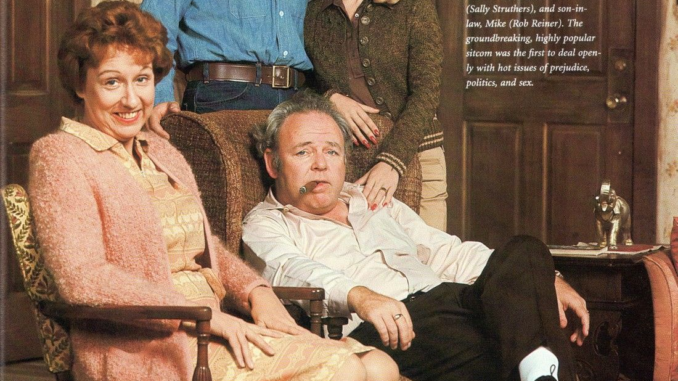
When All in the Family premiered in 1971, American television was dominated by safe, escapist entertainment. Sitcoms tended to avoid controversial subjects, focusing instead on light family humor and simple storylines. Into this landscape came a bold, confrontational series that shattered expectations and forced viewers to confront the social tensions simmering in American society.
Created by television producer Norman Lear, the sitcom redefined what television comedy could accomplish. Through sharp writing, unforgettable characters, and fearless storytelling, All in the Family became one of the most influential programs in television history. Its mixture of humor and social commentary not only entertained millions but also sparked national conversations about race, politics, gender roles, and generational conflict.
A Show Born From a Turbulent Era
The early 1970s were a time of enormous social and political change in the United States. The civil rights movement had reshaped the national conversation about race, the Vietnam War divided the country, and traditional gender roles were being questioned by a rising feminist movement. Television networks, however, were often reluctant to tackle these subjects directly.
That changed when Norman Lear adapted a British sitcom called Till Death Us Do Part into an American format. Lear believed that comedy could serve as a powerful tool for discussing difficult social issues. Instead of avoiding controversy, he embraced it.
Premiering on CBS, All in the Family quickly distinguished itself from other sitcoms. Its scripts addressed topics rarely seen on television at the time—racism, political polarization, economic struggles, and changing family dynamics. Audiences were sometimes shocked, sometimes amused, but almost always engaged.
Within a few seasons, the show became one of the most-watched programs in America. More importantly, it transformed the role of television comedy, proving that sitcoms could tackle serious themes while still making audiences laugh.
The Bunker Family: A Microcosm of America
At the heart of the series was the working-class Bunker household in Queens, New York. Each character represented a different perspective in the cultural debates of the era.
The patriarch, Archie Bunker, was portrayed by Carroll O’Connor. Archie was loud, opinionated, and stubbornly resistant to social change. He often expressed views that reflected the anxieties and prejudices of many Americans of his generation.
His wife, Edith Bunker, played by Jean Stapleton, provided a striking contrast. Kind-hearted and optimistic, Edith often acted as the emotional center of the family. Though frequently underestimated, her compassion and moral clarity made her one of the show’s most beloved characters.
Living with the Bunkers were their daughter Gloria Stivic and her husband Michael Stivic, played by Sally Struthers and Rob Reiner. Michael—nicknamed “Meathead” by Archie—represented the younger, more progressive generation. Their constant arguments over politics and social issues became a central comedic engine of the show.
Together, the Bunker household served as a small-scale representation of the larger cultural debates happening across America.
How Archie Bunker Challenged Social Norms
Perhaps the most remarkable element of All in the Family was its portrayal of Archie Bunker. At first glance, Archie appeared to embody many outdated and controversial viewpoints. Yet the brilliance of the character lay in how the show used him to expose and challenge those attitudes.
Archie represented a segment of the older American working class struggling to understand a rapidly changing society. His opinions about race, gender roles, and politics often reflected fears and frustrations felt by people who believed the world they knew was slipping away.
However, the show never simply celebrated Archie’s views. Instead, it placed him in constant conflict with the people around him—particularly his son-in-law Michael. Through their heated debates, the series confronted issues that television had rarely addressed so directly.
Humor played a crucial role in this process. Archie’s misunderstandings, exaggerations, and stubborn logic often became the source of the show’s biggest laughs. Yet those same moments also revealed the flaws and contradictions in his thinking.
By making Archie both flawed and human, the writers allowed audiences to engage with controversial topics without turning the show into a lecture. Viewers could laugh at Archie while also recognizing the deeper truths behind the conversations.
In many ways, Archie Bunker became one of television’s most important characters because he embodied a national dialogue. Rather than ignoring social divisions, All in the Family brought them into the living room—and invited audiences to think about them in new ways.
Behind the Scenes of a Television Revolution
The production of All in the Family was almost as fascinating as the show itself. When it first aired, network executives were uncertain how audiences would respond to its bold themes. Early episodes even included a disclaimer warning viewers that the program used humor to explore social prejudices.
The cast quickly became one of the most celebrated ensembles in television history. Carroll O’Connor earned widespread praise for his nuanced performance as Archie, balancing comedic timing with dramatic depth. Jean Stapleton brought warmth and sincerity to Edith, transforming what could have been a simple comic role into something deeply memorable.
The show also won numerous awards, including multiple Primetime Emmy Awards, and dominated television ratings throughout much of the 1970s.
A Lasting Cultural Legacy
The impact of All in the Family on television cannot be overstated. It opened the door for a new generation of socially conscious sitcoms that blended comedy with meaningful commentary.
Shows such as The Jeffersons, Maude, and later programs like Roseanne and The Simpsons all drew inspiration from the storytelling style pioneered by All in the Family.
More broadly, the series proved that audiences were willing to engage with complex social issues through comedy. Its influence can still be seen in modern television programs that explore politics, identity, and cultural conflict with humor and honesty.
Why the Show Still Matters Today
More than fifty years after its debut, All in the Family remains strikingly relevant. The debates that unfolded in the Bunker living room—about politics, social change, and generational differences—continue to resonate in contemporary society.
The show’s enduring power lies in its ability to combine laughter with reflection. By presenting flawed characters who struggled to understand one another, it encouraged viewers to consider perspectives different from their own.
In doing so, All in the Family accomplished something rare in television history: it entertained millions while also challenging them to think more deeply about the world around them.