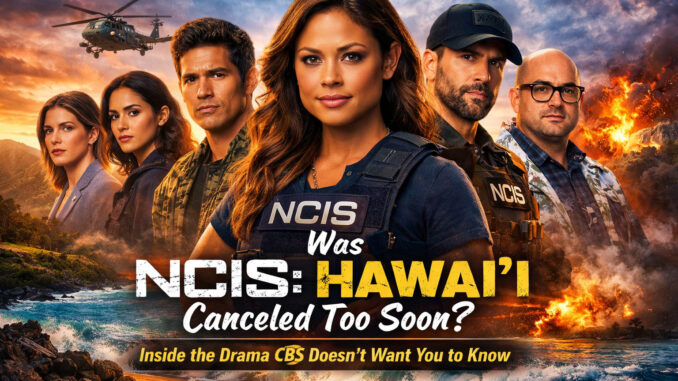
The Sudden Goodbye That Shocked Fans
When NCIS: Hawaiʻi first hit screens, it wasn’t just another procedural—it was a cultural shift. A female-led cast, stunning island visuals, and a fresh take on the beloved NCIS universe made it an instant fan favorite.
So when CBS pulled the plug, fans didn’t just feel disappointed—they felt blindsided.
Was it really time to say goodbye? Or did something deeper happen behind the scenes?
Let’s dig into the truth.
A Quick Recap of NCIS: Hawaiʻi’s Rise
A New Era for the NCIS Franchise
Unlike its predecessors, NCIS: Hawaiʻi broke new ground. With Vanessa Lachey leading as Jane Tennant, the series brought diversity, emotional depth, and a strong female perspective.
And let’s be honest—it worked.
Ratings That Told a Different Story
Despite the cancellation, the show consistently held solid ratings. It wasn’t a flop by any stretch. In fact, compared to many modern network shows, it performed respectably.
So why cancel a show that wasn’t failing?
The Official Reason vs. The Real Story
CBS’s Public Explanation
CBS cited “financial considerations” and “strategic programming decisions.” Sounds corporate, right?
But here’s the thing—those phrases often mean more than they reveal.
The Budget Problem Nobody Talks About
Filming in Hawaii isn’t cheap. Between location logistics, crew costs, and maintaining production quality, NCIS: Hawaiʻi had a higher budget than many of its counterparts.
Even a successful show can become a liability if the cost outweighs the profit.
Behind-the-Scenes Drama and Industry Rumors
Contract Negotiations Gone Wrong?
Whispers in the industry suggest that cast contract renewals may have played a role. Negotiations can get messy—especially when a show gains popularity.
Could disagreements behind closed doors have sealed its fate?
Network Priorities Shifting
CBS has been reshaping its lineup, investing in new content and rebalancing its franchises. Shows like NCIS: Los Angeles and NCIS: New Orleans have already come and gone.
Was NCIS: Hawaiʻi simply the next domino to fall?
Fan Backlash: A Storm CBS Didn’t Expect
Social Media Erupts
Within hours of the announcement, hashtags began trending. Fans flooded platforms demanding answers—and even a reversal.
It wasn’t just noise. It was a movement.
Petitions and Campaigns
Online petitions gathered thousands of signatures in days. Fans argued that the show deserved a proper ending—or at least another season.
And honestly, they had a point.
Why Fans Feel It Was Canceled Too Soon
Unfinished Storylines
Plot arcs were still developing. Characters were evolving. The story felt… incomplete.
Canceling at that point? It felt like hitting pause in the middle of a sentence.
A Growing Fanbase
Unlike declining shows, NCIS: Hawaiʻi was still gaining traction. Word-of-mouth was spreading, and new viewers were joining in.
Canceling a show while it’s still growing is like cutting down a tree just as it starts bearing fruit.
The Bigger Picture: Changing TV Landscape
Streaming vs. Network TV
Let’s face it—traditional TV is under pressure. Streaming platforms are dominating, changing how networks measure success.
Shows now compete not just on ratings, but on streaming potential.
Could Another Platform Save It?
There’s still hope.
Platforms like Netflix or Paramount+ have revived canceled shows before.
Could NCIS: Hawaiʻi make a comeback? It wouldn’t be the first time a fan campaign worked miracles.
What This Means for the NCIS Franchise
A Franchise in Transition
The NCIS universe has been evolving for years. Each spinoff brings something new—but also faces new challenges.
Risk vs. Reward
Canceling a show like NCIS: Hawaiʻi sends a message: even successful entries aren’t safe.
That’s a risky move in a franchise built on loyalty.
Could CBS Have Made a Different Choice?
The Case for Renewal
From fan engagement to steady ratings, the arguments for renewal were strong.
A final season—just to wrap things up—could have softened the blow.
The Business Reality
But TV isn’t just art—it’s business.
And sometimes, even good shows don’t survive the numbers game.
Lessons Learned from the Cancellation
Audience Loyalty Matters
Fans aren’t just viewers—they’re advocates. Ignoring them can backfire.
Transparency Is Key
When networks stay vague, speculation fills the gap. And sometimes, those rumors do more damage than the truth.
The Emotional Impact on Fans and Cast
Cast Reactions
While official statements were polite and professional, you could sense the disappointment.
After all, this wasn’t just a job—it was a family.
Fans Left Hanging
For viewers, it felt personal. They had invested time, emotion, and loyalty.
And suddenly, it was over.

Is This Really the End?
Hope for Revival
In today’s TV landscape, canceled doesn’t always mean gone forever.
Fan pressure has revived shows before—and it could happen again.
The Power of the Audience
At the end of the day, viewers hold more power than ever. Streaming numbers, social buzz, and fan campaigns can influence decisions.
So maybe this isn’t goodbye—just a pause.
Final Verdict: Was It Canceled Too Soon?
Let’s be real—yes, it probably was.
NCIS: Hawaiʻi still had stories to tell, fans to engage, and momentum to build. Its cancellation feels less like a natural ending and more like an abrupt interruption.
And that’s what stings the most.
Conclusion: The Mystery That Still Lingers
The cancellation of NCIS: Hawaiʻi isn’t just about ratings or budgets—it’s about timing, strategy, and maybe even missed opportunities.
Was it purely financial? Or was there more happening behind the scenes than CBS is willing to admit?
One thing’s certain: fans aren’t done talking about it.
And until there’s a clear answer, the mystery lives on.