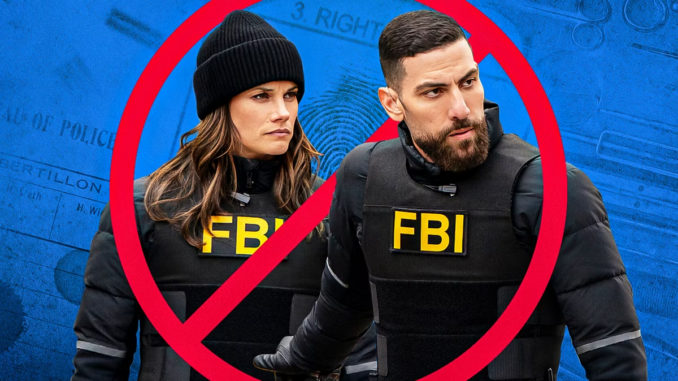
The foundation of the New York Field Office has always been the unwavering bond between Special Agents Maggie Bell and OA Zidan. Their partnership is the gold standard of the Bureau, built on a bedrock of mutual respect, shared trauma, and an intuitive understanding that allows them to move as one in the most dangerous situations. However, the latest episodes of FBI have signaled a seismic shift in this dynamic. The air between them is no longer filled with supportive banter or silent agreement; instead, tension explodes in every scene they share, leading fans to ask a terrifying question: Is the team finally breaking apart?
The friction began as a series of small, almost imperceptible disagreements over tactical decisions, but it has quickly snowballed into a full-blown ideological conflict. On one side, we have Maggie, who has returned to the field with a sharpened sense of urgency and perhaps a more rigid adherence to her own moral compass following her recent brushes with death. On the other side, OA has evolved into a leader who prioritizes the safety of his partner and the long-term stability of the team, sometimes at the expense of the immediate mission. When these two philosophies clash in the high-pressure environment of a live investigation, the results are explosive.
What makes this conflict so painful to watch is that both characters are technically right in their own ways. During a recent high-stakes pursuit, Maggie’s willingness to take a massive risk created a rift that wasn’t just professional but deeply personal. OA’s reaction was not one of a subordinate questioning a superior, but of a partner who feels his trust has been exploited. The heated exchanges in the back of the surveillance van and the heavy silences in the hallways of 26 Fed are a far cry from the seamless coordination we have grown to love. For the first time in the history of the series, the two lead agents are not just on different pages; they are reading from entirely different books.
This growing divide is creating a dangerous ripple effect throughout the rest of the squad. The FBI thrives on clear communication and absolute trust. When the two most senior field agents are at odds, the younger agents like Tiffany Wallace and Stuart Scola are forced to navigate a political minefield. The tension is palpable during briefing sessions, where Jubal Valentine’s rapid-fire instructions are often met with loaded glances between Maggie and OA. The team’s efficiency is beginning to suffer, as hesitation and second-guessing replace the decisive action that usually saves lives. If the core partnership fails, the entire structural integrity of the New York office is at risk.
The psychological toll on both agents is becoming impossible to ignore. Maggie appears increasingly isolated, perhaps feeling that her partner no longer understands the fire that drives her. Meanwhile, OA is visibly struggling with the burden of trying to protect a partner who doesn’t seem to want his protection. This isn’t just a simple plot device; it is a deep dive into the complexities of work-place trauma and the reality that even the strongest bonds can fray under constant pressure. The writers are cleverly exploring the idea that being a hero isn’t a permanent state, but a grueling daily choice that can wear a person down until they snap.
As the season pushes forward, the stakes of this internal war are likely to surpass the threats of the cases they solve. A team that is divided is a team that is vulnerable. If a major antagonist realizes that the legendary duo of Bell and Zidan is fractured, they will undoubtedly use that weakness to their advantage. The promo material for upcoming episodes suggests that this tension will reach a breaking point during a major crisis, forcing both agents to decide if their partnership is worth saving or if it is time to request new assignments.
Fans are understandably divided, with some siding with Maggie’s proactive intensity and others defending OA’s cautious pragmatism. Regardless of where you stand, the drama is undeniably compelling. The series is at its best when it moves beyond the procedural elements and explores the raw, human emotions of its protagonists. Whether they find a way to reconcile or if this marks the beginning of a permanent separation, the landscape of FBI has been irrevocably changed. We are witnessing the possible end of an era, and the fallout promises to be as devastating as any explosion the team has ever faced.