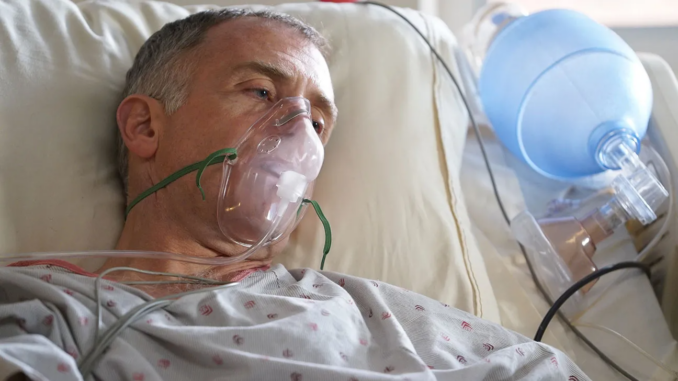
The sirens of Firehouse 51 have often signaled danger for the residents of the Windy City, but the latest narrative arc in Chicago Fire has turned that alarm toward one of its most veteran and beloved figures. Christopher Herrmann, the heart and soul of Engine 51, is currently navigating a career-ending crisis that has left fans questioning if the legendary firefighter can recover before his time in the department is cut short. Known for his wisecracks, his unwavering loyalty to his family, and his “old school” approach to life at the firehouse, Herrmann has survived countless backdrafts and structural collapses, but his latest battle is one that cannot be fought with a hose or an axe.
The crisis began following a harrowing call involving a massive explosion that left Herrmann with significant hearing damage and a lingering sense of vertigo. While he initially tried to brush it off with his trademark bravado, the physical reality of the injury has become impossible to ignore. In a profession where split-second communication and sensory awareness are the difference between life and death, Herrmann’s struggle to hear radio commands or detect the subtle sounds of a shifting structure has placed him in a precarious position. For a man who defines himself entirely by his service to the Chicago Fire Department, the prospect of being forced onto disability or early retirement is a fate worse than any blaze he has ever faced.
The emotional weight of this storyline is a testament to David Eigenberg’s nuanced performance. We see a version of Herrmann that is uncharacteristically quiet and vulnerable. He is a man who has always been the one to offer a pep talk or a shoulder to cry on at Molly’s Bar, but now he is the one retreating into the shadows of the firehouse. The writers have done an excellent job of showing how this health crisis affects his identity. Herrmann isn’t just a firefighter; he is a mentor to the younger generation and a peer to leaders like Chief Boden. Watching him struggle to maintain his standing while younger recruits inadvertently step in to cover for his lapses is a heartbreaking look at the reality of aging in a high-intensity profession.
The pressure on Herrmann is magnified by the looming presence of the department’s medical board. In recent episodes, the tension has shifted from the fire ground to the briefing rooms, where Herrmann must prove his fitness for duty. Every hearing test and every physical evaluation feels like a ticking time bomb. The “career-ending” nature of the crisis isn’t just hyperbole; the CFD has strict safety protocols, and if Herrmann cannot meet the baseline requirements, his badge will be taken regardless of his decades of heroic service. This creates a sense of dread that permeates every scene, as the audience knows that one failed test could mean the end of an era for Firehouse 51.
Furthermore, the impact on the “Mouch and Herrmann” dynamic has provided some of the most poignant moments of the season. Mouch, his long-time best friend and partner in countless “get-rich-quick” schemes, has been forced into the role of a silent guardian. Seeing Mouch navigate the delicate balance of supporting his friend while recognizing the genuine danger Herrmann’s condition poses to the crew adds a layer of maturity to their relationship. It highlights the “found family” aspect of the show, proving that even when a hero is at his lowest, the firehouse remains a sanctuary.
The central question remains: Can he recover in time? The road to rehabilitation is long, involving specialized treatments and a grueling mental adjustment. Herrmann must learn to adapt his leadership style and rely on his team in ways he never had to before. This arc serves as a powerful metaphor for resilience and the courage it takes to ask for help. While fans are used to seeing Herrmann charge into burning buildings, watching him fight to stay in the game is a different, more intimate kind of heroism. It humanizes the legends of 51, reminding us that even the toughest veterans are susceptible to the physical toll of the job.
As we head toward the season finale, the stakes for Christopher Herrmann have never been higher. The community of fans is rooting for a recovery that allows him to go out on his own terms rather than being sidelined by an injury. Whether he manages to regain his full capacity or finds a new way to serve the department, the journey has already left an indelible mark on the series. Chicago Fire has once again proven that its most compelling drama isn’t found in the heat of a fire, but in the resilience of the human spirit.
Firehouse 51 wouldn’t be the same without Herrmann’s voice echoing through the common room or his steady hand on the engine. As he faces this ultimate test, the audience is reminded that the greatest fires are often the ones we fight within ourselves. The countdown is on, and every shift could be his last, making every moment he spends in that uniform feel precious and hard-earned.