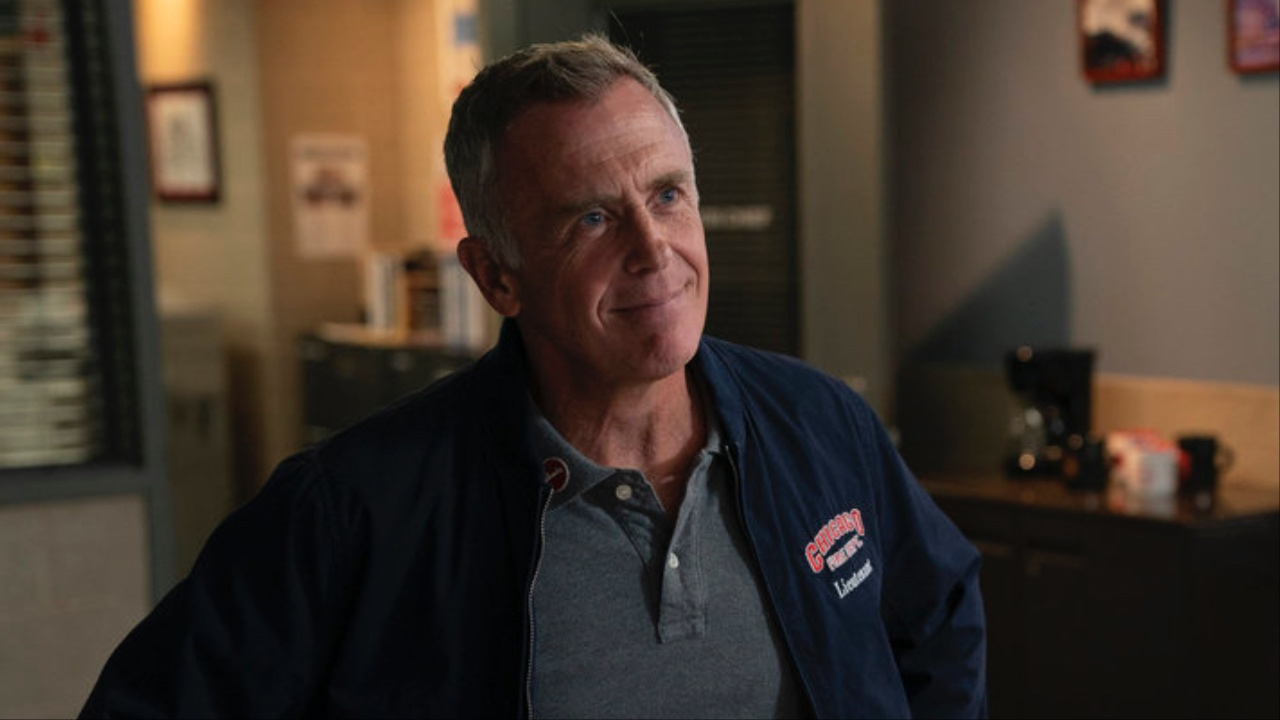
The seasoned halls of Firehouse 51 have weathered countless storms, but the latest narrative arc in the long-running NBC drama Chicago Fire has placed one of its most foundational pillars in a state of unprecedented jeopardy. David Eigenberg, who has portrayed the heart and soul of the engine crew as Christopher Herrmann since the series premiered in 2012, is currently navigating a storyline that hints at a devastating, career-ending crisis. For a character defined by his grit, blue-collar wisdom, and fierce loyalty to his firefighting family, the prospect of hanging up the turnout gear for good isn’t just a professional hurdle—it is an existential threat that has the entire One Chicago fanbase bracing for a heartbreaking transition.
The genius of David Eigenberg’s performance has always been his ability to balance comedic relief with a raw, visceral humanity. Herrmann is the Everyman of the firehouse, a father of five and a small business owner who represents the aging veteran trying to keep pace with a younger, faster generation of first responders. However, the writers have recently pivoted toward a more somber reality, introducing physical and psychological stressors that suggest Herrmann’s body and mind may finally be reaching their limit. Whether it is the lingering effects of a traumatic blast or the cumulative toll of decades spent inhaling smoke and carrying the weight of fallen comrades, the signs of a decline are being woven into the scripts with painful clarity.
What makes this career-ending crisis so poignant is the way it mirrors the real-life challenges faced by veteran firefighters. Chicago Fire has always prided itself on its grounded portrayal of the profession, and by placing Herrmann in a position where he might be forced to retire against his will, the show is exploring a universal fear: the loss of identity. For Christopher Herrmann, the firehouse is not just a job; it is his sanctuary and his legacy. Seeing David Eigenberg portray the frustration and denial of a man who can no longer perform at one hundred percent is a masterclass in subtlety. The shaky hand after a difficult call or the silent moment of reflection in the common room speaks louder than any explosion, signaling that the end of an era may be closer than anyone is ready to admit.
The impact of this crisis ripples far beyond Herrmann himself. As a mentor to younger characters and a peer to leadership figures like Wallace Boden and Kelly Severide, Herrmann’s potential departure creates a vacuum that would fundamentally shift the internal dynamics of Station 51. He is the bridge between the old guard and the new recruits, the man who provides perspective when the world feels like it is falling apart. If the show follows through on a permanent exit, the remaining crew will have to find a new moral compass, a task that feels increasingly difficult in the high-stakes environment of the Windy City. This shift in the ensemble hierarchy is what makes the current season feel so urgent and unpredictable.
Furthermore, the storyline allows the series to tackle the often-taboo subject of the physical and mental health of aging first responders. By putting a beloved icon like David Eigenberg at the center of this struggle, the showrunners are highlighting the reality that heroism has an expiration date. The heartbreak felt by the audience stems from a sense of injustice—that a man who has given everything to his city might be sidelined by circumstances beyond his control. It creates a powerful emotional hook that ensures viewers are tuned in every week, hoping for a miracle that allows Herrmann to stay in the game, while simultaneously preparing for a final farewell.
As we look toward the upcoming episodes, the tension surrounding Herrmann’s medical evaluations and his standing with the department has reached a boiling point. David Eigenberg has managed to make this struggle feel incredibly personal, drawing on his years of history with the character to deliver his most vulnerable work to date. Whether this arc ends in a heroic last stand or a quiet, dignified retirement, the legacy of Christopher Herrmann is already cemented in the history of the franchise. The show is successfully proving that the most intense fires are not the ones burning in the skyscrapers of Chicago, but the ones burning within the hearts of its oldest defenders as they face the sunset of their careers.
The speculation among fans continues to mount, with many wondering if this is a strategic move to transition Eigenberg into a different capacity within the One Chicago universe or if it marks a definitive goodbye. Regardless of the outcome, the narrative courage to put a core character through such a definitive crisis has revitalized the emotional stakes of the series. Firehouse 51 may never look the same without its loudest and most passionate engine officer, but the journey of watching him fight one last battle for his professional soul is a testament to why Chicago Fire remains a staple of network television.