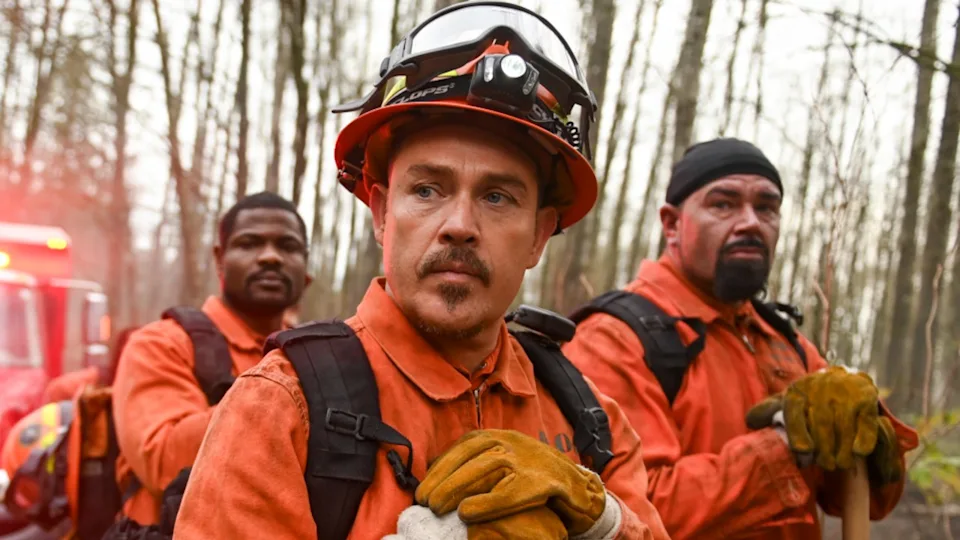
The atmospheric tension of Edgewater has reached a fever pitch as CBS’s Fire Country plunges into a narrative arc that has the entire fanbase bracing for impact. While the show has always been defined by its high-octane rescue missions and the redemptive journey of Bode Leone, the spotlight has recently shifted toward a more veteran presence. Kevin Alejandro, who portrays the stoic and resilient Vince Leone, is currently at the heart of a storyline so perilous that it has ignited widespread concern across social media. The question echoing through the fandom is no longer just about the success of a mission, but rather a much more somber inquiry: Is Vince Leone in real, permanent danger?
Vince has long served as the foundational pillar of Station 42 and the emotional anchor for the Leone family. As the Fire Chief, he is the man who carries the weight of the town’s safety on his shoulders while simultaneously navigating the fractured relationship with his son and the grief of past family tragedies. However, recent episodes have seen this pillar begin to crack. The writers have introduced a series of physical and psychological stressors that suggest Vince is pushing himself far beyond the breaking point. Whether it is a lingering injury masked by duty or the sheer cumulative trauma of a lifetime fighting fires, the signs of a decline are becoming impossible for the audience to ignore.
The worry for Kevin Alejandro’s character stems from a shift in the show’s tone, which has moved from celebratory heroism to a more grounded exploration of the toll this profession takes on the body and mind. In several recent high-stakes sequences, we have seen Vince uncharacteristically hesitant or physically compromised. These moments are meticulously crafted to build a sense of dread, leading viewers to believe that a catastrophic failure is imminent. In a drama where no one is truly safe, the prospect of losing the patriarch of the series feels like a move that would fundamentally alter the DNA of the show.
From a narrative perspective, placing Vince in genuine jeopardy serves a dual purpose. It forces the younger generation, specifically Bode and Jake, to step into leadership roles they may not be ready for, and it highlights the mortality of the heroes we often view as invincible. Kevin Alejandro’s performance during this arc has been nothing short of masterly. He portrays Vince with a weary dignity, showing a man who is trying to hold back the tide with his bare hands. The subtlety in his acting—the winces of pain hidden from his crew or the long, silent stares at the firehouse—suggests a character who knows his time might be running short.
This sense of impending doom is amplified by the way Fire Country handles its ensemble dynamics. If Vince is sidelined or, worse, written out, the ripple effect would be devastating. Sharon Leone would lose her partner in both life and work, and the precarious peace between the Leone family and the town would likely shatter. This is why fans are so vocal about their fears; Vince isn’t just a character, he is the glue that keeps the various subplots from spinning out of control. The possibility of his exit feels like the loss of the show’s moral compass.
Beyond the on-screen drama, some viewers have pointed to the cyclical nature of television casting as a reason for concern. Often, when a veteran actor’s character undergoes a massive, life-threatening trial, it can be a precursor to a transition behind the camera or a departure to pursue other creative ventures. However, Kevin Alejandro has also been a key creative force for the series, having directed several pivotal episodes. This involvement might suggest that even if Vince Leone faces a tragic end, Alejandro’s footprint on the show will remain. Still, for the fans who tune in every week to see the Chief lead his team into the flames, the thought of an Edgewater without Vince is a bitter pill to swallow.
As the season progresses toward its inevitable climax, the intensity surrounding Vince’s fate will only continue to grow. The show has successfully created a scenario where every siren and every falling timber feels like it could be the end for a beloved icon. Whether this is a clever feint by the writers to heighten the stakes or the beginning of a final farewell, the emotional investment from the audience is a testament to the character Alejandro has built. For now, the fans are left watching the smoke, hoping that their leader finds a way to make it back to the station one more time.