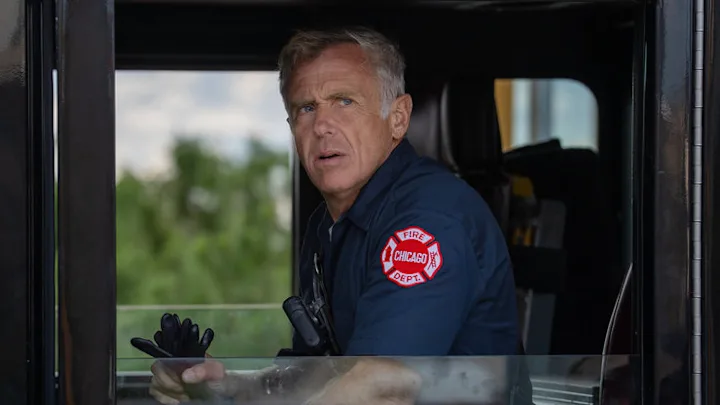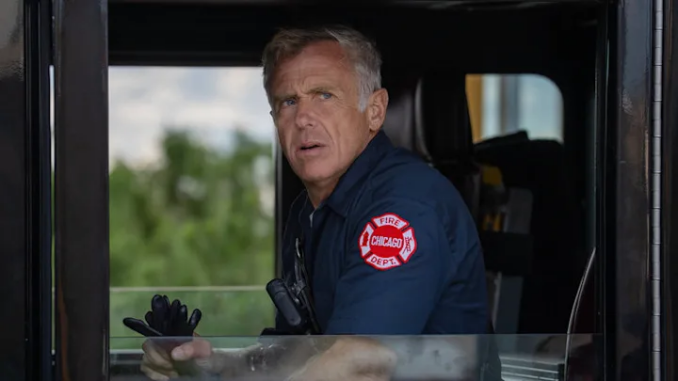
The bustling atmosphere of Firehouse 51 has always been defined by its unwavering sense of family and tradition, but the latest narrative arc in Chicago Fire has introduced a somber reality that threatens to dismantle one of its most foundational pillars. For over a decade, David Eigenberg has portrayed Christopher Herrmann with a masterful blend of blue-collar grit and paternal warmth, serving as the emotional conscience of the engine crew. However, the current season has veered into devastating territory, placing Herrmann at the center of a heartbreaking career-ending crisis that has left the audience in a state of collective grief. This is not a standard tactical hurdle or a momentary injury; it is a profound exploration of the physical and psychological toll of a lifetime spent in the line of fire.
The brilliance of David Eigenberg’s performance has always been his ability to ground the high-stakes drama of the One Chicago universe in the relatable struggles of a family man. The current crisis began with a subtle, lingering medical issue—a hearing impairment caused by a proximity explosion during a high-stakes rescue. What initially seemed like a temporary setback has evolved into a permanent physiological barrier, forcing Herrmann to confront a reality that every first responder fears: the possibility that his body can no longer keep the promises his heart wants to make. The cinematography of these recent episodes has been particularly effective, utilizing muffled sound design and isolated framing to pull the audience into Herrmann’s world of increasing silence and professional isolation.
What makes this moment so heartbreaking is the way it challenges Herrmann’s identity beyond the firehouse. To the men and women of Engine 51, he is a mentor and a source of constant stability. To his wife Cindy and their five children, he is the provider who has always managed to come home safely. By placing David Eigenberg at the center of this medical crisis, the writers are stripping away the invincibility of the procedural hero. Watching Herrmann attempt to hide his symptoms during a departmental physical is a masterclass in desperation, illustrating the lengths a man will go to protect the only life he has ever known. It is a raw, unpolished look at the aging process within a profession that demands peak physical perfection.
The impact of this crisis on the rest of the Firehouse 51 crew adds a layer of tragic complexity to the story. Characters like Joe Cruz and Mouch, who have stood by Herrmann’s side for years, are forced into a painful position where their loyalty to their friend conflicts with their duty to the safety of the team. The tension at Molly’s Bar and the station common room is suffocating, as the realization sets in that the era of Christopher Herrmann might be reaching its final chapter. David Eigenberg delivers some of his finest work to date, moving away from his trademark comedic timing to embrace a vulnerable, elegiac tone that resonates with anyone who has ever faced an unwanted career transition.
Furthermore, the introduction of a new, younger candidate who is being groomed to take over Herrmann’s spot on the engine adds a layer of chilling finality to the arc. This isn’t just a physical battle; it is a psychological war against the feeling of becoming obsolete. The show is daring to explore the “forgotten veteran” trope with a level of grit and emotional weight that reminds the audience why Chicago Fire remains at the top of the genre. By pushing Herrmann to the brink of a forced retirement, the series is asking difficult questions about the value of experience versus the necessity of physical capability.
The meta-commentary surrounding the show’s longevity and the aging of its original cast also adds a layer of real-world uncertainty for the fans. Because the series has historically prioritized realism, the threat to Herrmann’s position feels genuine and permanent. The question of whether the firehouse could function without its primary moral anchor is a bold narrative gamble, and this episode leans into that ambiguity with a fearless confidence. Every scene featuring the medical evaluations and the quiet conversations between Herrmann and Chief Boden feels like a countdown to an inevitable and potentially heartbreaking departure.
As the smoke clears on this breathtaking chapter, the aftermath of Herrmann’s ordeal will undoubtedly leave a permanent mark on the unit. Whether he finds a way to remain in the department in a different capacity or if this truly marks the end of his time in the field, the landscape of the Chicago Fire universe has been forever altered. The episode serves as a powerful reminder that in the world of first responders, the most dangerous enemies are often the ones you cannot see, and the hardest fires to put out are the ones burning within. The legend of Christopher Herrmann is being tested in the most extreme conditions imaginable, and the viewers are left breathless, hoping for a miracle but bracing for the possibility that the era of this iconic firefighter has finally reached its limit.