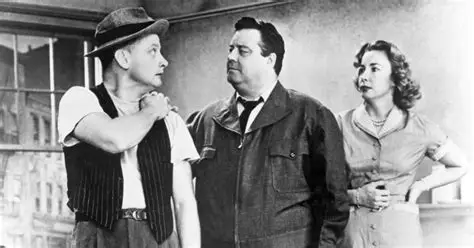
Today, many sitcoms proudly explore the messy, complicated realities of relationships. Shows often highlight financial struggles, marital arguments, and the everyday frustrations that couples face. But long before modern television embraced this kind of realism, one show had already broken the mold. In the mid-1950s, The Honeymooners stunned audiences by portraying married life not as a perfect fantasy—but as something far more relatable.
The series centered on bus driver Ralph Kramden and his patient wife Alice Kramden, a working-class couple living in a small Brooklyn apartment. Instead of glamorous homes or idealized romance, viewers saw a cramped kitchen, constant money problems, and a husband who was always dreaming up wild schemes to get rich quickly.
At the time, this was incredibly unusual for television. Many early sitcoms preferred to show tidy suburban homes and happy couples with very few real problems. But The Honeymooners was different. Ralph often struggled with frustration and pride, while Alice answered his bluster with sharp wit and calm practicality. Their arguments felt genuine, sometimes loud, but always grounded in the reality of everyday life.
A huge part of the show’s success came from the performances of Jackie Gleason, who played Ralph, and Audrey Meadows, who portrayed Alice. Gleason brought explosive comedic energy to Ralph’s temper and unrealistic dreams, while Meadows balanced him perfectly with Alice’s intelligence and sarcasm. Together, they created a relationship dynamic that felt surprisingly authentic for television at the time.
The show also introduced viewers to Ralph’s best friend, sewer worker Ed Norton, played by Art Carney. Norton’s cheerful optimism and oddball personality often pulled Ralph into ridiculous money-making schemes—most of which failed spectacularly.
What made The Honeymooners so groundbreaking was its honesty. The Kramdens weren’t wealthy, glamorous, or perfect. They argued about money, worried about the future, and struggled with the pressures of working-class life. Yet beneath all the shouting and sarcasm was something deeply sincere: Ralph and Alice truly loved each other.
In many ways, the show paved the way for the more realistic sitcoms that would follow decades later. Modern audiences may take flawed, relatable characters for granted, but in the 1950s, The Honeymooners was doing something daring—showing that marriage wasn’t always smooth, but it could still be full of humor, loyalty, and heart.
Even today, the legacy of The Honeymooners remains powerful. By daring to show the struggles behind closed doors, the show helped redefine what television comedy could be—and proved that sometimes the most honest stories are also the funniest.