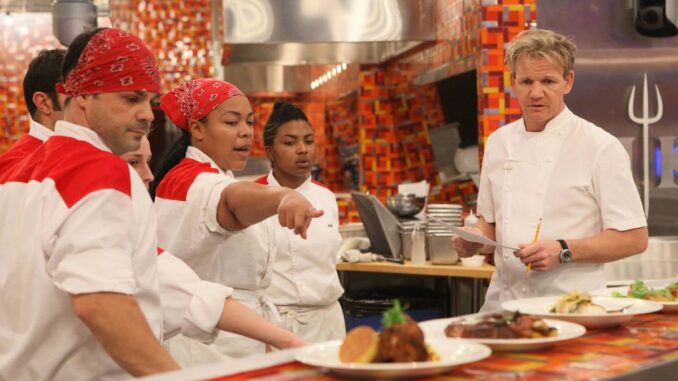
For two decades, Gordon Ramsay has been television’s ultimate kitchen tyrant: red-faced, vein-popping, hurling insults like “idiot sandwich,” “donkey,” and “it’s f***ing RAW!” at terrified contestants on Hell’s Kitchen, Kitchen Nightmares, and beyond. Fans watched in awe and horror, convinced the rage was authentic—born from a brutal upbringing, forged in high-pressure Michelin kitchens, and unleashed on anyone who dared serve substandard food.
But as 2026 unfolds—with Being Gordon Ramsay dominating Netflix, retirement whispers, grandfather glow-ups, and rival chefs questioning whether he’s “lost his touch”—a quieter, more complicated truth is emerging. The explosive persona that defined him might not have been pure, unfiltered anger after all. It was performance. Survival. And, increasingly, a mask he’s finally ready to drop.
Insiders, former producers, and even Ramsay himself have begun peeling back the layers:
- The Persona Was Crafted Early Ramsay’s first breakout show, Boiling Point (1998), captured real intensity during his push for three Michelin stars at Aubergine. But by the time Hell’s Kitchen launched in the US (2005), producers quickly realized raw Gordon was too volatile for network television. Multiple ex-crew members (speaking anonymously in 2024–2026 podcasts and articles) claim early episodes were heavily edited to amplify outbursts, insert dramatic pauses, and even feed him lines via earpiece during services. “We needed the villain,” one former producer told a food-industry outlet last month. “He gave us gold, but we polished it into dynamite.”
- Rage as Armor In Being Gordon Ramsay, Gordon admits the screaming was partly inherited trauma turned outward. Growing up with an abusive, alcoholic father who died at 53, he learned anger as a shield. Kitchens became the one place he could control chaos. “I wasn’t just yelling at bad risotto,” he says in Episode 4. “I was yelling at the kid who got hit for spilling milk.” The TV version? Exaggerated for effect—but rooted in real pain. Fans who grew up watching now confess they felt it too: the rage was cathartic, a proxy for their own unspoken anger.
- Burnout Turned It Hollow By the mid-2010s, the constant performance began to hollow him out. Ex-staff from his restaurants (Glassdoor reviews 2025–2026) describe a man who still yelled—but the fire felt rehearsed, less personal. In the docuseries, he confesses burnout made him “a ghost at home and a caricature on screen.” The screaming continued because it was expected; the soul behind it was running on fumes.
- The Softening Is Real 2026 Gordon is visibly different. Grandfatherhood (Holly’s son born, Tilly pregnant), public grief over Rocky and Adam, therapy admissions, and family-first posts show a man no longer hiding behind the mask. When Tilly roasted his failed attempt at her potatoes, he laughed it off instead of exploding. When Marco Pierre White called him out, he defended his empire without personal venom. The old Ramsay would have gone nuclear. The new one? He’s choosing peace.
Fans are now saying what they never dared before:
- “I used to think the anger was 100% real. Now I see it was half trauma, half TV. And I loved him anyway.”
- “He played the monster so we didn’t have to feel like one. Watching him cry on Netflix broke me.”
- “The truth is he was never just the villain. He was the wounded kid who built a shield so big it almost swallowed him.”
The explosive persona wasn’t fake—it was amplified, weaponized, and eventually exhausting. What fans once believed was pure, unfiltered Gordon was a carefully honed character that protected him, entertained millions, and, in many ways, saved him from repeating his father’s cycle.
But in 2026, the mask is slipping. And the man underneath—flawed, guilty, tender, still brilliant—is finally stepping into the light.
The kitchen may never see that level of televised fury again. And maybe that’s exactly how it should be.