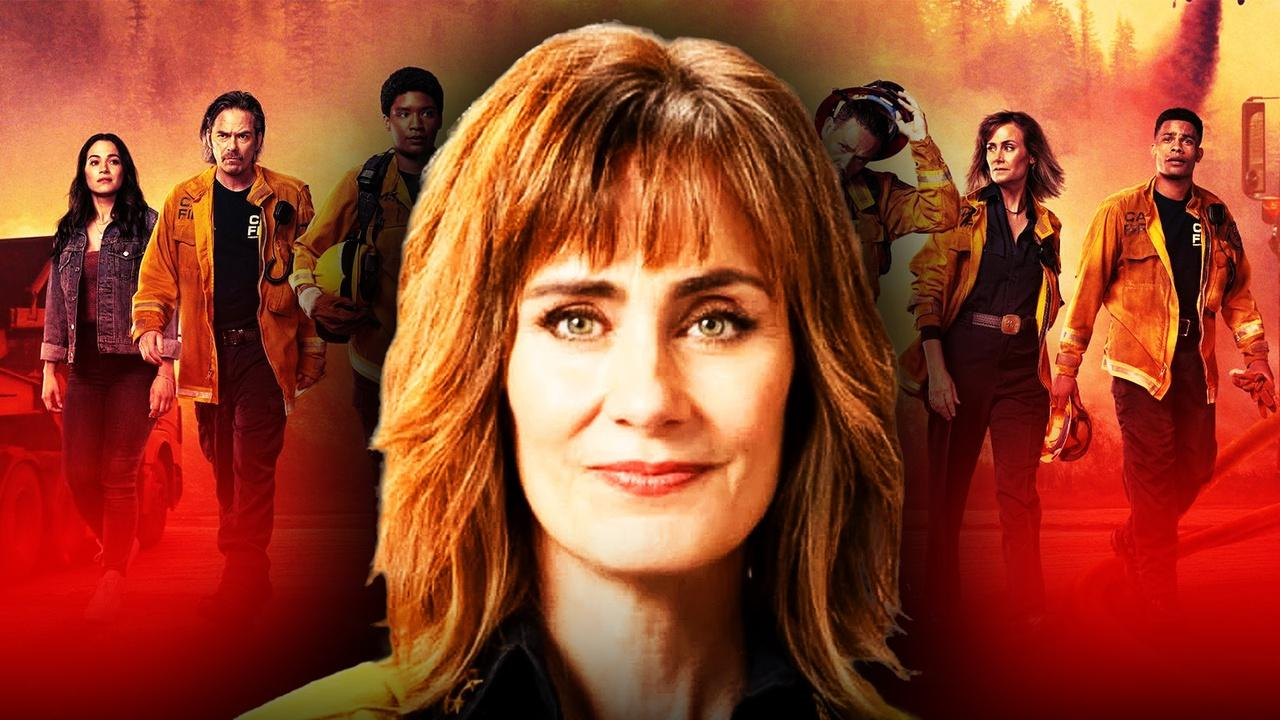
The emotional landscape of Edgewater has always been as treacherous as its mountainous terrain, but a recent development in Fire Country has pushed the boundaries of network drama into a somber, deeply provocative territory. Fans are currently reeling from a sequence of events that suggests a heartbreaking question: Did Sharon Leone try to end her life? This potential shift into such dark thematic material marks a turning point for the series, moving it away from the adrenaline-pumping action of the fire line and into the silent, suffocating grip of a mental health crisis within the Leone household.
Sharon Leone, portrayed with incredible depth by Diane Farr, has long been the emotional bedrock of the show. As the matriarch of the family and a high-ranking official within Cal Fire, she has navigated kidney failure, the incarceration of her son Bode, and the death of her daughter Riley with a stoic grace that often masked her internal fracturing. However, the cumulative weight of these tragedies appears to have finally breached her defenses. The recent episodes have portrayed a version of Sharon that is uncharacteristically detached, leading to a moment of isolation that has left the audience breathless and searching for answers.
The Anatomy of a Breaking Point
The brilliance of Fire Country lies in its ability to show that heroes are not invincible. For several seasons, Sharon has been the person everyone else leans on. She fought for Bode’s redemption, managed her husband Vince’s explosive temper, and maintained the operational integrity of the station. But the show is now exploring the cost of that strength. When a person is always the anchor, they are often the first to be pulled under when the storm becomes too great.
The scene in question was filmed with a haunting, quiet intensity that contrasted sharply with the show’s usual roar of chainsaws and sirens. By focusing on Sharon’s isolation, the directors emphasized the internal nature of her struggle. If this was indeed a suicide attempt or a moment of extreme self-neglect, it serves as a stark reminder that the most dangerous fires are often the ones burning inside. This narrative choice forces the audience to look past the badge and the uniform to see a woman who is simply exhausted by the relentless cycle of grief and survival.
Impact on the Leone Family Dynamic
If Sharon is truly at her lowest point, the ripple effects will be felt by every character in Edgewater. For Vince, played by Billy Burke, the realization that he might have missed the warning signs of his wife’s despair is a devastating blow. Their partnership has been the show’s most stable relationship, and seeing that foundation crack introduces a new level of vulnerability to the series. Vince is used to fighting external fires, but he is fundamentally ill-equipped to battle an enemy as invisible and persistent as clinical depression or suicidal ideation.
For Bode, his mother has always been his primary advocate. His journey toward parole and a clean slate was fueled largely by his desire to make Sharon proud. If she is no longer the North Star guiding him home, Bode’s own stability is at risk. This dark turn creates a high-stakes emotional environment where the characters must learn to save one another in ways that don’t involve a fire hose or a helicopter rescue. It shifts the show’s focus toward the importance of mental health awareness within the first responder community, a demographic that historically struggles with the stigma of seeking help.
Why This Dark Turn Is Necessary for the Narrative
While some viewers might find this shift into darker territory jarring, it is a necessary evolution for a show that claims to be a realistic portrayal of life in high-stress professions. Fire Country is at its best when it refuses to take the easy way out. By addressing the possibility of Sharon’s self-harm, the writers are acknowledging the reality of burnout and PTSD that plagues real-life firefighters and their families. It adds a layer of social responsibility to the entertainment, sparking conversations among fans about the signs of distress and the need for support systems.
The question of whether Sharon tried to end her life remains a haunting cloud over the current season. Regardless of the definitive answer, the damage is done; the illusion of the Leone family’s invincibility has been shattered. As we move forward, the show must navigate this sensitive subject with the same care it gives to its technical rescue scenes. The path to recovery for Sharon will likely be long and arduous, providing a new type of redemption arc that is just as vital as Bode’s legal journey.
This moment of darkness has unified the fanbase in a shared sense of concern for a beloved character. It proves that despite the spectacle of the fires, it is the human heart that keeps us coming back to Edgewater. We are no longer just watching to see if the fire is extinguished; we are watching to see if Sharon Leone can find a reason to keep her own light burning.