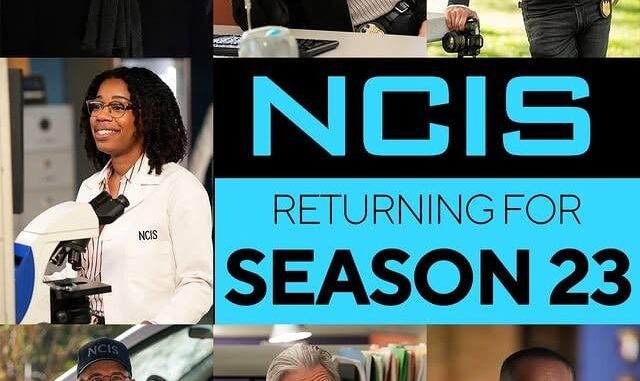
At least the folks working in the “NCIS” writer’s room have a sense of humor about their foibles. “Her” makes ample reference to an infamously stupid scene in Season 2’s “The Bone Yard” — then turns the moment on its head by having its characters talk about and then partially reenact the scene with different results.
In “The Bone Yard,” Abby Sciuto (Pauley Perrette) and Tim McGee (Sean Murray) try to stop a major hack of Abby’s computer in her lab by wildly typing on the keyboard. Their progress is nil and Tony DiNozzo (Michael Weatherly) and Leroy Jethro Gibbs (Mark Harmon) enter the room and gawk at them. All of a sudden Abby’s terminal shuts off and both she and Tim are each convinced that the other fixed the problem. But it turns out Gibbs unplugged the computer.
Fans and casual observers have long laughed at that interlude, but “Her” pays fond tribute to Abby and Tim’s follies. In it, Ukrainian cyberterrorist Patricia Kovach (Masha Cima) complains to her colleague Jonathan Lin (Sam Marra) about a novel she’s reading. “Do you know what’s dumber than running ops from a bombed-out basement?” Patricia asks. He replies, “Don’t say, ‘Two people typing on the same keyboard.'” She echoes his statement back to him, and he says he warned her not to read the book because it would melt her frontal lobes. Later, after Patricia admits it’s the only form of entertainment they have down there, she wonders, “How could the boss read this unrealistic crap?” Jonathan then goes on to defend the plot point. “Okay. Rude. And it is technically possible … Remap the macros. Assign key clusters left side, right side. Perfect for emergencies.” Well, there you have it.
When Nostalgia Meets Tech Absurdity
Television crime dramas thrive on suspense, clever twists, and dramatic reveals. But sometimes, they also lean into moments that are… well, a little ridiculous. And if you’ve watched NCIS long enough, you probably know exactly what we’re talking about.
With NCIS Season 23, the legendary procedural has done something both surprising and oddly nostalgic—it has revived one of the most famously mocked hacking tropes in television history. Yes, the show that helped define modern crime dramas just dipped back into a moment that fans, critics, and internet meme creators have laughed about for years.
But why bring it back now? Is it a tongue-in-cheek nod to longtime viewers? A harmless joke? Or a reminder that even beloved series sometimes embrace the absurd? Let’s unpack why NCIS Season 23 resurrecting this infamous hacking trope has everyone talking again.
A Quick Look at the Legacy of NCIS
The Crime Drama That Refuses to Quit
Since its debut in 2003, NCIS has grown into one of television’s most enduring franchises. What started as a naval investigative drama quickly evolved into a global phenomenon.
With multiple spin-offs, decades of storylines, and a rotating roster of fan-favorite characters, the series has mastered the art of balancing procedural storytelling with character-driven drama.
Why Fans Keep Coming Back
The secret sauce of NCIS has always been simple:
-
Charismatic characters
-
Emotional story arcs
-
A mix of humor and high-stakes investigations
-
And just enough technical wizardry to keep things interesting
But sometimes that “technical wizardry” gets… creative.
The Infamous Hacking Scene That Became a Meme
When Two People Use One Keyboard
If you’ve spent even a few minutes in online TV forums, you’ve probably seen it—the legendary scene where two characters try to stop a hacker by typing on the same keyboard at the same time.
Yes, really.
The moment became instantly iconic for how absurd it looked to anyone even slightly familiar with computers.
Why the Internet Never Let It Go
The scene exploded across the internet for several reasons:
-
It looked hilariously unrealistic
-
It unintentionally created a perfect meme template
-
Tech experts roasted it for years
The moment quickly became shorthand for Hollywood’s misunderstanding of hacking.
And yet, somehow, it became part of the show’s legacy.
Season 23 Brings the Trope Back
A Surprising Throwback
Fast-forward to NCIS Season 23, and fans noticed something familiar during a tense cyber-crime storyline.
The show revisited that same style of frantic, exaggerated hacking sequence. Screens flashed with rapid code, characters shouted instructions, and the entire scene leaned heavily into the dramatic chaos.
Was it intentional? Many viewers think so.
A Self-Aware Moment
Unlike earlier seasons, this time the moment felt more self-aware. Instead of presenting the scene with complete seriousness, the episode hinted at a subtle wink to longtime fans.
It’s almost as if the show was saying:
“We know you remember that scene.”
Why TV Shows Struggle With Realistic Hacking
Real Hacking Isn’t Cinematic
The truth is, real-world cybersecurity is rarely exciting to watch.
Most of it involves:
-
Silent coding
-
Long hours analyzing data
-
Patiently testing vulnerabilities
That doesn’t exactly scream “edge-of-your-seat television.”
Drama Requires Visual Action
To keep audiences engaged, shows exaggerate computer scenes with:
-
Flashing graphics
-
Rapid typing
-
Dramatic countdowns
It’s the digital equivalent of action movies where every explosion is ten times bigger than reality.
Why Fans Actually Love These Ridiculous Moments
Campy Charm
Ironically, the very thing critics mock often becomes part of a show’s charm.
For many fans, these moments feel like inside jokes shared with the audience.
A Sense of Tradition
Long-running shows develop quirks over time. Some become beloved traditions.
In the case of NCIS, the over-the-top hacking scenes are almost like a signature move.
Social Media Reacts to the Season 23 Callback
Instant Meme Material
Within hours of the episode airing, clips began circulating across social media platforms.
Fans joked that the show had:
-
“Unlocked the ultimate keyboard combo”
-
“Discovered cooperative hacking”
-
“Reinvented cybersecurity”
Fans Are In On the Joke
Instead of criticizing the scene, many viewers celebrated it.
After all, when a show runs for over two decades, leaning into its own history can feel refreshing.
The Evolution of Tech in Crime Dramas
From Fake Interfaces to Realistic Cybercrime
Over the years, crime dramas have become far more sophisticated in portraying technology.
Modern shows often consult cybersecurity experts to keep their stories believable.
Yet Some Tropes Never Die
Despite these improvements, certain TV tropes continue to survive:
-
Typing faster magically solves problems
-
Hacking takes seconds
-
One genius hacker can access anything
These exaggerations remain because they’re entertaining.
Why NCIS Still Works After 20+ Years
Strong Characters Beat Perfect Realism
At the end of the day, fans don’t watch NCIS for flawless computer science.
They watch for the characters.
The relationships, humor, and emotional stakes are what keep viewers invested season after season.
Nostalgia Plays a Big Role
Bringing back old tropes can remind fans why they fell in love with the series in the first place.
Even the silly moments become part of that nostalgia.

Is the Trope Here to Stay?
Possibly—And That Might Be a Good Thing
If Season 23 proves anything, it’s that the show is comfortable acknowledging its own history.
And honestly, that confidence might be exactly why it continues to succeed.
Sometimes embracing your quirks is better than pretending they never existed.
Conclusion
The return of NCIS’s famously ridiculous hacking trope in Season 23 is more than just a nostalgic callback—it’s a reminder of how television evolves alongside its audience.
What once looked unintentionally silly has now transformed into a self-aware piece of the show’s identity. Instead of hiding from the meme-worthy moment that made the internet laugh, NCIS seems willing to lean into it.
And maybe that’s the secret to the show’s longevity. After more than two decades on the air, NCIS understands something many series never figure out: perfection isn’t what keeps viewers coming back.
Personality does.
And sometimes, that personality includes two agents typing on the same keyboard like the fate of the world depends on it.