
For years, viewers rewatching Friends noticed something subtle but strangely different about Chandler Bing in Season 3. The jokes were still razor-sharp, the sarcasm was still perfect, and the awkward charm that made the character iconic never faded. Yet visually, something had shifted. His wardrobe suddenly looked bulkier, layered, almost unusually styled compared to earlier seasons. At the time, most fans assumed it was just a minor fashion adjustment — a sitcom experimenting with a character’s look.
But behind the scenes, the change wasn’t about style at all.
It was protection.
During the filming of Season 3, Matthew Perry was going through a deeply difficult period in his personal life. His weight had dropped noticeably, and those close to the production knew that what audiences might see on screen could quickly turn into speculation about his health. In an era before social media transparency and open celebrity conversations about addiction and mental health, the show’s creators and costume department faced a quiet dilemma: how do you protect one of your lead actors while keeping the illusion of the character intact?
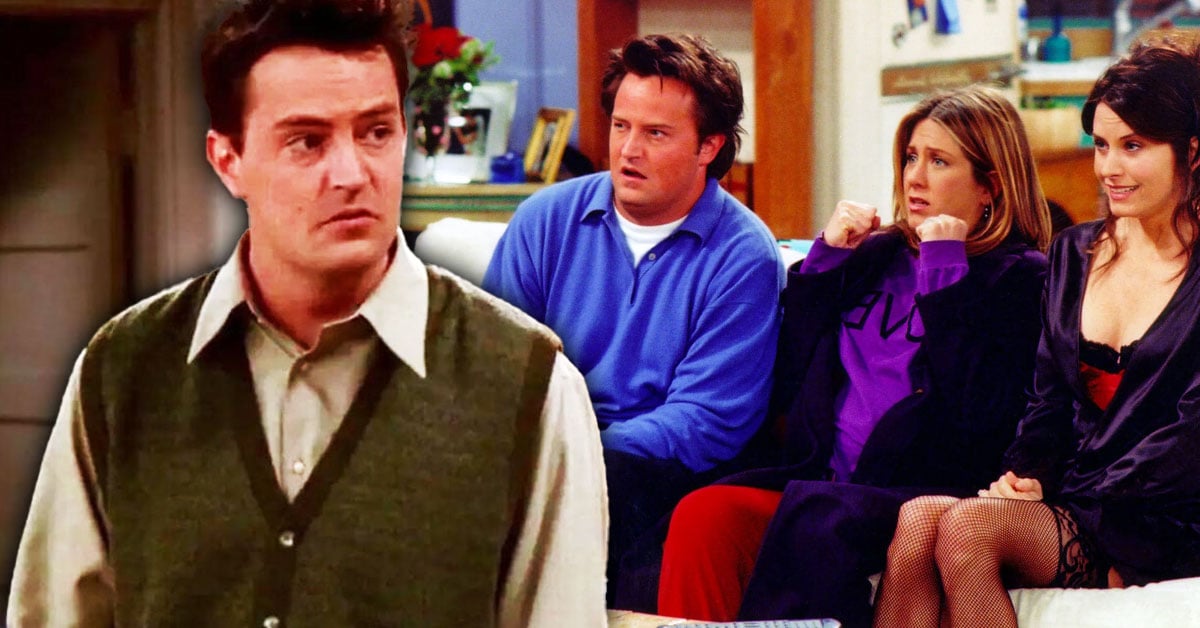
Their solution was subtle but deliberate.
Wardrobe became a shield.
Chandler’s clothing in Season 3 suddenly leaned toward oversized silhouettes — looser button-downs, heavier jackets, sweater vests layered over shirts, and sports coats that added visual structure to his frame. The goal wasn’t to create a new fashion identity for Chandler; it was to gently disguise the physical changes happening off-screen so that audiences stayed focused on the character, not the actor’s health.
And it worked.
At the time, almost no one questioned it. The wardrobe felt natural within Chandler’s personality — a slightly awkward office guy whose style always hovered somewhere between corporate casual and unintentionally nerdy. The layers blended seamlessly with the character’s comedic energy. Fans laughed at the jokes, quoted the lines, and moved on without realizing the careful work happening behind the camera.
Only years later, with Perry openly discussing his struggles and fans revisiting the show with a deeper understanding, did the quiet intention behind those choices become clear.
Looking back now, the wardrobe shift feels less like a costume decision and more like an act of compassion.
Television productions often operate like tightly controlled machines where appearance, continuity, and ratings dominate every decision. Yet in this moment, the team behind the show chose something more human. Instead of forcing Perry to hide or explaining his condition publicly, they simply adjusted the visual storytelling around him.
They protected the person while preserving the character.
That decision says a lot about the culture behind the scenes of the show. While Friends is remembered for its record-breaking popularity, massive salaries, and cultural dominance in the 1990s, stories like this reveal the quieter reality of the set: a group of people trying to support a colleague during a vulnerable time without turning his struggle into spectacle.
Rewatch Season 3 today and you’ll start to notice it.
The slightly oversized shirts.
The layered sweaters.
The jackets that rarely seemed necessary in the apartment scenes.
What once looked like quirky fashion now reads as something else entirely — a silent effort to keep Chandler Bing feeling whole on screen while Matthew Perry fought battles the audience didn’t yet understand.
And that realization has changed how many fans see those episodes forever.
Because hidden beneath the punchlines and laugh track was a different story unfolding — one not written in the script, but stitched carefully into the clothes the character wore.