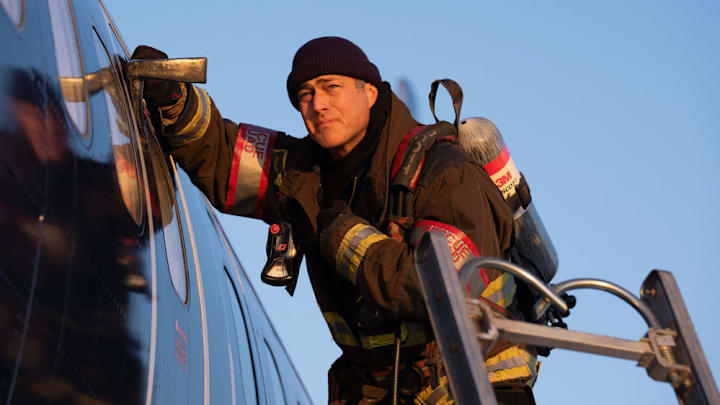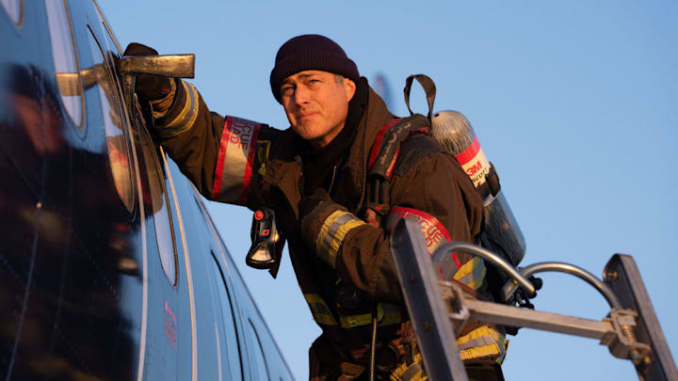
The landscape of network television is often a game of strategy, timing, and audience engagement, and nowhere is this more evident than in the recent announcement regarding the “One Chicago” franchise. Following the massive, high-stakes success of the latest season premiere, NBC has officially decided to reshuffle its Wednesday night lineup. This move comes as a direct response to the overwhelming viewership numbers and critical acclaim surrounding Chicago Fire’s highly anticipated return, which saw the series reclaim its throne as the emotional and ratings anchor of the mid-week schedule. By adjusting the flow of the evening, NBC is not just chasing numbers; they are attempting to perfect the “flow” of storytelling that connects Firehouse 51, the halls of Chicago Med, and the precinct of Chicago P.D. into one seamless, cinematic experience.
The catalyst for this reshuffle was undoubtedly the premiere episode of Chicago Fire’s new season, which picked up immediately after a cliffhanger that had left fans in a state of anxiety for months. The return featured a masterclass in tension, combining a complex high-rise rescue with deep, personal character developments that shifted the power dynamics within the station. The “anticipated return” proved that even after more than a decade on the air, the chemistry of the cast and the grit of the storytelling remain unmatched. Viewers tuned in in record numbers, signaling to the network that the appetite for the heroic exploits of Kelly Severide, Stella Kidd, and the rest of the crew is stronger than ever. Consequently, the network realized that the traditional order of the night could be optimized to better capitalize on the “Fire” momentum.
Under the new reshuffle, the sequence of the “One Chicago” nights has been adjusted to ensure that the narrative stakes of Chicago Fire serve as the primary engine for the evening. In the past, the shows often functioned as standalone units with occasional overlaps, but the new structure leans into a “serialized” approach for the entire block. By moving the premiere airtime and adjusting the lead-in sequences, NBC is encouraging a “stay-tuned” culture. The goal is to create a three-hour block that feels like a singular, epic movie. This shift recognizes that the modern viewer doesn’t just watch a show; they inhabit a universe. When a fire breaks out at 8 PM on Chicago Fire, the network wants the audience to be primed and ready to see the resulting trauma at 9 PM on Chicago Med and the criminal investigation at 10 PM on Chicago P.D.
Technically, the reshuffle is a bold logistical feat. It requires the showrunners and writers of all three series to synchronize their timelines with even greater precision. The highly anticipated return of Chicago Fire introduced several new characters and subplots that are destined to ripple through the sister shows. For instance, a new fire investigator introduced in the premiere has already been slated for a multi-episode arc that crosses into the Intelligence Unit’s territory on P.D. The reshuffled schedule allows these crossovers to feel more organic and less like “special events,” making the interconnectedness of the city’s emergency services feel like a permanent fixture of the viewing experience.
For the fans, this reshuffle represents a double-edged sword of excitement and adjustment. While many are thrilled that Chicago Fire is receiving such a prominent focus, others are navigating the new “appointment viewing” times. However, the early feedback suggests that the strategy is working. The increased “hang time” between the shows has sparked a surge in social media engagement, as fans discuss the implications of a rescue in the first hour while watching the medical fallout in the second. The “Chicago Wednesday” brand has never been more cohesive, and the network’s willingness to pivot based on the strength of Fire’s return shows a deep respect for the audience’s passion.
The “Reckoning” of the schedule also addresses the changing habits of streaming viewers on Peacock. By creating a more unified linear block, NBC is essentially creating a high-value “content dump” that performs exceptionally well on digital platforms the following day. The reshuffle ensures that Chicago Fire remains the gateway drug for the entire franchise, drawing in casual viewers with its high-octane action and then hooking them into the deeper, more procedural elements of the sister shows. It is a savvy business move that reinforces the idea that in the world of Dick Wolf, the family that fights together, stays together.
Ultimately, the reshuffling of the One Chicago nights is a testament to the enduring power of Chicago Fire. It is a show that has survived cast departures, production hurdles, and a changing media landscape by staying true to its core: the bravery of those who run toward the danger. As the new schedule takes hold, the message to the citizens of Chicago—and the viewers at home—is clear: Firehouse 51 is leading the way, and the rest of the city is following close behind. The return wasn’t just a premiere; it was a call to action that has redefined the future of the franchise.