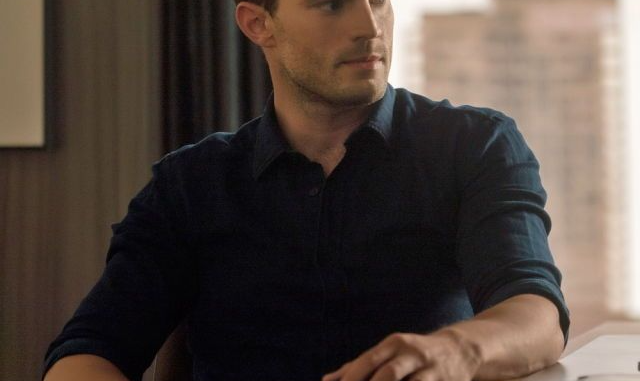
In the lead-up to the 2015 release of Fifty Shades of Grey, Jamie Dornan faced intense scrutiny over the film’s portrayal of BDSM and power dynamics. Critics and commentators accused the adaptation of E.L. James’s erotic novel of being inherently misogynistic, arguing that its depiction of a dominant billionaire controlling a young woman reinforced harmful stereotypes. Dornan, stepping into the role of Christian Grey, pushed back firmly in a candid January 2015 interview with Elle UK, insisting the story was far from anti-woman or anti-feminist.
“I can understand why people say tying a woman up and spanking her is misogynistic,” Dornan acknowledged, showing empathy for the criticism. “But actually, more men are submissives than women. Very powerful men.” He highlighted the broader BDSM community, noting, “It’s a far bigger scene than I imagined. In pretty much any city in the world that you could name, people want to get spanked with a paddle with studs on it.” Drawing from his research—including visits to sex dungeons—Dornan emphasized that submission isn’t gendered in the way critics assumed, and dominant/submissive dynamics often flip traditional power roles, with high-powered individuals seeking release through surrender.
At its core, Dornan argued, the film prioritizes romance over kink. “The love story is more important than the BDSM aspect,” he explained. “I mean, we are going to tell a love story, you know, it can’t just be what happens in the Red Room, that’s not a film. There’s so much more going on than that.” He positioned Fifty Shades as an exploration of consensual exploration, vulnerability, and emotional connection between two people discovering desire together, rather than a one-sided tale of female subjugation.
This defense came amid widespread debate. The books had already sparked feminist backlash for romanticizing control and abuse-like behaviors, with some arguing Christian Grey’s dominance glorified toxic masculinity. Dornan countered by reframing the narrative: Anastasia Steele (played by Dakota Johnson) actively consents, negotiates boundaries via the famous contract, and ultimately holds agency in their evolving relationship. By trilogy’s end in Fifty Shades Freed (2018), their dynamic shifts toward equality, marriage, and parenthood—elements often overlooked in early critiques.
Dornan’s comments, echoed across outlets like The Hollywood Reporter, TIME, CBS News, and The Independent, helped shift some perceptions during promotion. He never dismissed valid concerns but urged viewers to see the full picture: a fantasy rooted in mutual attraction and growth, not oppression. In later reflections, as the franchise grossed over $1 billion and became a cultural phenomenon, Dornan maintained pride in the project while acknowledging its polarizing nature. He has since moved to acclaimed roles in Belfast (Oscar-nominated) and Netflix series like The Tourist and The Undertow, but his early defense of Fifty Shades remains a key moment—highlighting how he navigated backlash by focusing on consent, balance, and the story’s romantic essence.
Even in 2026, as retrospectives revisit the saga’s impact, Dornan’s words stand out: the film isn’t misogynistic because it celebrates consensual fantasy, flips power expectations, and centers love above all. For Dornan, portraying Christian Grey was about authenticity in a misunderstood world, not endorsing harm