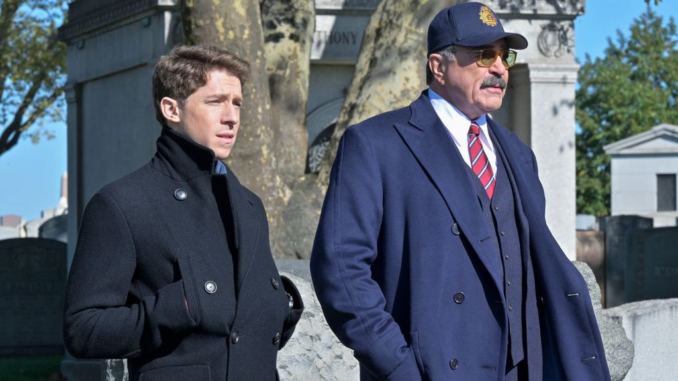
For more than a decade, Blue Bloods has built one of the most fiercely loyal fanbases in TV crime drama history — and not always for the reasons you’d expect. While audiences celebrate its strong family ties and gripping episodic cases, a tidal wave of fan discussion reveals that some of the show’s most iconic elements are actually wildly unrealistic — and sometimes hilariously so.
At the center of all the buzz are the actors themselves, especially Donnie Wahlberg, whose portrayal of Detective Danny Reagan has been one of the most talked-about performances of the series. Wahlberg’s gruff but charismatic detective is often described as “too tough for real life” — a character who fires his weapon and engages in physical confrontation in almost every episode, something many fans say would land a real officer in deep trouble off screen.
Fans also laud Tom Selleck as Frank Reagan, the stoic Police Commissioner whose moral rigidity and family leadership anchor the show. Selleck’s portrayal of Reynolds blends sage wisdom with no-nonsense law enforcement, and he’s been so central to the Blue Bloods legacy that multiple cast photos have graced the cover of TV Guide — often featuring Selleck front and center.

Despite the powerful performances, Blue Bloods isn’t above earning ridicule from its own audience over implausible police procedures that even hardcore fans can’t ignore. Among the most discussed absurdities:
-
Reagan Everywhere Syndrome: No matter where a crime happens in New York City, one or more members of the Reagan family always magically show up on the scene — a phenomenon fans jokingly attribute to the Reagans being “strategically planted everywhere.”
-
Unrealistic Gunfire Frequency: Danny and other officers fire their weapons in almost every episode — a glaring contrast to real NYPD stats that show most officers never discharge their firearm in a lifetime of service.
-
Sunshine Sundays with Zero Work: Every Sunday, without exception, the entire Reagan law enforcement crew shows up for family dinner — yet somehow nobody ever has to work. Fans point out that in reality, cops and DA offices would regularly staff cases on weekends.
-
Too Much Free Parking: Viewers have even joked online about New York City’s fictional parking situation on the show — where cruisers pull up without any difficulty to blockbuster crime scenes, defying NYC’s real-world traffic and parking challenges.
Online communities explode with comments about these quirks, ranging from laughter at “fake car driving scenes” and continuity bloopers to critical debates over procedural realism — such as internal affairs portrayals and case workflows that don’t match real policing practices.
What makes Blue Bloods so addictive, despite these obvious flaws, is the blend of heartfelt family drama and uncompromising crime storytelling. Audiences may roll their eyes at the implausible logistics — but they keep tuning in because the Reagan clan feels like one of their own. The dinner table — staged, repeated, and sometimes immortalized in cast cookbooks — has become a cultural touchstone of the series, even if its perfection is barely believable.
In the end, the biggest shocking realism gap isn’t a single twist or stunt — it’s the fact that fans keep watching passionately, celebrating the show’s strengths even while gleefully roasting its more ridiculous moments.