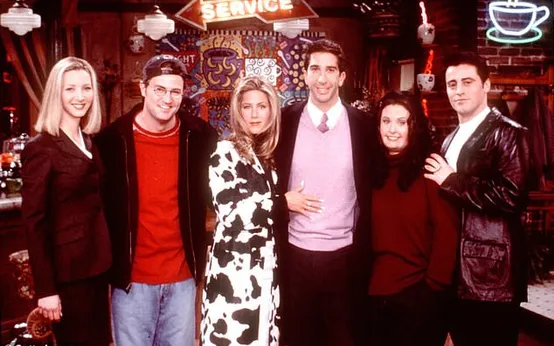
It sounds almost absurd at first: a 1990s sitcom about six twenty-somethings in New York doubling as a form of mental health support. And yet, that is exactly what psychologists and millions of devoted viewers are now openly acknowledging about Friends.
In 2019, London-based clinical psychologist Marc Hekster publicly reflected on how the series helped him navigate some of the most challenging periods of his own life. His admission did more than spark nostalgia — it reignited a broader cultural conversation. Why does this particular show, decades after its premiere, still feel like a lifeline?
The answer, according to behavioral science, is far more profound than simple comfort viewing.
The Science Behind the “Comfort Sitcom” Effect
Psychologists have long studied the emotional benefits of familiarity. Rewatching a well-loved show like Friends creates predictability — and predictability reduces anxiety. When the brain knows what’s coming next, it lowers its guard. That sense of narrative certainty provides emotional regulation during stressful periods.
Then there’s the laughter factor. Repeated exposure to humor activates mood-boosting neurochemicals and decreases cortisol levels. But what makes Friends uniquely powerful isn’t just the jokes — it’s the emotional architecture. The characters function as stable social anchors. Viewers build parasocial bonds that mimic real friendships, offering a sense of belonging even in isolation.
For many, rewatching isn’t about distraction. It’s about emotional recalibration.

A Cultural Phenomenon That Refuses to Fade
Despite concluding in 2004, Friends remains one of the most streamed series worldwide. Younger audiences, who weren’t even born during its original run, are discovering it for the first time. Meanwhile, longtime fans revisit it during breakups, job losses, global crises, and sleepless nights.
The show’s ensemble cast — including Jennifer Aniston, Courteney Cox, Lisa Kudrow, Matt LeBlanc, Matthew Perry, and David Schwimmer — created characters so distinct and emotionally accessible that they feel less like scripted personas and more like long-standing companions.
Even after the tragic passing of Matthew Perry, conversations around the show intensified. Fans revisited episodes not only to grieve but to reconnect with joy. The series became both memorial and medicine.
Nostalgia as Emotional Armor
There’s a reason many people turn to Friends during turbulent times rather than newer, more complex dramas. Modern prestige television often demands emotional investment and suspense. Friends, by contrast, offers emotional safety.
Its conflicts resolve within 22 minutes. Its friendships endure despite romantic misfires and career disasters. Its tone insists that even in chaos, humor and loyalty survive. That worldview is deeply reassuring in an era marked by uncertainty.
In psychological terms, nostalgia strengthens identity continuity — it reminds us who we were and reinforces who we are. Watching Friends can transport viewers back to dorm rooms, first apartments, or simpler years. That temporal bridge can soften present-day stress.
Quiet Therapy, Hidden in Plain Sight
The most striking revelation in this renewed discussion is not that television can comfort us — it’s that we may have underestimated how powerful that comfort can be. What once seemed like procrastination is increasingly recognized as a coping strategy.
Rewatching a favorite episode after a draining day isn’t avoidance. It can be a micro-ritual of self-regulation. A familiar laugh track. A well-timed sarcastic comment from Chandler. A reassuring group hug at Central Perk. These moments create a psychological buffer.
For critics who dismiss sitcoms as lightweight entertainment, this reframing is provocative. If something consistently helps people feel less alone, more stable, and emotionally grounded, does it really deserve to be trivialized?
More Than a Sitcom — A Social Lifeline
The enduring debate around Friends isn’t just about whether it holds up culturally. It’s about why it still holds us.
In an age of hyper-speed content consumption, Friends stands as a reminder that emotional connection — even fictional — has tangible value. It demonstrates that warmth, humor, and chosen family can act as stabilizing forces when the real world feels overwhelming.
The most shocking part may be this: the show didn’t set out to be therapeutic. It simply told stories about flawed people trying to figure life out together. And in doing so, it accidentally built a refuge millions still rely on.
Sometimes self-care doesn’t look like silence or meditation. Sometimes it looks like pressing play on an episode you’ve seen 40 times — and laughing anyway.